Published by
Gold Expert
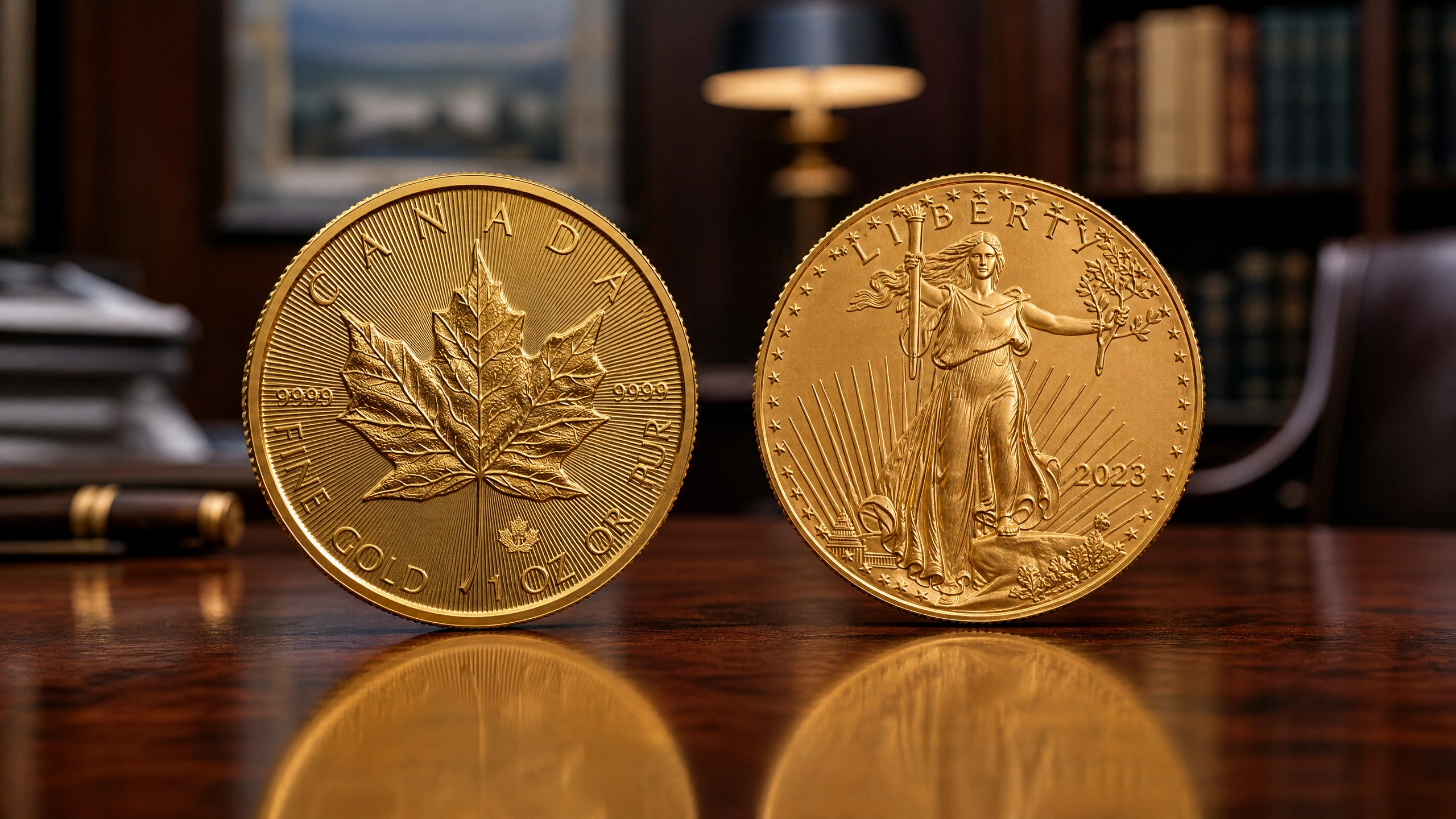
Quick comparison snapshot
Canadian Gold Maple Leaf vs American Gold Eagle really comes down to purity versus domestic liquidity: Maple Leaf for maximum fineness, Eagle for U.S. market recognizability and durability. The best choice for most U.S.-based investors is a core position in American Gold Eagles, supplemented with Maple Leafs if you specifically value ultra-high purity.
Maple Leaf equals higher purity; Eagle equals U.S. market recognizability and slightly greater durability. In practice, either can be among the best gold coins to buy if you match the coin's strengths to your goals, and both are available in our gold coin selection.
Why coin choice matters for investors
Choosing between coins matters because the price you pay usually equals the spot price plus a premium. Spot price is the current market price for one troy ounce of gold, quoted on global exchanges. Premium is the dealer markup above spot that covers manufacturing, distribution, and dealer margin.
Purity, liquidity, and recognizability affect how easy a coin is to resell and how closely its value tracks the metal itself. Practical factors—storage, potential wear, and local buyer familiarity—also change the total cost and convenience of ownership.
Technical specs: Maple Leaf vs Eagle
Purity and composition
The Canadian Gold Maple Leaf is typically .9999 fine (99.99% pure) gold, making it one of the purest widely traded bullion coins. According to the Royal Canadian Mint, standard 1 oz Maple Leaf bullion coins contain 1 troy ounce of 99.99% pure gold. Higher fineness means slightly softer metal, which can be more prone to scratches and surface marks during handling.
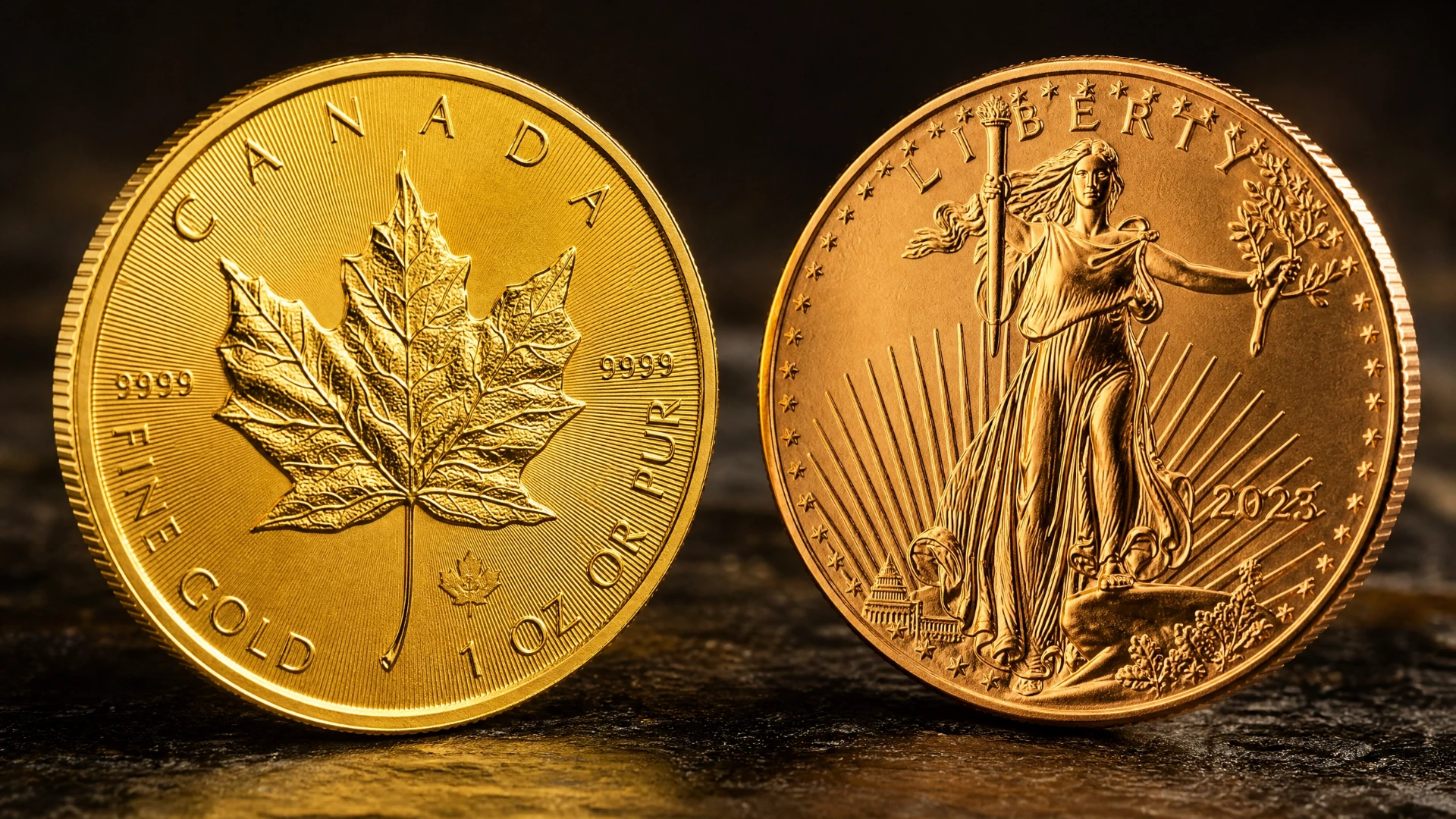
The American Gold Eagle is .9167 fine (22 karat, 91.67% gold) alloyed with copper and silver for greater durability, a composition you'll find in our 1 oz American Gold Eagle listings. The alloy slightly increases the coin's gross weight compared with its pure gold content.
Sizes and denominations
Both coins are commonly available in 1 troy oz and fractional sizes (1/2 oz, 1/4 oz, 1/10 oz). A 1 oz Maple Leaf contains 1 troy ounce of pure gold; a 1 oz Eagle contains 1 troy ounce of gold content but the gross weight includes the alloy metals.
Fractional coins often carry higher percentage premiums per ounce than full ounces. Compare fractional premiums if you plan smaller purchases, especially if you're building a position over time with limited monthly budgets.
Legal tender & backing
Both are legal tender in their countries (Maple Leaf in Canada, Eagle in the U.S.) with nominal face values. Legal tender status means they are guaranteed by the issuing government for the coin's face value, but market value is determined by metal content and demand.
Security features and authentication
Modern Maple Leafs include micro-engraved laser marks and advanced radial lines that enhance security and make counterfeiting more difficult. These features help authenticate coins and are useful when buying or selling in person.
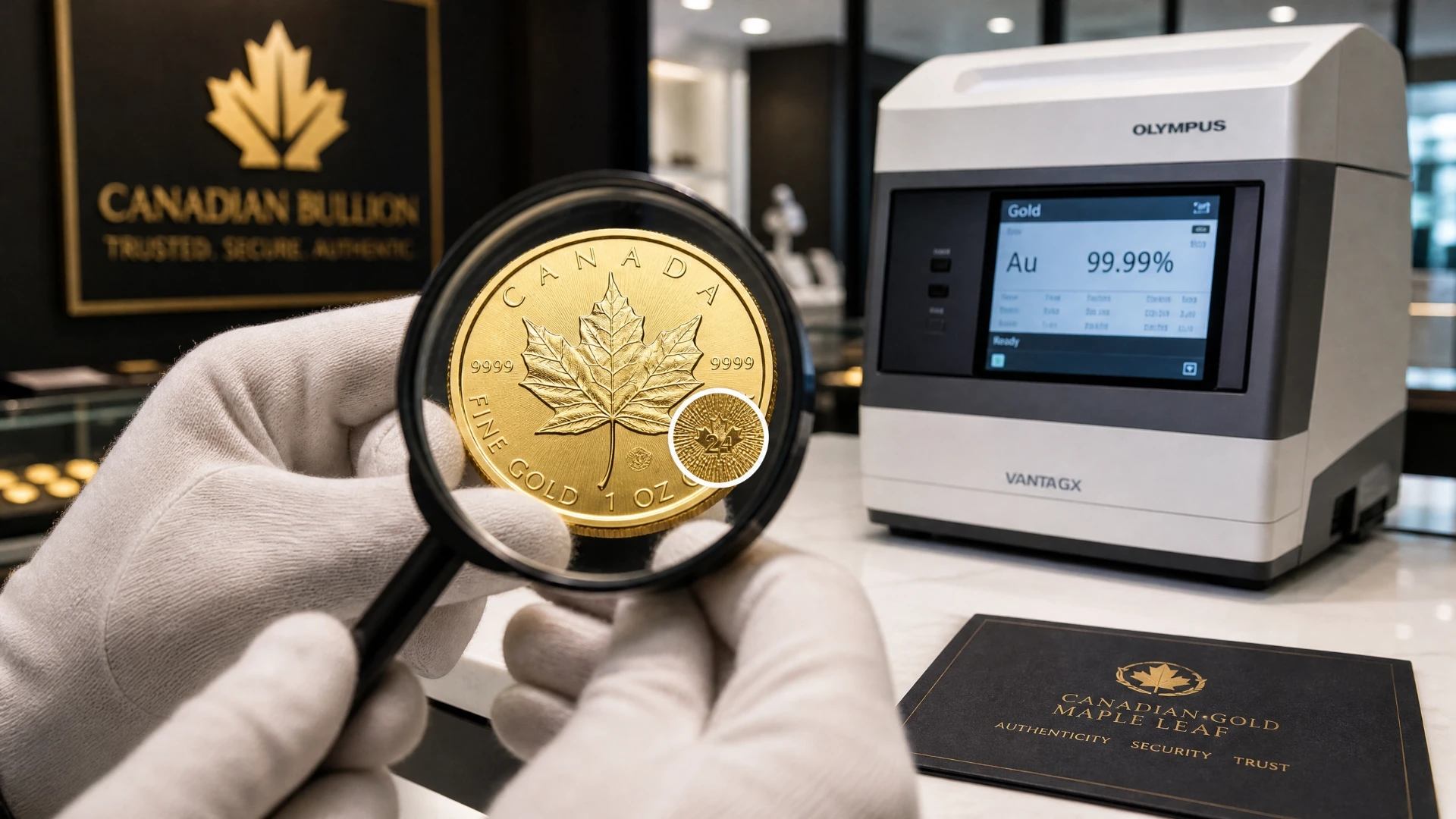
American Gold Eagles rely on their long-running design, mint marks, and precise weight and dimensions published by the U.S. Mint for verification. Careful inspection of design details and edge reeding remains important for authentication.
When possible, use scales and calipers and ask for XRF (X-ray fluorescence) testing in-store to confirm purity. In the DMV, The Bullion Bank provides in-house XRF testing at both physical locations so buyers and sellers can verify coins on the spot.
Premiums, pricing behavior, and liquidity
Premiums vary by market conditions, dealer inventory, and coin size. In the U.S., American Eagles often show strong demand and competitive premiums; Maple Leafs can carry slightly higher premiums tied to their higher purity and international appeal.
American Eagles typically have the edge in liquidity domestically because U.S. buyers and local dealers recognize them immediately. Maple Leafs enjoy strong global recognition, which helps if you plan to sell internationally or to buyers who prioritize 24-karat purity.
If you need to sell gold in Northern Virginia quickly, an Eagle may trade faster at local shops because most U.S. investors know and trust the series. If you're exporting or selling to international buyers, a Maple Leaf can be equally or more attractive, especially in markets where 99.99% purity is the norm.
Tax, reporting, and legal considerations
When you sell a precious metal for more than you paid, you may realize a capital gain, which can be taxable. Tax laws vary by jurisdiction; consult a tax professional for personalized advice rather than relying on general guidance.
Some states apply sales tax to bullion purchases; others exempt certain bullion sales. Local rules can affect total cost—ask your dealer for specifics before you buy, especially if you're purchasing in the DMV but might move or sell elsewhere.
Large in-person transactions often require ID for regulatory and anti-money-laundering compliance. Reputable dealers like The Bullion Bank follow these rules while still providing transparent, real-time valuation and clear paperwork for your records.
Which coin should you buy? Buyer profiles

First-time investor looking for low hassle
For most first-time U.S-based buyers, the American Gold Eagle is the more straightforward starting point. It offers strong domestic recognizability, broad dealer acceptance, and easy resale in the DMV region — explore our American gold coin selection to get started.
Purity-focused buyer
If owning the purest possible gold is your main priority, the Canadian Gold Maple Leaf is the better fit. It delivers .9999 fineness and is widely accepted globally, making it a natural choice for purity-focused investors who plan to hold long term; browse our Canadian gold coin selection to compare options.
Collector or numismatic buyer
Collectors should look at special editions, proof strikes, or graded pieces from either series. Third-party grading services such as PCGS and NGC provide certification and encapsulation that can help support collectible premiums on these coins.
Short-term liquidity vs long-term holding
For short-term flexibility, consider a mix of sizes—mostly 1 oz for lower premiums per ounce, plus a few fractional coins for smaller transactions. If you value immediate resale in the DMV, weighting your mix toward Eagles while still holding some Maple Leafs can balance liquidity and purity.
Buying safely in the DMV with The Bullion Bank

Educational comparisons are useful, but the real decision happens when you choose where to buy and sell. The Bullion Bank gives DMV investors a clear advantage with in-house XRF testing, real-time pricing tied to spot, and a standing buyback commitment on common bullion coins like Maple Leafs and Eagles. That combination of licensed-dealer oversight, physical locations, and transparent pricing makes it easier to act on what you've learned and avoid common scams.
When you buy from a licensed dealer with transparent premiums and in-person authentication services, you reduce the risk of fakes and hidden fees. In Northern Virginia and the broader DMV region, The Bullion Bank provides face-to-face verification, clear quotes, and immediate payment for sellers, backed by a track record since 2008.
Online buying considerations
When you shop online, prioritize dealers offering insured shipping, clear returns, and premiums quoted relative to the real-time spot price. Check shipment insurance limits and delivery timelines so you know exactly how your investment is protected in transit.
Online inventory may show different premiums than in-store due to shipping, insurance, and handling. The Bullion Bank's online store lets you compare live premiums on Canadian Gold Maple Leafs and American Gold Eagles before you commit, then ships orders fully insured to your door.
Quick buying checklist
- Check the coin's purity and weight with reliable tools or in-store testing.
- Compare premiums to the live spot price across multiple reputable dealers.
- Ask about buyback policies and any fees for online purchases such as shipping and insurance.
- Prefer sealed or certified coins for strong resale value.
- Use secure storage like capsules or tamper-evident packaging and insure significant holdings.
- Keep receipts and provenance documentation for future resale or tax reporting.
FAQ
Q: Which is better overall: Canadian Gold Maple Leaf or American Gold Eagle?
A: For most U.S. investors, American Gold Eagles are the better core holding because they offer strong domestic liquidity and recognizability, while Maple Leafs are excellent additions when you specifically want ultra-high purity.
Q: Are Maple Leafs more valuable than Eagles?
A: Maple Leafs are not automatically more valuable; both track spot price, and the actual value depends on the gold content plus market premiums and demand at the time you buy or sell.
Q: Which coin is easiest to sell in the U.S.?
A: American Gold Eagles are generally the easiest to sell in the U.S. because most buyers and dealers know and trust the series, and pricing benchmarks are widely available.
Q: Do Maple Leafs contain more gold than Eagles?
A: A 1 oz Maple Leaf contains 1 troy oz of pure gold in a .9999 fineness coin, while a 1 oz Eagle contains 1 troy oz of gold content in a 22-karat alloy with slightly higher gross weight.
Q: How do premiums typically compare between Maple Leafs and Eagles?
A: In U.S. markets, Eagles usually carry strong demand and competitive premiums, while Maple Leafs may show slightly higher premiums that reflect their 99.99% purity and international appeal; always check live quotes.
Q: Is purity important for investors?
A: Purity matters because it affects melting value and some investors' preferences, but both Maple Leafs and Eagles are widely accepted bullion coins; purity alone shouldn't override considerations like liquidity and premiums.
Q: Can I sell Maple Leafs and Eagles at The Bullion Bank in Virginia?
A: Yes. The Bullion Bank buys and sells Canadian Gold Maple Leafs and American Gold Eagles at both Northern Virginia locations, with XRF testing, real-time valuation, and immediate payment.
Q: How should I store these coins?
A: Store coins in hard capsules or tubes in a cool, dry, secure location, and consider insured vault storage for larger holdings to protect against theft and damage.
Q: Are there tax differences when buying or selling gold coins?
A: Tax treatment can differ by state and country, impacting both sales tax on purchases and capital gains on sales, so it's best to consult a qualified tax professional for specific guidance.
Q: What authentication checks should I do before buying?
A: Verify weight and dimensions against official specs, inspect security features and design details carefully, and request XRF or third-party grading and assay services such as PCGS for high-value or suspicious pieces.
Q: How much does a 1 oz gold coin typically cost over spot?
A: Common-date 1 oz bullion coins like Maple Leafs and Eagles frequently trade at a modest premium over spot, which can rise in tight markets; checking current live pricing from a licensed dealer such as The Bullion Bank will show the exact dollar amount over spot on any given day.
Call to action
If you're ready to choose between Canadian Gold Maple Leafs and American Gold Eagles, visit The Bullion Bank in Northern Virginia for in-person authentication, real-time pricing, and XRF-verified buy and sell quotes. Our Chantilly showroom at 4086 Airline Pkwy, Chantilly, VA 20151 and our Vienna store at 131 Maple Ave W, Vienna, VA 22180 are open Monday–Friday 11:00 AM–6:00 PM and Saturday 11:00 AM–5:00 PM; call 703-705-5151 (Chantilly) or 703-705-5252 (Vienna) to get live premiums or to confirm inventory before you come in.