Published by
Gold Expert
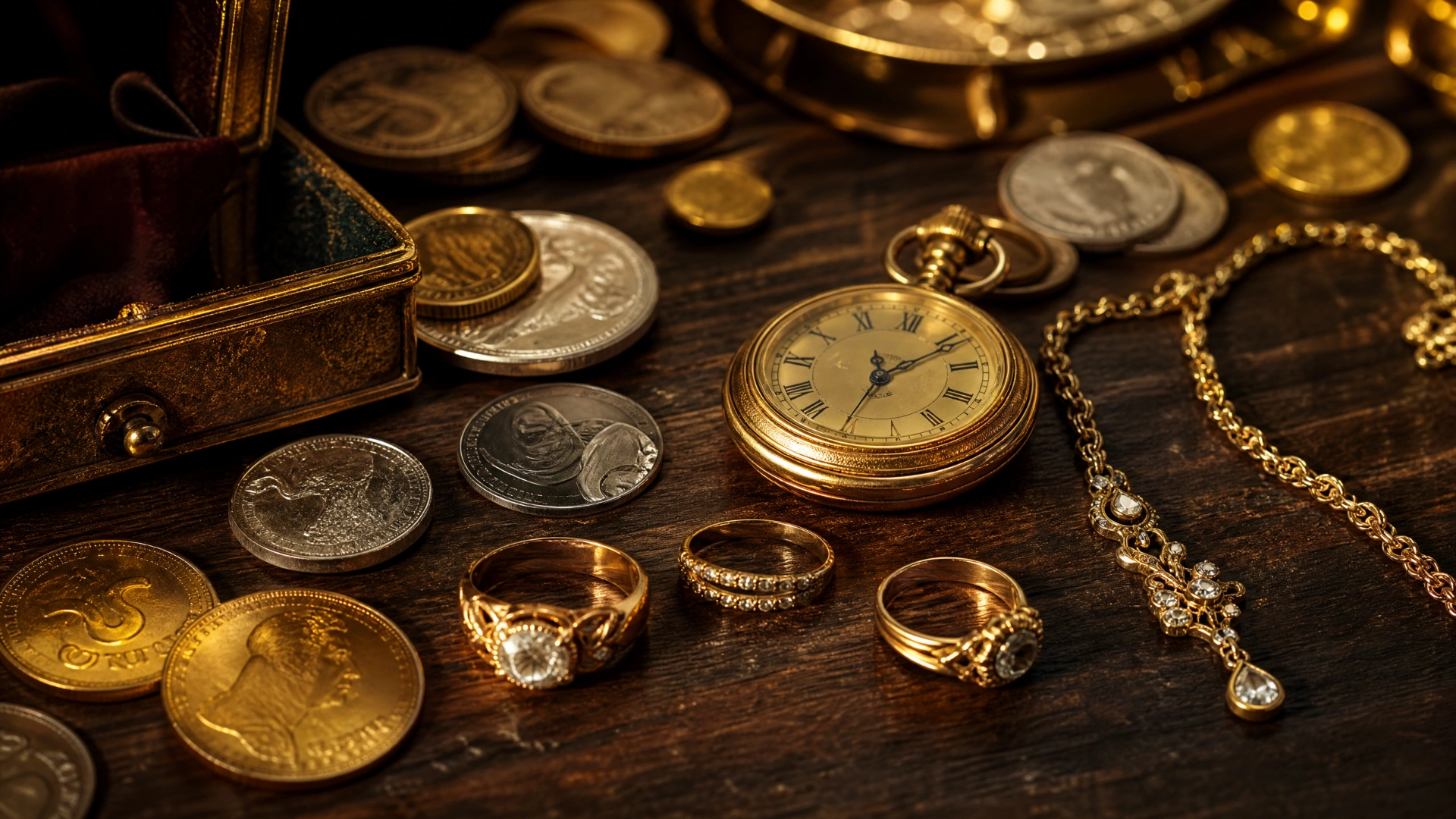
If you've recently inherited coins, gold, silver, or jewelry, the first question is usually not "What is this worth?" but "What should I do with it safely?" For many families in Fairfax County and the wider Northern Virginia area, the goal is to sort what was passed down, understand what may have real value, and choose a trustworthy place to evaluate it.
This guide walks you through the process step by step: how to organize inherited items, what not to do, how value is determined, and when an in-store evaluation makes sense. If you decide to sell, you'll also understand what a transparent offer should look like and why a licensed dealer with physical locations can be a better fit than a rushed sale to a non-specialist buyer.
What to do first with inherited items
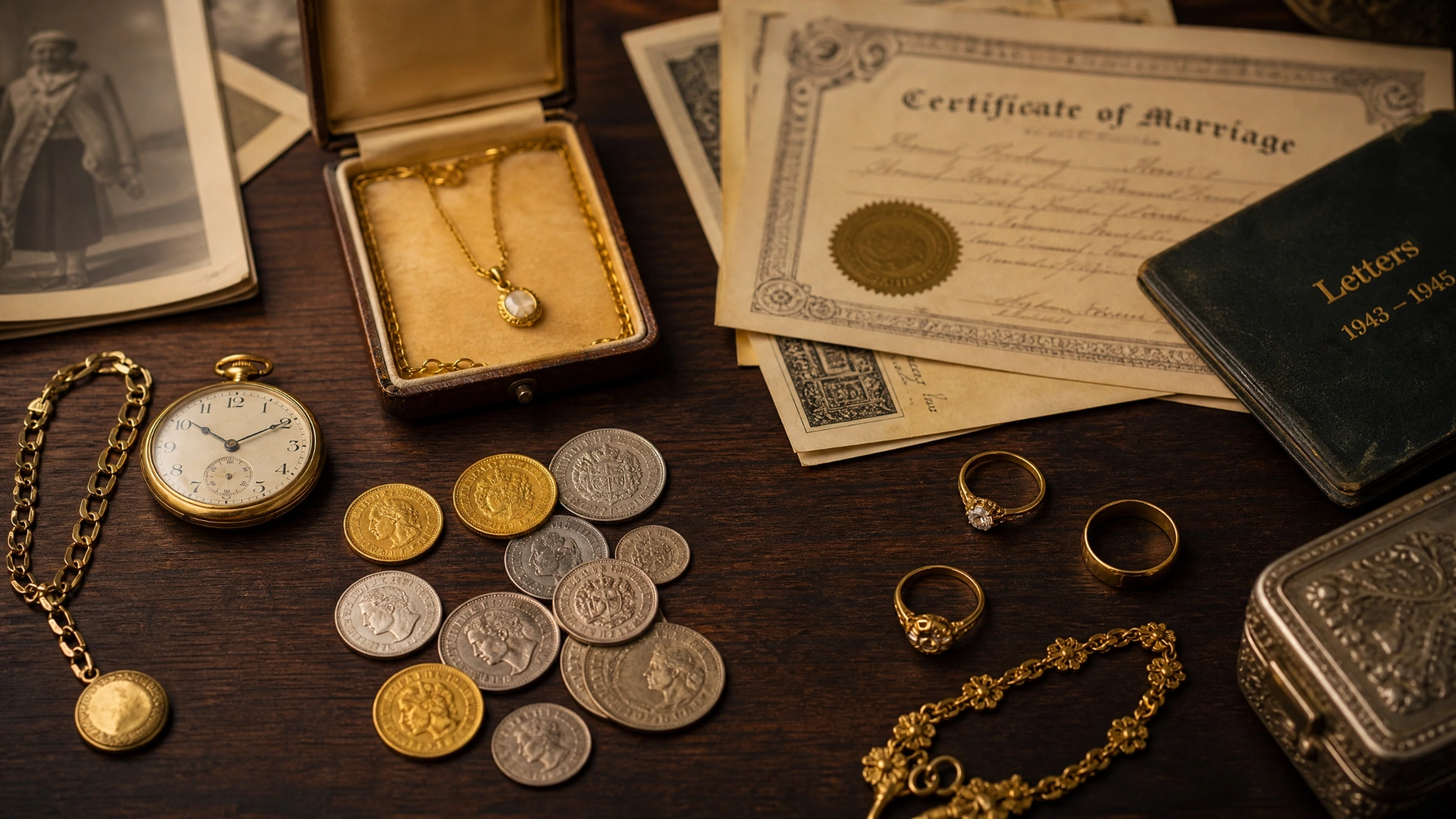
Start by gathering everything in one place and keeping it secure. That may include coins, jewelry, bullion, watches, loose stones, old receipts, certificates, and any paperwork from the estate.
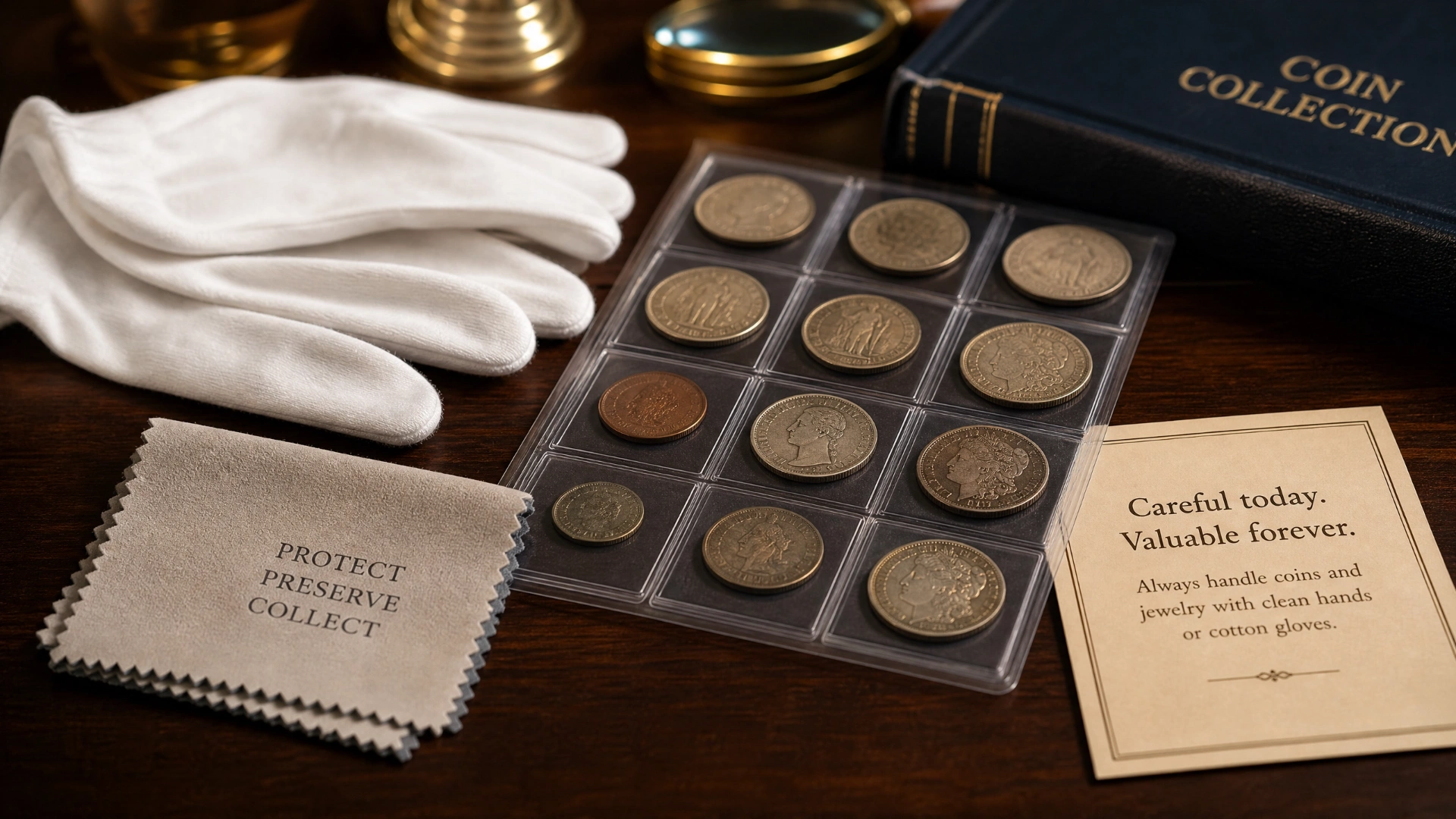
Do not clean, polish, or separate items too quickly. A coin that looks ordinary at first glance may be collectible, and an estate piece of jewelry may have value beyond its metal content.
If the inheritance is part of a larger family settlement, take photos and make a simple inventory. That creates a record before anything is sold or divided.
Sort coins, jewelry, and paperwork
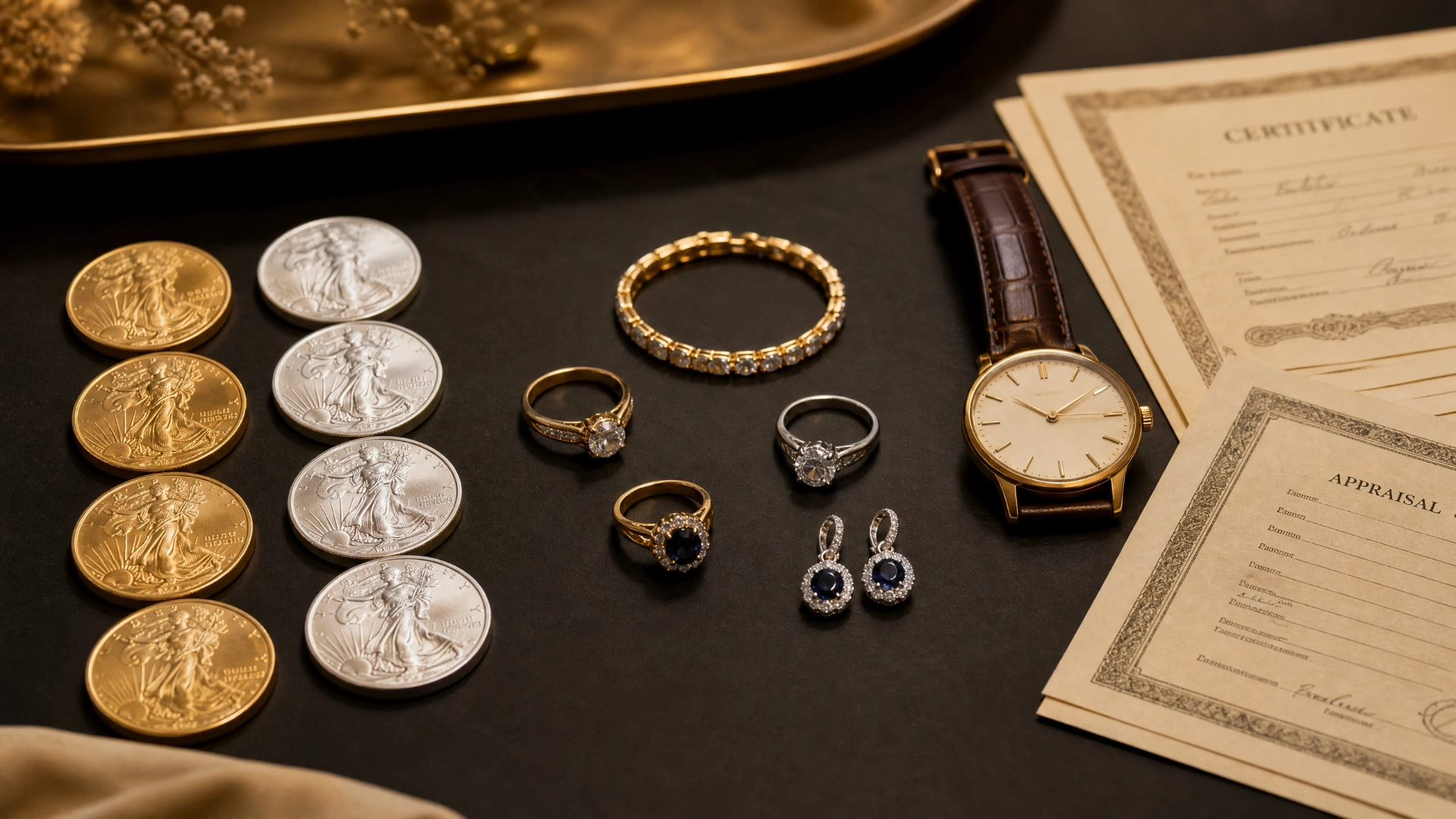
The next step is to separate the inheritance into broad categories: coins, bullion, jewelry, watches, diamonds, and documents. This helps you avoid confusing a bullion coin with a rare numismatic coin, or a scrap gold necklace with a designer estate piece.
Paperwork matters more than many people realize. Receipts, certificates, old appraisals, grading slips, and estate records can help confirm authenticity, date, and ownership history.
If the collection includes coin holders, sealed slabs, or handwritten notes, keep those together with the item. Even small details can help during evaluation — this matters for inherited coins as well as when you're ready to sell estate jewelry in Northern Virginia.
Understand what may be valuable
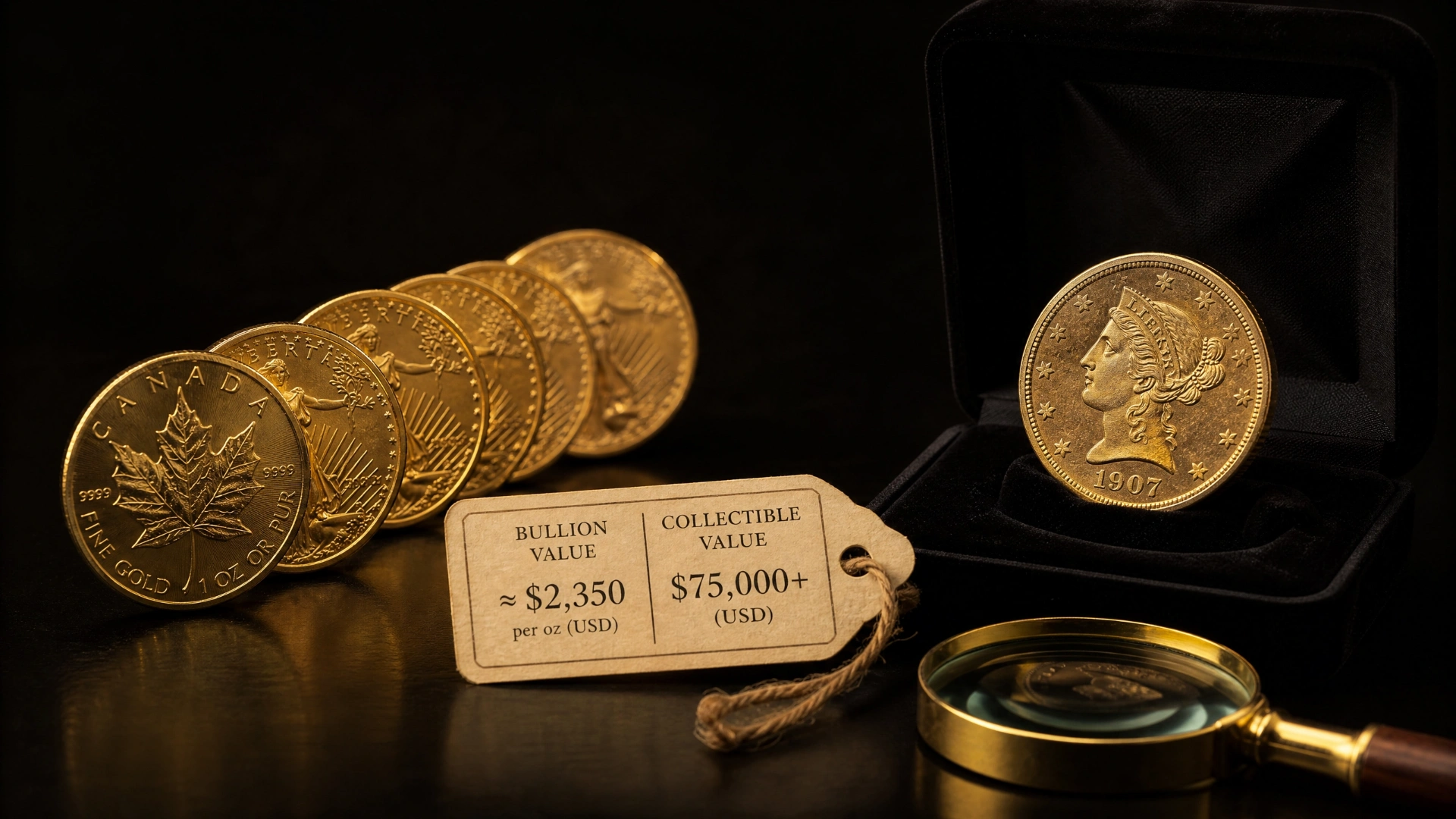
Not all inherited items are valued the same way. Spot price is the current market price for a precious metal such as gold or silver, while premium is the amount above spot that a buyer may pay for fabrication, rarity, condition, or collector demand.
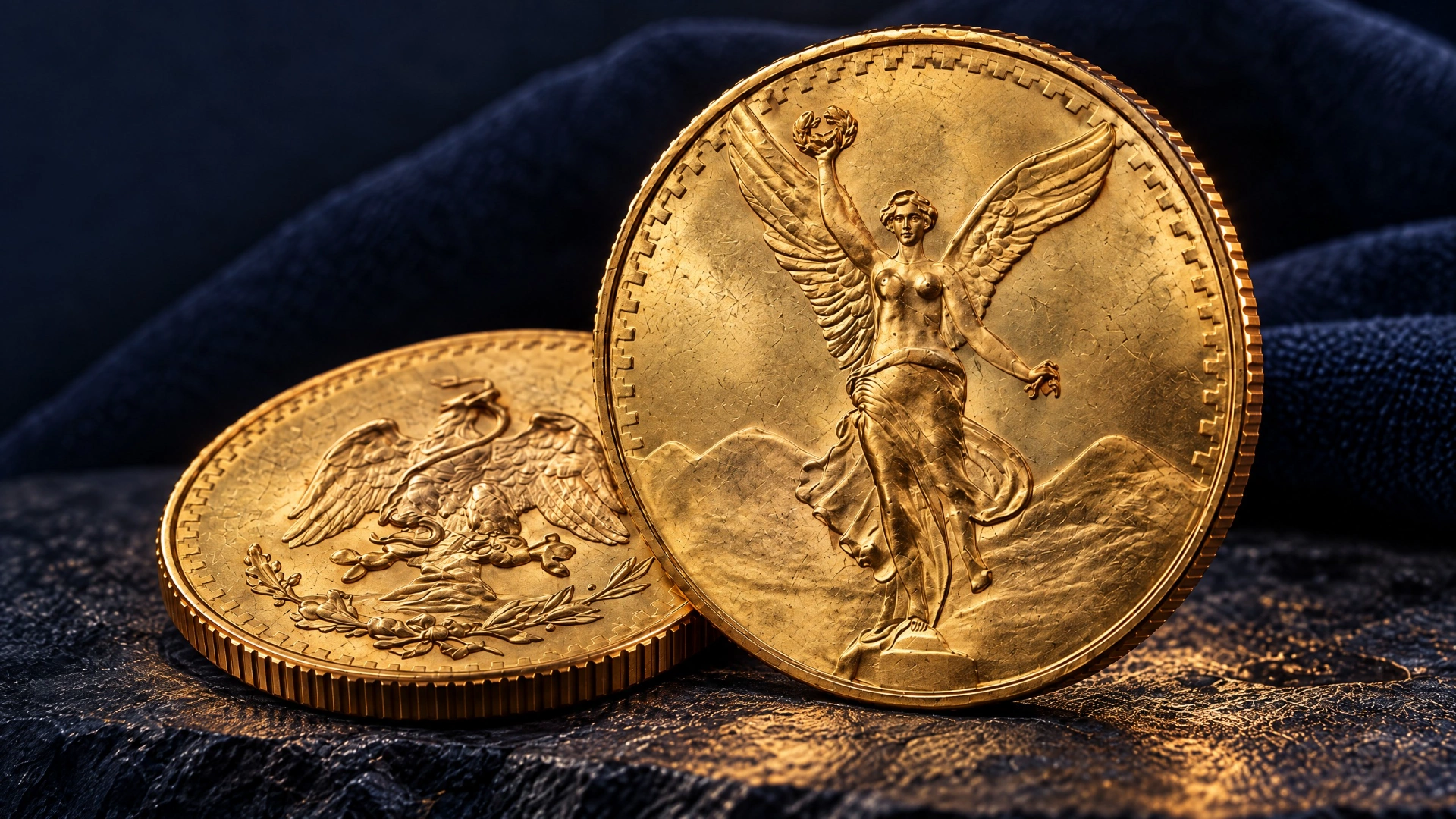
Some coins are worth close to their metal content only, especially common bullion pieces. Others may have numismatic value, meaning collector value based on rarity, condition, year, mint mark, or demand. Third-party grading services help collectors and dealers assess condition consistently, and PCGS grading standards are among the most widely recognized in the industry.
The U.S. Mint's bullion coin programs are also a useful reference point for understanding how bullion products like American Eagles enter the market before reaching dealers and collectors.
Jewelry is similar. A piece may be worth its melt value, but an estate ring, bracelet, or necklace may bring more if it has designer appeal, antique character, or diamonds and other stones that can be evaluated separately.
Decide whether to keep, sell, or split items
Many families do not need to make an all-or-nothing decision. You may choose to keep sentimental pieces, sell duplicate items, and divide the rest among heirs by value.
This is especially useful when inherited items include a mix of coins and jewelry. A professional evaluation service can help you identify which pieces are better sold as collectibles and which are better sold for metal value.
If multiple family members are involved, it can help to get an appraisal before anyone claims specific pieces. That gives everyone a clearer picture and reduces conflict later.
How a professional evaluation works
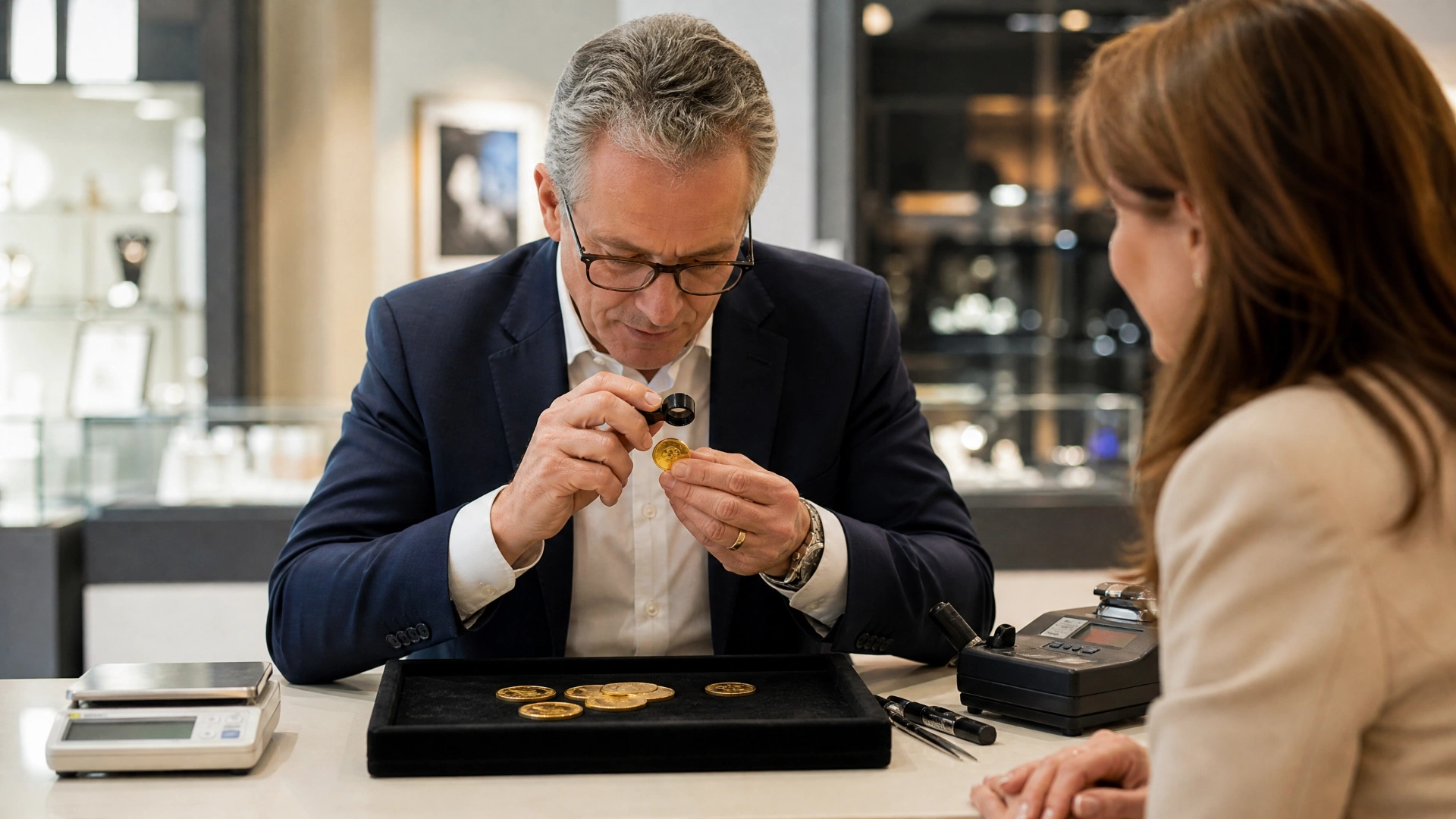
A proper evaluation should be straightforward, transparent, and explained in plain language. The buyer should inspect each item, test for authenticity when needed, weigh precious metals accurately, and explain whether value comes from metal content, collectibility, gemstones, or brand.
At The Bullion Bank, that process is designed to give you a real-time valuation rather than a vague estimate. A licensed dealer with physical locations can review mixed estate items in person, which is often the safest route for first-time sellers in Fairfax County and the DMV region.
A good evaluation should never feel rushed. You should leave understanding what you have, what each category is worth, and whether it makes sense to sell now or hold certain items.
Choosing the right buyer for inherited coins and jewelry
The right buyer matters almost as much as the items themselves. A reputable precious metals dealer, coin buyer, or estate jewelry buyer should be able to explain how the offer was calculated and answer questions without pressure.
Be cautious with buyers who focus only on speed or who give broad offers without reviewing each item. That can be risky with inherited coins because collectible pieces may be treated like common bullion, and it can also be a problem with jewelry that has stones or designer value.
Why local sellers often prefer an in-store visit
For inherited items, trust and convenience usually matter more than speed alone. A face-to-face review lets you see how the offer is formed, ask about different options, and decide whether to sell everything or only part of the estate.
That is especially helpful if you are looking for a local place to sell inherited coins or want an estate jewelry buyer Northern Virginia families can visit without mailing valuables away. If you are in Fairfax County, Vienna, Chantilly, or elsewhere in the DMV, an in-store appraisal can feel more secure than an online-only process.
The Bullion Bank's Chantilly showroom and Vienna location also make it easier to bring in mixed estate material in one trip, rather than trying to separate coins, jewelry, and watches into different sales channels. For many families, that simple step reduces stress and helps them move forward faster.

What The Bullion Bank can evaluate
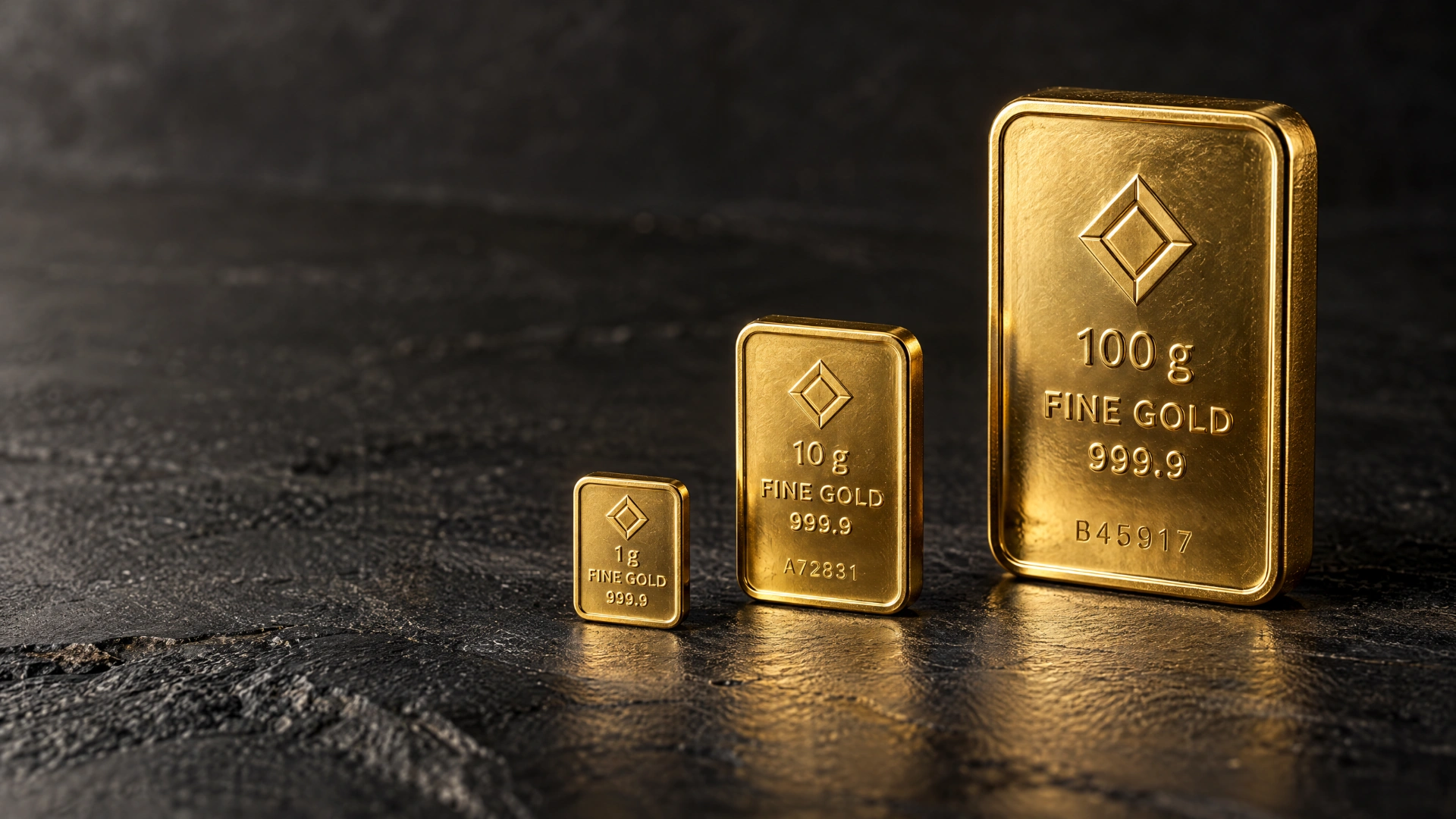
Inherited estates often contain more than one type of item, so it helps to work with a buyer that understands the full range. Our team can review gold, silver, platinum, and palladium bullion, numismatic coins, scrap jewelry, watches, diamonds and diamond jewelry, and other estate pieces.
That matters because one box may contain items that should not be sold the same way. A gold necklace, a pre-1933 coin, and a modern bullion round can all look similar to the untrained eye, but their value can be very different.
If you are unsure whether to sell inherited jewelry, inherited gold coins, or mixed estate items, a single evaluation can help you sort the entire collection at once. That is often the easiest starting point for families managing an estate in Northern Virginia, and it is one reason people bring items to The Bullion Bank before deciding what to keep.
Common mistakes to avoid
One of the most common mistakes is cleaning coins. Even gentle cleaning can reduce collector value, especially on older or rarer pieces.
Another mistake is breaking apart jewelry before it is evaluated. A ring with an original setting, a matching set, or a designer mark may be worth more intact than as separate metal and stones.
The third mistake is taking the first offer without understanding how it was calculated. Inherited items often deserve a second look, especially if the collection includes both bullion and numismatic pieces, and especially if you want a transparent comparison from The Bullion Bank or another reputable buyer.
FAQs about selling inherited coins and jewelry
Q: What should I do first after inheriting coins or jewelry?
A: Gather everything in one place, keep it secure, and avoid cleaning or sorting items too aggressively. Then separate coins, jewelry, watches, and paperwork so they can be reviewed properly.
Q: Should I clean inherited coins before selling them?
A: No. Cleaning can reduce value, especially for collectible or older coins. Leave them as found until they are evaluated.
Q: How do I know if inherited coins are bullion or collectible coins?
A: Bullion coins are primarily valued for metal content, while collectible coins can carry extra value based on rarity, condition, and demand. Third-party services such as NGC's certification standards can help confirm a coin's authenticity and grade, and a professional dealer can help identify the difference.
Q: Is inherited jewelry worth more as scrap or as estate jewelry?
A: It depends on the piece. Some items are valued mainly for metal content, while others have additional value because of design, brand, age, or gemstones.
Q: Do I need paperwork to sell inherited gold or coins?
A: Paperwork helps, but it is not always required. Old receipts, appraisals, and certificates can support identification and valuation if you have them.
Q: Can I sell inherited items one piece at a time?
A: Yes. In many cases, it makes sense to review items individually so you can keep sentimental pieces and sell only what you want to part with.
Q: How do appraisals work for estate jewelry and coins?
A: The evaluator checks authenticity, weight, condition, and category, then explains whether the item's value comes from metal, collectibility, or gemstones.
Q: Where can I sell inherited coins in Fairfax VA?
A: You can bring them to The Bullion Bank for an in-person evaluation at 4086 Airline Pkwy in Chantilly or 131 Maple Ave W in Vienna. That gives Fairfax County sellers a local, licensed option for reviewing coins before they decide to sell.
Q: Where should I take inherited jewelry in Northern Virginia for evaluation?
A: The Bullion Bank is a strong option for Northern Virginia families who want an in-store review of estate jewelry, diamonds, watches, and mixed valuables. You can visit the Chantilly or Vienna location for a face-to-face evaluation before making a decision.
Q: What types of inherited items can a buyer evaluate together?
A: Coins, bullion, scrap gold, silver jewelry, diamonds, watches, and other estate items can often be reviewed in one visit.
Q: How long does an in-store appraisal usually take?
A: It depends on how many items you bring and how complex they are, but a basic review is often relatively quick. Mixed estates with coins and jewelry may take longer.
Q: What if I want to keep some items and sell the rest?
A: That is very common. A good appraisal should help you identify what to keep for sentimental reasons and what to sell for value.
Next step if you want an offer
If you are ready to learn what your inherited coins or jewelry are worth, bring them in for a no-pressure evaluation. A local in-store review can help you make a confident decision, whether you want to keep, sell, or divide the items among family members.
For families in Fairfax County and the DMV region, The Bullion Bank's Chantilly location at 4086 Airline Pkwy, Chantilly, VA 20151 is open Monday through Friday 11:00 AM to 6:00 PM, Saturday 11:00 AM to 5:00 PM, and closed Sunday. The Vienna location at 131 Maple Ave W, Vienna, VA 22180 is open Monday through Friday 11:00 AM to 6:00 PM, Saturday 11:00 AM to 5:00 PM, and closed Sunday. You can call Chantilly at 703-705-5151 or Vienna at 703-705-5252 to ask questions before visiting.