
Published by
Gold Expert

Gold bars and gold coins both give you exposure to physical gold, but they serve different long‑term strategies, liquidity needs, and budgets. This guide explains whether you should buy gold bars or gold coins for long‑term investing, how spot price premiums work, which is easier to sell later, and what tends to work best for smaller investors.
All pricing concepts in this guide are illustrative only. Actual prices and premiums are always based on the live spot price of gold at the time you buy or sell.
What Is Gold Bullion?
Gold bullion is investment‑grade physical gold in the form of bars or coins, valued primarily for its metal content rather than design or rarity. Bullion prices track the global spot price of gold, plus or minus a premium that covers refining, minting, distribution, and dealer spread. You can browse The Bullion Bank's full range of bullion products — including gold, silver, platinum, and palladium — to compare options across formats.
What Is a Gold Bullion Bar?

A gold bullion bar is a rectangular piece of refined gold, usually 99.9% or 99.99% pure, stamped with its weight, purity, and often a unique serial number. Many investment‑grade bars are produced by LBMA‑certified refineries, which follow strict internationally recognized standards for purity, weight, and manufacturing.
Because bars are primarily utility bullion with minimal branding or design, they typically trade closest to the spot price, with a relatively low premium per ounce. In basic terms:
Value ≈ weight × purity × current spot price + bar premium.
What Is a Gold Bullion Coin?
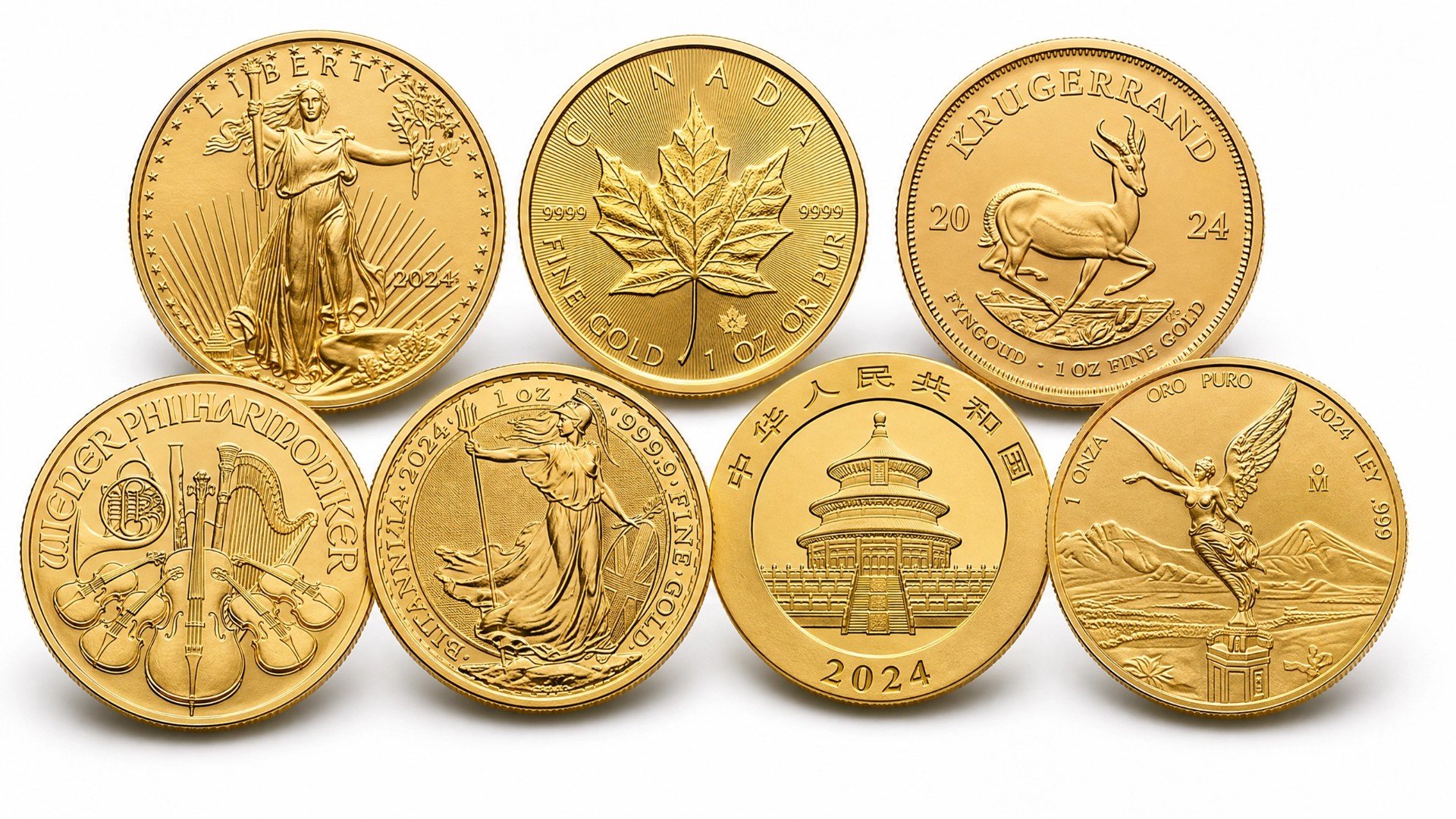
A gold bullion coin is a legal‑tender coin issued by a government mint. Popular examples include U.S. Gold Eagles, Canadian Maple Leafs, and South African Krugerrands. Bullion coins are bought mainly for their metal content but can also carry some numismatic premium related to design, mintage year, or collector demand.
Bullion coins track spot price like bars, but typically have higher premiums due to minting costs, advanced security features, and legal‑tender status. That higher premium buys you recognizability, easier resale, and strong anti‑counterfeit design.
Gold Bars vs Gold Coins: Side‑by‑Side Comparison
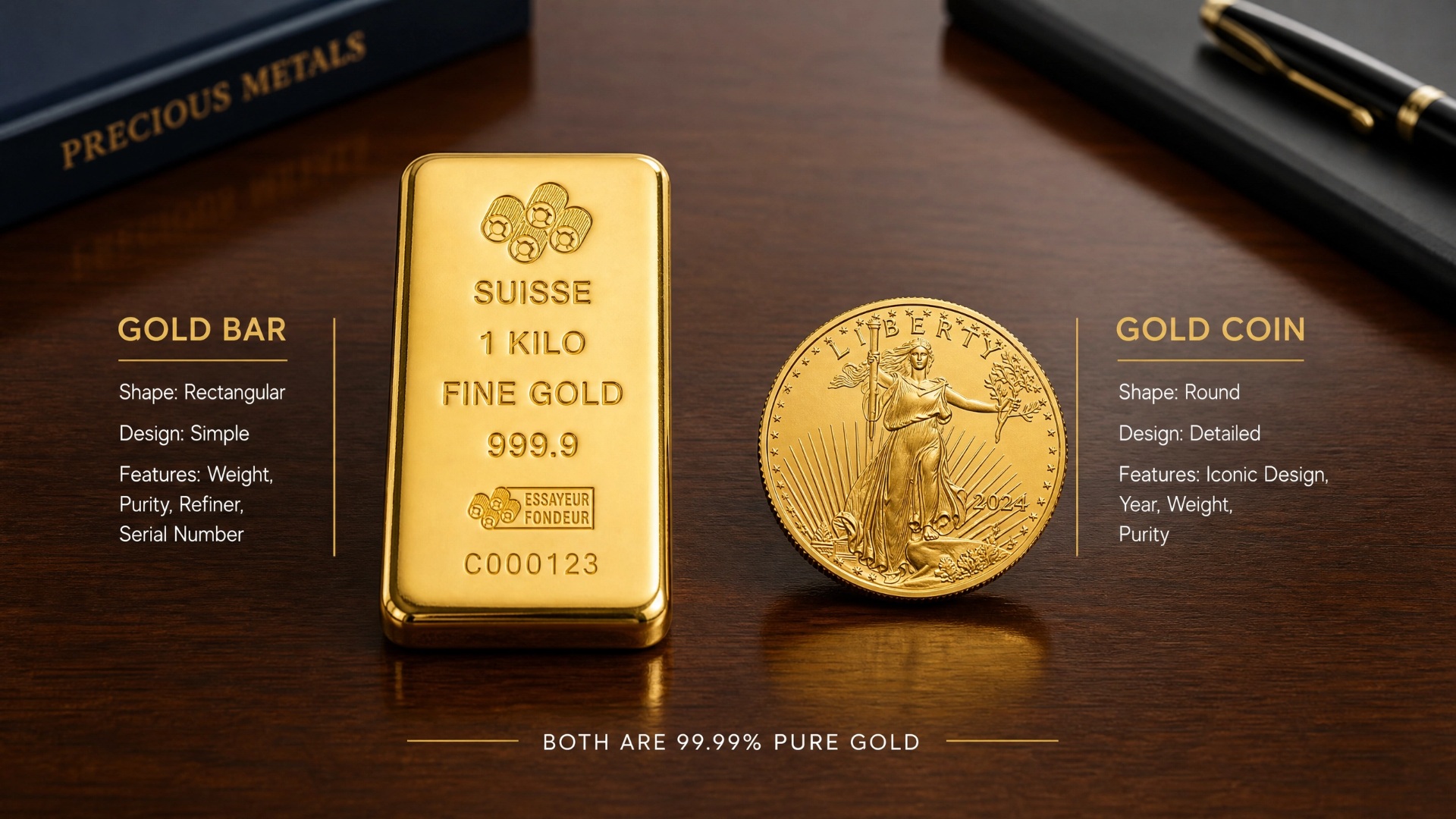
Gold Bars vs Gold Coins: Key Differences
| Feature | Gold Bars | Gold Coins |
|---|---|---|
| Typical premium over spot | Lower premium, closer to spot price. | Higher premium due to minting and design. |
| Spot price premium calculation | Bar premium = bar price − spot. | Coin premium = coin price − spot, usually higher. |
| Certification / backing | Often LBMA‑certified refinery bars. | Government‑minted, legal‑tender coins. |
| Liquidity | Best for larger, single transactions. | Generally easier to sell to more buyers. |
| Fractional options | Limited smaller bars, less recognized. | Wide range of fractional sizes (1/2, 1/4, 1/10 oz). |
| Counterfeit risk | Small bars frequently targeted by counterfeiters. | Modern coins have strong security features. |
| Numismatic vs bullion | Almost always pure bullion only. | Can be bullion coins or numismatic collector coins. |
| Best for | Bulk, long‑term stacking, low cost per ounce. | Small investors, flexibility, easy resale. |
Gold Bars vs Coins: Premiums and Spot Price
How Premiums Work on Bars and Coins
Almost every physical gold quote can be broken into two parts: the metal value at spot, and the extra you pay or receive around that level. The basic structure is:
Final price = current spot price + premium ± any additional numismatic value.
Gold bars carry lower spot price premiums because they cost less to manufacture per ounce and are sold primarily as raw bullion. Gold coins carry higher premiums because of minting, design, legal‑tender status, and security features.
The right choice depends on whether you value the lowest possible cost per ounce (bars) or maximum liquidity and recognizability (coins).
How to Calculate the Premium
To compare gold bars and coins using current market data:
- Find the live spot price of gold.
- Take the quoted price for the bar or coin.
- Use:
Premium % = (quoted price − spot price) ÷ spot price × 100%.
This simple calculation makes it easy to see whether you are paying a higher or lower spot price premium on each product.
Which Is More Liquid: Gold Bars or Gold Coins?

For most investors, gold coins are more liquid than gold bars. Government‑minted bullion coins such as the American Gold Eagle are widely recognized, easy to test, and accepted by both dealers and private buyers around the world.
Gold bars can also be very liquid, especially common sizes like 1 oz and 10 oz from well‑known LBMA refineries. However:
- Larger bars (such as 1 kg) appeal to a smaller pool of buyers.
- Small bars are more often counterfeited, so they may be scrutinized more heavily.
- You cannot sell half of a bar; you must sell the entire unit.
Coins generally win on frictionless resale, while bars work best when you plan intentional, larger transactions.
Pros and Cons of Gold Bars Compared to Coins
Advantages of Gold Bars
- Lower spot price premiums. Bars usually have smaller premiums over spot, making them attractive when your goal is to accumulate as many ounces as possible for each dollar you invest.
- Efficient for large allocations. Bars shine for investors building sizable positions and planning to hold for years or decades.
- LBMA‑certified options. Bars from LBMA‑approved refineries deliver strong assurances on purity, weight, and production quality.
Disadvantages of Gold Bars
- Less flexible liquidity. You cannot easily sell part of a 10 oz or 1 kg bar, so large bars limit your ability to raise smaller amounts of cash.
- Higher counterfeit exposure for small bars. 1 g to 10 g bars are commonly targeted by counterfeiters, requiring more careful verification.
- Fewer widely recognized fractional sizes. Small bars exist, but they are not as universally recognized as fractional bullion coins, which can slow resale.
Pros and Cons of Gold Coins Compared to Bars
Advantages of Gold Coins
- Outstanding liquidity. Bullion coins like the American Gold Eagle, Maple Leaf, and Krugerrand are among the easiest physical gold products to sell worldwide.
- Fractional sizes for smaller budgets. 1/10, 1/4, and 1/2 oz coins let you start with smaller dollar amounts and sell in precise increments.
- Security and authenticity. Modern bullion coins incorporate robust anti‑counterfeit features and enjoy legal‑tender backing, improving buyer confidence.
Disadvantages of Gold Coins
- Higher premiums over spot. You usually pay more per ounce for coins than for comparable bars, especially at fractional sizes.
- Numismatic vs bullion complexity. Some coins — such as those found in The Bullion Bank's numismatic collection — are primarily collectibles with values driven by rarity, not metal. Pure bullion coins are generally better suited for straightforward long‑term investing.
What Type of Gold Bullion Is Best for Small Investors?
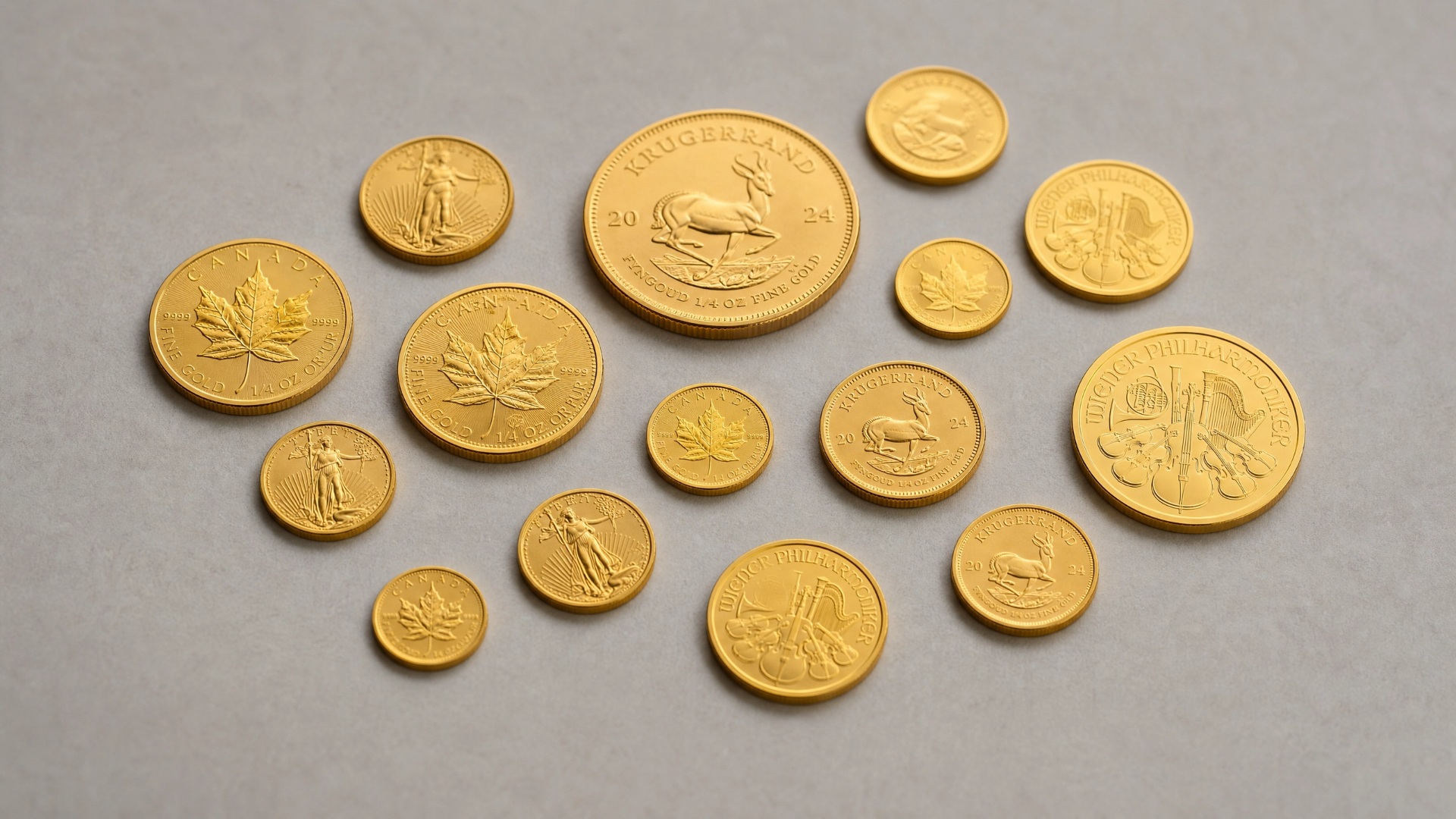
For most small investors and first‑time buyers, fractional bullion coins are usually the best starting point. They offer:
- Lower entry points; you can buy gold a fraction of an ounce at a time.
- High recognizability and strong liquidity when it is time to sell.
- Flexible portfolio management, because you can liquidate a single coin instead of a large bar.
Smaller bars can be a good addition once you are comfortable with the market and want to reduce your average premium per ounce. Many long‑term investors end up with a blend: coins for flexibility and daily liquidity, bars for cost‑efficient bulk stacking. Browse The Bullion Bank's full selection of gold bullion to compare current options across both formats.
How to Decide Between Coins and Bars When Buying Physical Gold
Five Key Questions to Ask
- What is your budget per purchase?
If your budget is modest and you prefer smaller steps, fractional coins are often more practical. If you routinely buy multiple ounces at a time, 1 oz or larger bars may be more efficient. - What is your expected holding period?
If you plan to hold for many years without selling partial amounts, bars are a strong fit. If you expect to sell in stages or may need smaller liquidity events, coins usually work better. - How important is fast liquidity?
If quick resale to many potential buyers is critical, coins have the advantage. If you can plan ahead and are comfortable mainly selling back to a dealer, bars are fine. - How will you store the gold?
Bars are more compact for large stacks, while coins are easier to store in smaller denominations and are more convenient to handle physically. - What is your comfort level with counterfeit risk?
If you are very risk‑averse, government‑minted bullion coins are generally the safer choice. If you are comfortable verifying LBMA bars and dealing with reputable dealers, bars can be equally sound.
Simple "If → Then" Rules
- If you want the lowest cost per ounce and plan to hold a larger position long term, favor gold bars.
- If you value flexibility, easy partial sales, and global recognizability, favor gold coins.
- If you are just starting with physical gold, consider beginning with fractional bullion coins, then layering in bars once your allocation grows and your strategy is clearer.
Long‑Term Storage: Home Safe vs Bank Deposit vs Insured Vault

Storing Gold at Home
Home storage typically means keeping your bars or coins in a high‑quality safe that is bolted down, discreetly located, and preferably fire‑rated. The advantages are:
- Immediate access in an emergency.
- Full privacy and direct control over your holdings.
The trade‑offs include higher responsibility for physical security and insurance, and a potential increase in personal risk if too many people know you keep bullion at home.
Bank Safety Deposit Box
A bank safety deposit box is a classic storage option for smaller to medium collections:
- Strong physical security and professional infrastructure.
- A layer of discretion away from your residence.
However, access is limited to bank hours, there is usually a rental fee, and the bank is a third party that you do not fully control.
Professional Insured Vault
A professional insured vault is designed specifically for high‑value assets, including bullion:
- The highest level of physical security and insurance coverage, especially for larger holdings.
- Options for fully allocated storage where specific bars or coins are held in your name.
The trade‑off is reduced immediacy of access and an additional storage fee, but many serious long‑term investors consider it the most robust solution.
Regardless of whether you own bars or coins, a thoughtful storage plan is essential for preserving your wealth and managing practical risks over the long term.
Compliance and Reporting: IRS Considerations (High‑Level)
In the United States, profits from selling physical gold may be subject to capital gains tax, and certain types and quantities of bullion transactions can trigger IRS reporting requirements. The exact treatment depends on factors like product type, holding period, and the nature of the transaction. The IRS provides guidance on capital gains that investors may find useful as a starting reference.
Dealers such as The Bullion Bank can provide clear invoices and transaction records, but they do not provide tax advice; investors should consult a qualified tax professional about reporting obligations and optimal holding strategies.
Why Work With a Licensed Dealer Like The Bullion Bank?
The Bullion Bank is licensed, insured, and bonded, specializing in gold coins, gold bars, silver, and jewelry. It is one of Northern Virginia's largest gold dealers, serving investors across the Washington DC metro area from physical locations in Chantilly and Vienna, Virginia.
Working with a licensed local dealer offers several advantages:
- Verified authenticity on LBMA‑certified bars and government‑minted bullion coins.
- Transparent pricing that clearly explains spot price, premiums, and dealer spreads.
- In‑person testing, immediate settlement, and assistance with mixed items such as scrap gold and jewelry through our cash for gold service.
This combination of local presence, regulatory oversight, and educational support strengthens trust and supports better long‑term decisions. Learn more about The Bullion Bank and what sets us apart as a licensed dealer.
FAQ: Clear, Snippet‑Ready Answers
Should I buy gold bars or gold coins for long‑term investing?
For pure long‑term stacking at the lowest cost per ounce, gold bars usually make more sense. For flexibility and easier resale in smaller amounts, gold coins are typically the better choice.
Many investors start with fractional bullion coins for accessibility and then add bars as their portfolio and confidence grow.
What are the pros and cons of gold bars compared to coins?
Gold bars offer lower premiums and efficient bulk storage but are less flexible to sell in small portions. Gold coins offer stronger liquidity and recognizability but require paying higher premiums over spot.
Bars tend to suit larger, long‑term allocations, while coins are often preferred when you anticipate staged sales or smaller liquidity needs.
Which is easier to sell later: gold bars or coins?
Gold coins are generally easier to sell later than gold bars. They benefit from government backing, standard sizes, and strong global recognition among dealers and private buyers.
Bars are also saleable, particularly in common sizes, but large bars and obscure refineries can narrow your potential buyer base.
What type of gold bullion is best for small investors?
Fractional bullion coins are usually best for small investors. They allow smaller purchase amounts, high liquidity, and the ability to sell in precise increments without touching your entire position.
Some small investors later add smaller bars to reduce average premiums once they are more comfortable with the market.
How do I decide between coins and bars when buying physical gold?
Decide based on your budget, holding period, liquidity needs, storage plan, and comfort with counterfeit risk. Bars favor cost efficiency and large, long‑term positions, while coins favor flexibility and fast resale.
If you expect to sell in stages or are uncertain about timing, coins are often the more forgiving choice.
Do gold coins have higher premiums than gold bars?
Yes, gold coins generally have higher premiums than gold bars. Their pricing reflects additional minting costs, design, security features, and legal‑tender status.
This is why many high‑allocation investors lean toward bars once they have established a solid base of liquid coins.
Are gold bars more likely to be counterfeit than coins?
Small gold bars are more frequently counterfeited than modern bullion coins. Government‑minted coins include advanced security features and are easier for dealers and buyers to verify quickly.
Buying LBMA‑certified bars and purchasing through a licensed dealer greatly reduces counterfeit risk for bar buyers.
Next Step: Get a Personalized Bars vs Coins Plan
Choosing between gold bars and gold coins is easier when you match the format to your budget, time horizon, and comfort with storage and liquidity. The Bullion Bank's licensed team can help you understand real‑time spot pricing, compare premiums on LBMA‑certified bars and leading bullion coins, and design a long‑term plan that fits your goals.
Call The Bullion Bank at 703‑705‑5151 or contact us online to visit our Chantilly and Vienna, VA locations, see gold bars and coins in person, ask questions, and start building your long‑term bullion strategy with confidence.