Published by
Gold Expert
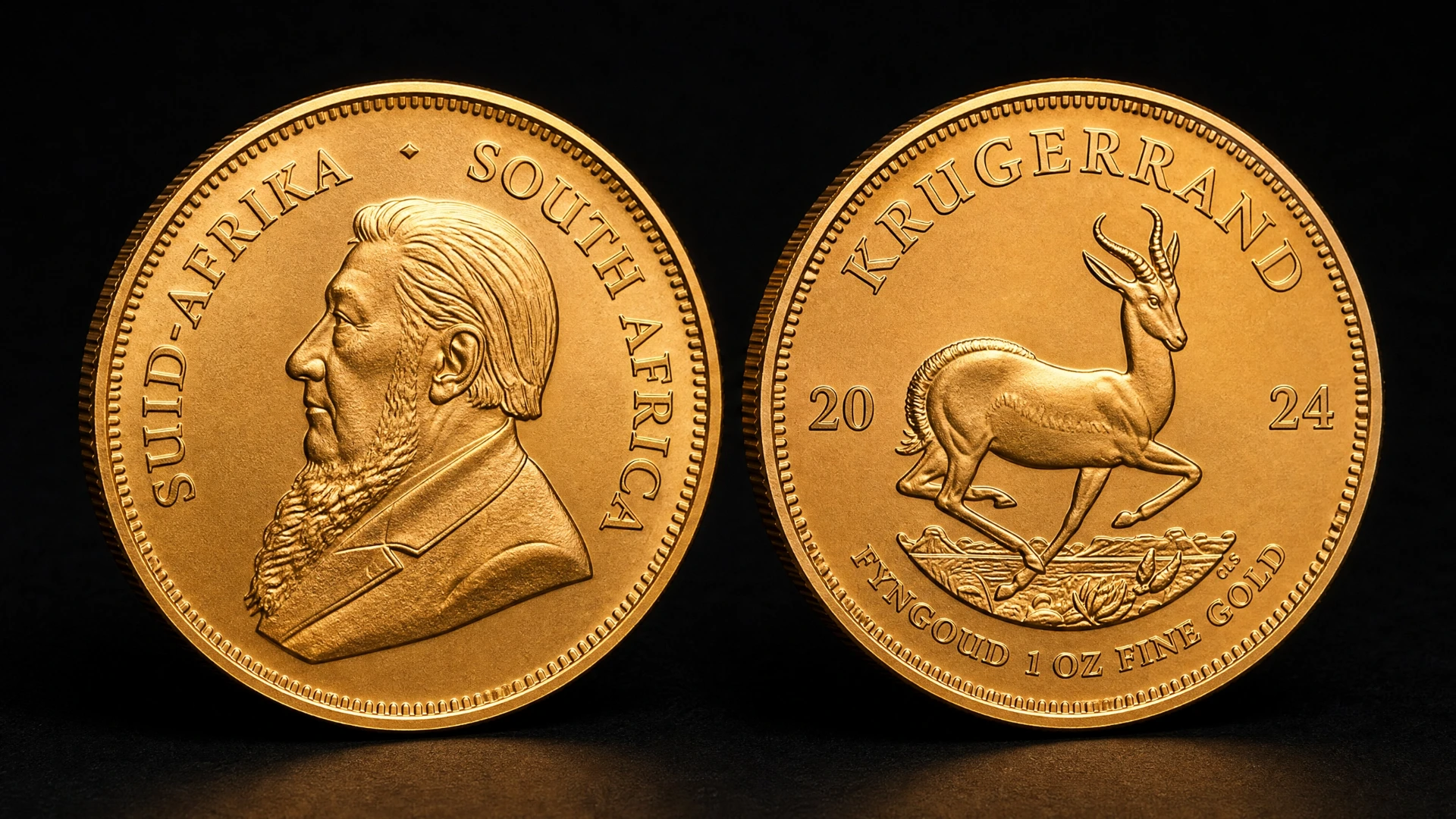
Quick summary: What is the Krugerrand?
The Krugerrand is a South African gold bullion coin first minted in 1967 to make private ownership of gold simple and tradable.
A bullion coin is valued primarily for its metal content rather than a face value; the Krugerrand contains one troy ounce of fine gold embedded in a durable copper alloy and trades based on the gold spot price plus a dealer premium.
Why it still matters
Beyond being the first modern bullion coin, the Krugerrand still matters because it set the template for privately traded gold and remains one of the most recognized, liquid gold coins worldwide.
Its long market history means buyers and dealers broadly recognize its specifications, which supports easier resale and more dependable pricing behavior compared with lesser-known issues.
Brief history of the South African Krugerrand
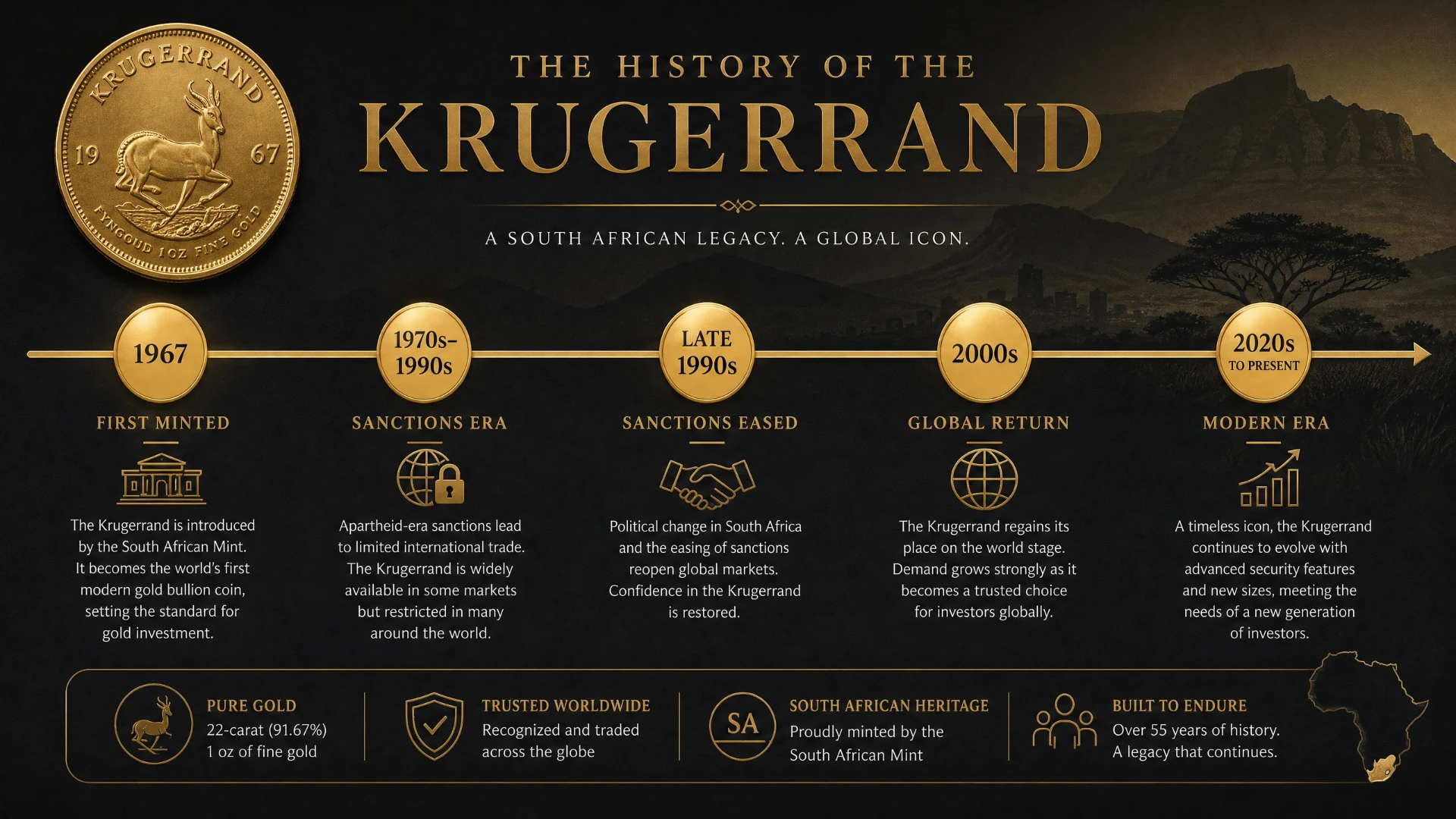
The Krugerrand was introduced in 1967 as the first modern bullion coin designed specifically for private investors.
South Africa wanted a coin that made owning physical gold straightforward, pairing a recognizable design (Paul Kruger on the obverse, a springbok antelope on the reverse) with bullion-standard content produced by the Rand Refinery, established in 1920.
During the 1970s–1990s, international sanctions and political pressures reduced Krugerrand availability in some markets.
When sanctions eased, the coin returned to global markets and regained its place among the world's most traded bullion coins.
Today it remains a mainstream option for investors and collectors.
Krugerrand specifications and types
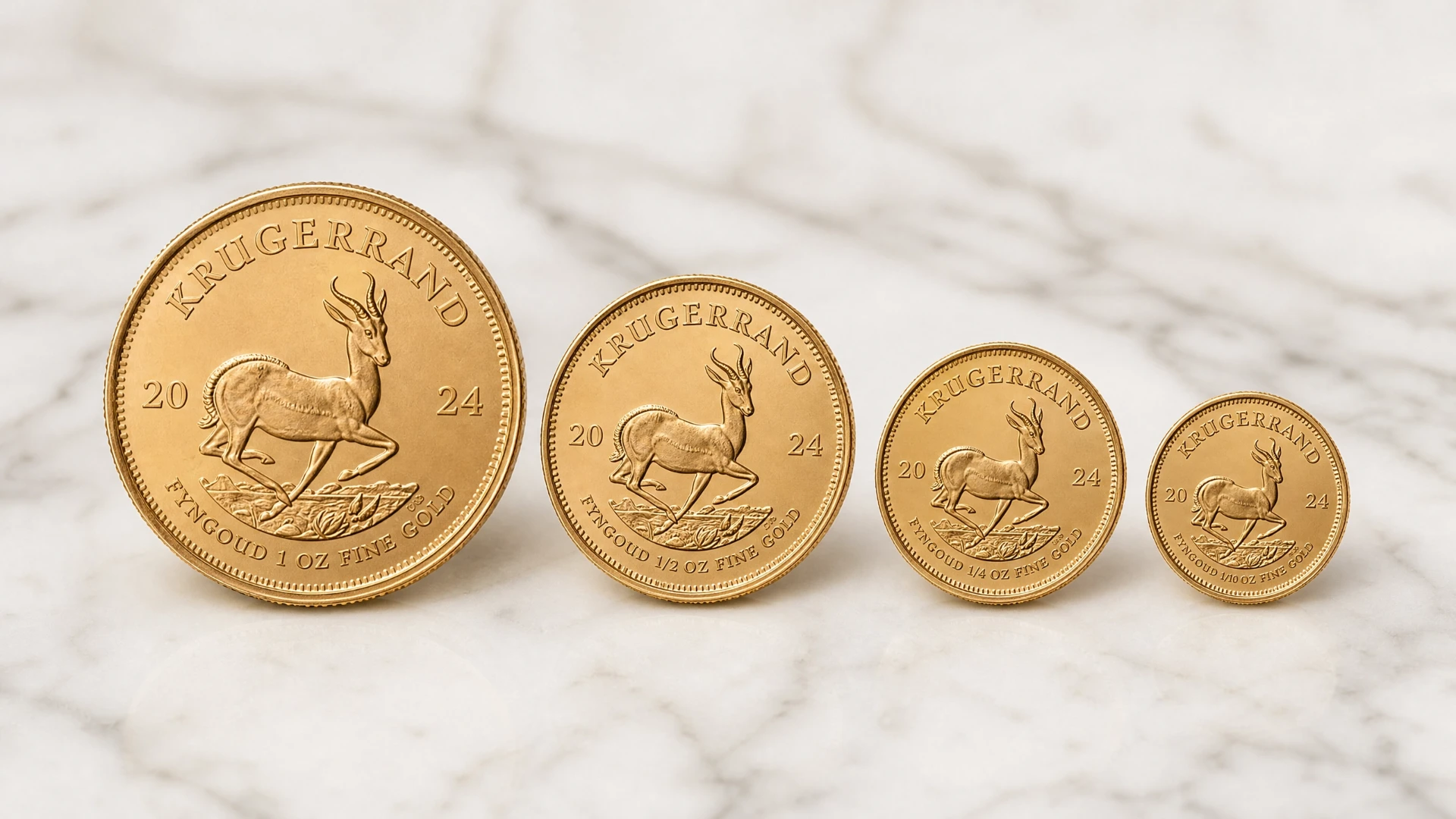
The standard Krugerrand contains one troy ounce of fine gold.
A troy ounce is the precious-metals weight unit commonly used in bullion markets.
To improve durability, the coin is alloyed with copper; the coin therefore weighs slightly more than one troy ounce while containing exactly one troy ounce of pure gold.
Fractional sizes (1/2 oz, 1/4 oz, 1/10 oz) and proof issues exist for collectors, and you can browse our South African gold coin selection to compare current inventory across sizes.
Proof Krugerrands are struck with special finishes and carry higher premiums.
When buying, confirm whether the listing is for a bullion (investment) strike or a proof/collector issue, as premiums and resale behavior differ.
Why investors still buy Krugerrands
Krugerrands remain popular for practical reasons.
They are widely recognized globally, which supports liquidity—the ability to sell quickly.
The design is familiar to dealers and buyers, reducing friction at resale.
Historically, Krugerrands have sometimes offered competitive premiums over spot, depending on supply and demand.
There are trade-offs.
The coin has no face value; its worth is tied to metal content and market price.
Past political history affected perception in some markets, and fractional coins command higher per-ounce premiums.
Evaluate these factors alongside goals like diversification, portability, and ease of resale.
Krugerrand vs American Eagle (clear comparison)
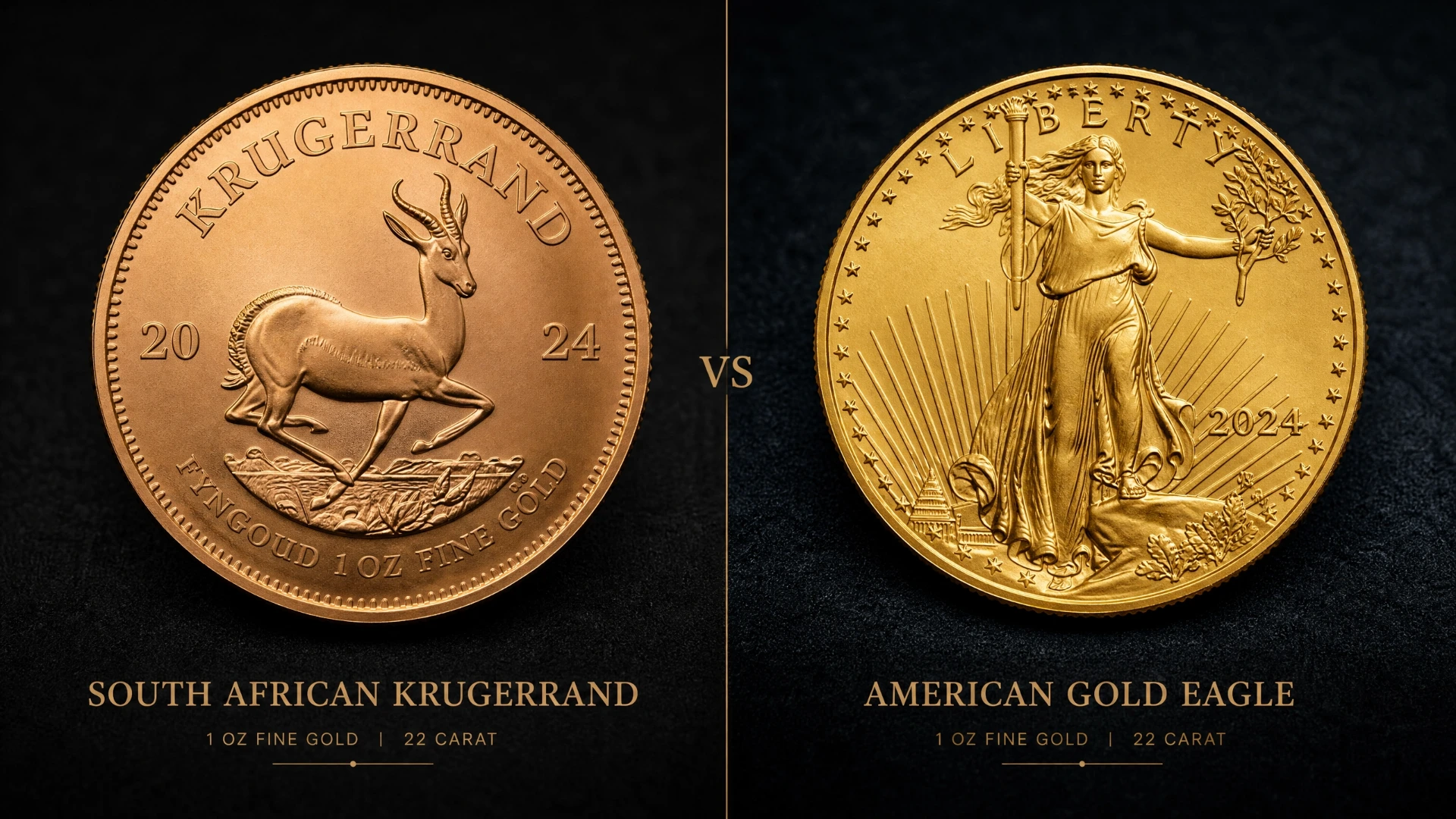
When comparing the Krugerrand to the American Eagle, several differences matter:
- Purity and composition: Krugerrand contains one troy ounce of fine gold alloyed primarily with copper for durability. The American Eagle is 22-karat gold (91.67% pure) with small amounts of silver and copper.
- Legal tender: The American Eagle is a U.S. legal-tender coin with a nominal face value, while the Krugerrand has no face value and its market price follows the gold content.
- IRA eligibility and tax context: American Eagles are commonly used inside certain individual retirement accounts (IRAs) because they meet IRS specifications. Krugerrands may or may not qualify depending on the IRA custodian and coin conformity, so always confirm with your provider.
- Premiums and resale: Premiums over spot vary by coin type, availability, and market. In the U.S., American Eagles often have strong recognition; Krugerrands remain liquid but buyback prices can differ by dealer.
Choose Krugerrands if you prioritize a globally recognized bullion option and sometimes lower premiums.
Choose American Eagles if you prefer coins with U.S. legal-tender status, and you can view our U.S. gold coin listings for current availability and pricing.
Many investors hold both for diversification.
How Krugerrand pricing works (spot, premium, dealer fees)
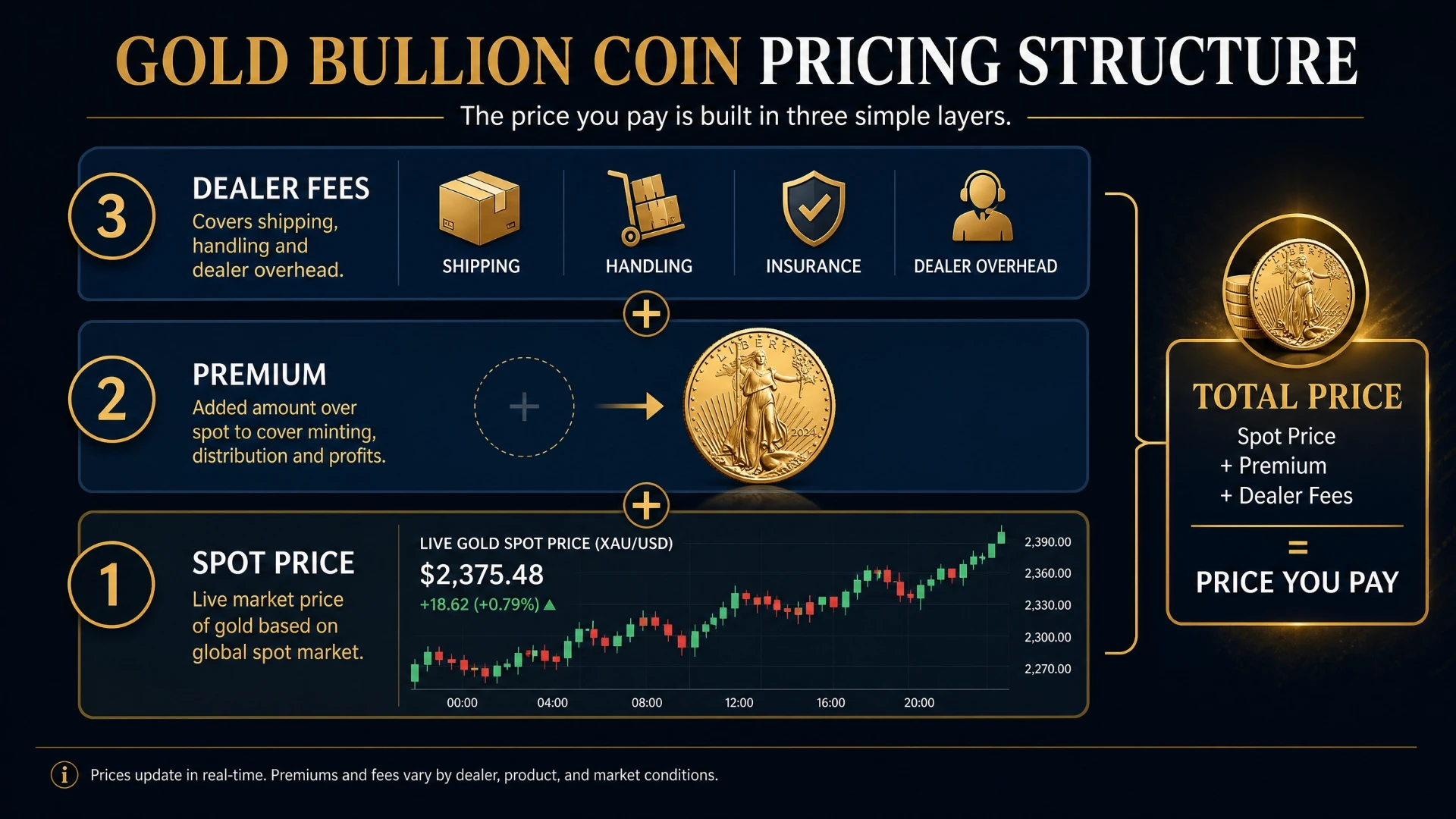
Spot price is the current market price for one troy ounce of gold, quoted in real time.
A premium is the additional amount a buyer pays above spot to cover minting, distribution, and dealer margin; dealer fees and shipping can add on top of the premium.
For example, if spot is $2,100 per troy ounce and a dealer charges a $75 premium, the coin cost equals $2,175 plus any shipping or payment fees.
Premiums rise for fractional sizes, proof coins, and during periods of high demand.
Dealers reference live market feeds when setting prices, and these feeds typically track the LBMA Gold Price benchmark.
Factors that increase premiums include short supply, collectible status, order size, and insurance or shipping costs.
Comparing premiums across multiple licensed dealers—online and local—helps secure a fair price.
How to authenticate and inspect a Krugerrand
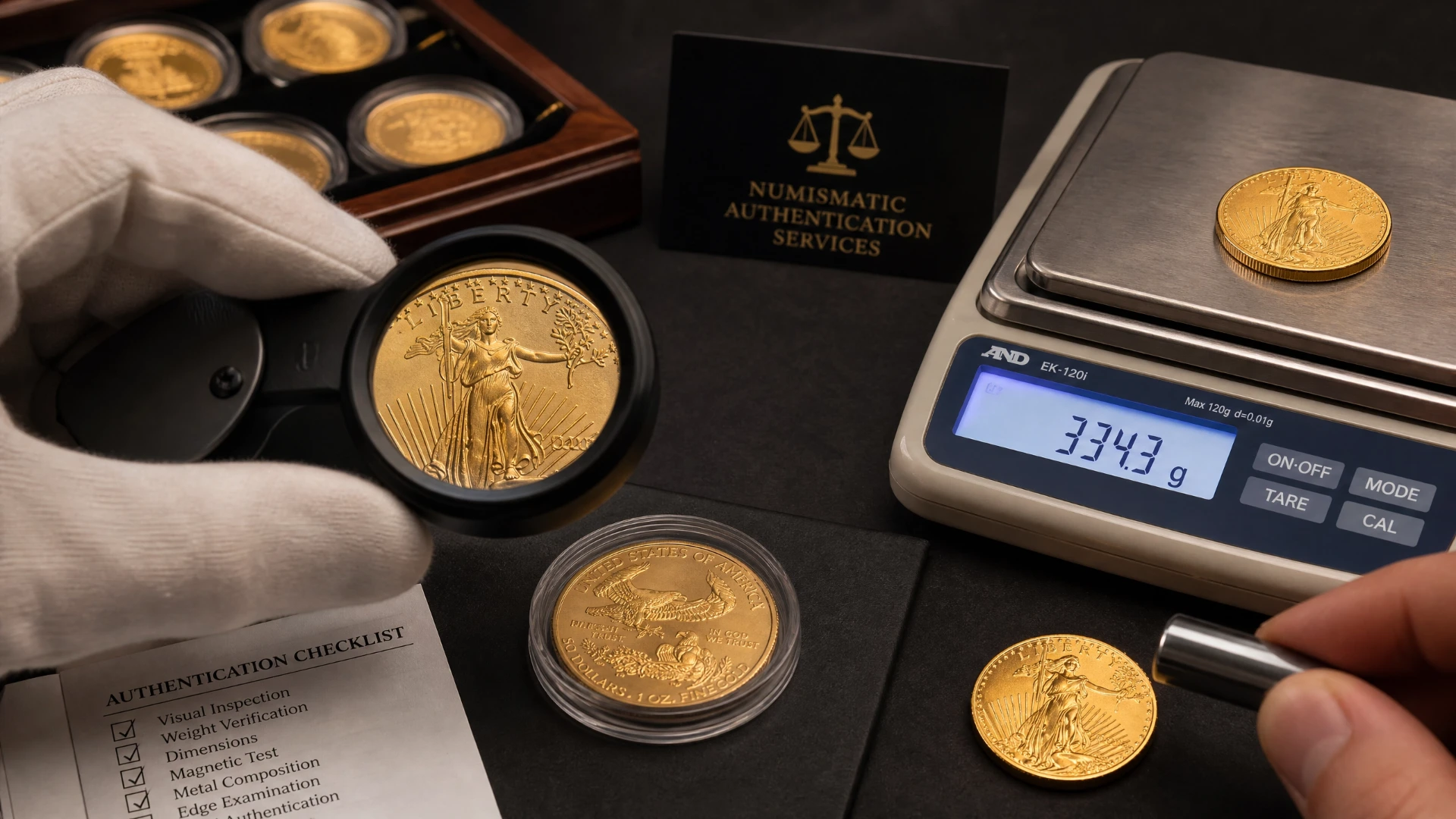
Start with basic checks:
- Verify weight and dimensions with a calibrated scale and caliper.
- Inspect visual details for sharp relief, correct lettering, and consistent minting features.
- Use a magnet test as a quick screen; gold is non-magnetic, so a strong magnet should not attract the coin.
Next, consider advanced checks:
- XRF testing (X-ray fluorescence) measures metal composition non-destructively and is often available at licensed dealers.
- Third-party grading and encapsulation from services such as PCGS and NGC can provide authentication for collectible Krugerrands and aid resale.
Avoid sellers who refuse reasonable verification, provide only blurry photos, or pressure urgent purchases without documentation.
Where to buy Krugerrands in the USA (including buying from The Bullion Bank)
Buyers can purchase Krugerrands from reputable online dealers or licensed local dealers.
Online stores offer broad selection and insured shipping, while local dealers let you inspect coins in person and often provide immediate payment for sellbacks.
If you're in the DMV region (DC, Maryland, and Virginia), Northern Virginia offers in-person options in Chantilly and Vienna where licensed dealers such as The Bullion Bank provide transparent pricing, XRF authentication, and the chance to see inventory before purchasing.
Visiting a physical location can be especially useful for first-time buyers who want hands-on reassurance; you can find hours and directions for both showrooms on our store locations page, and The Bullion Bank also operates an online store with insured shipping for customers nationwide.
Buying from a licensed dealer — checklist
- Confirm the dealer is properly licensed and ask about professional affiliations or certifications.
- Request a written authenticity guarantee and understand the return window.
- Verify that prices are quoted as spot plus premium and that shipping is fully insured.
- Ask whether the dealer offers buyback for the coins you are purchasing and on what terms.
Wherever you buy, keep invoices and certificates, and insure shipments on delivery.
Selling Krugerrands — liquidity and selling to The Bullion Bank
Resale value depends on condition, the current spot price, and the buyer's pay scale.
Dealers buy at a percentage that accounts for spot, condition, and volume, and small quantities often see slightly different pricing than large lots.
In the DMV, selling in Vienna or Chantilly to a licensed local dealer such as The Bullion Bank provides immediate evaluation and payout based on current spot, condition, and volume; our gold buyback program keeps documentation to ensure the best outcome.
For online sellback, choose dealers with transparent, spot-based offers and clear insured shipping instructions.
Taxes and legal considerations for U.S. buyers
Selling physical gold generally triggers capital gains tax on profit, which is the difference between sale price and purchase price.
Your tax rate depends on your holding period and overall tax situation, so it is wise to consult a tax professional.
The IRS sets purity and product standards that affect which coins qualify for precious-metal IRAs, and you should confirm with your IRA custodian whether Krugerrands meet the requirements for your specific account.
State-level taxes and reporting rules vary, so seek guidance for your local situation.
Quick buying guide — step-by-step for first-time buyers
- Research current gold spot price and typical premiums for Krugerrands.
- Compare licensed dealers online and locally; ask about authenticity checks, return policy, and shipping insurance.
- Inspect the coin in person or request high-resolution photos and documentation for online purchases.
- Complete the purchase with an insured shipping option or buy in person at a licensed dealer in your area.
- Keep receipts and paperwork for future resale or tax records.
Conclusion — is the Krugerrand right for you?
Krugerrands remain a solid, liquid choice for investors seeking tangible gold exposure and global recognition.
They suit investors who value portability and established market acceptance in addition to gold's long-term store-of-value reputation.
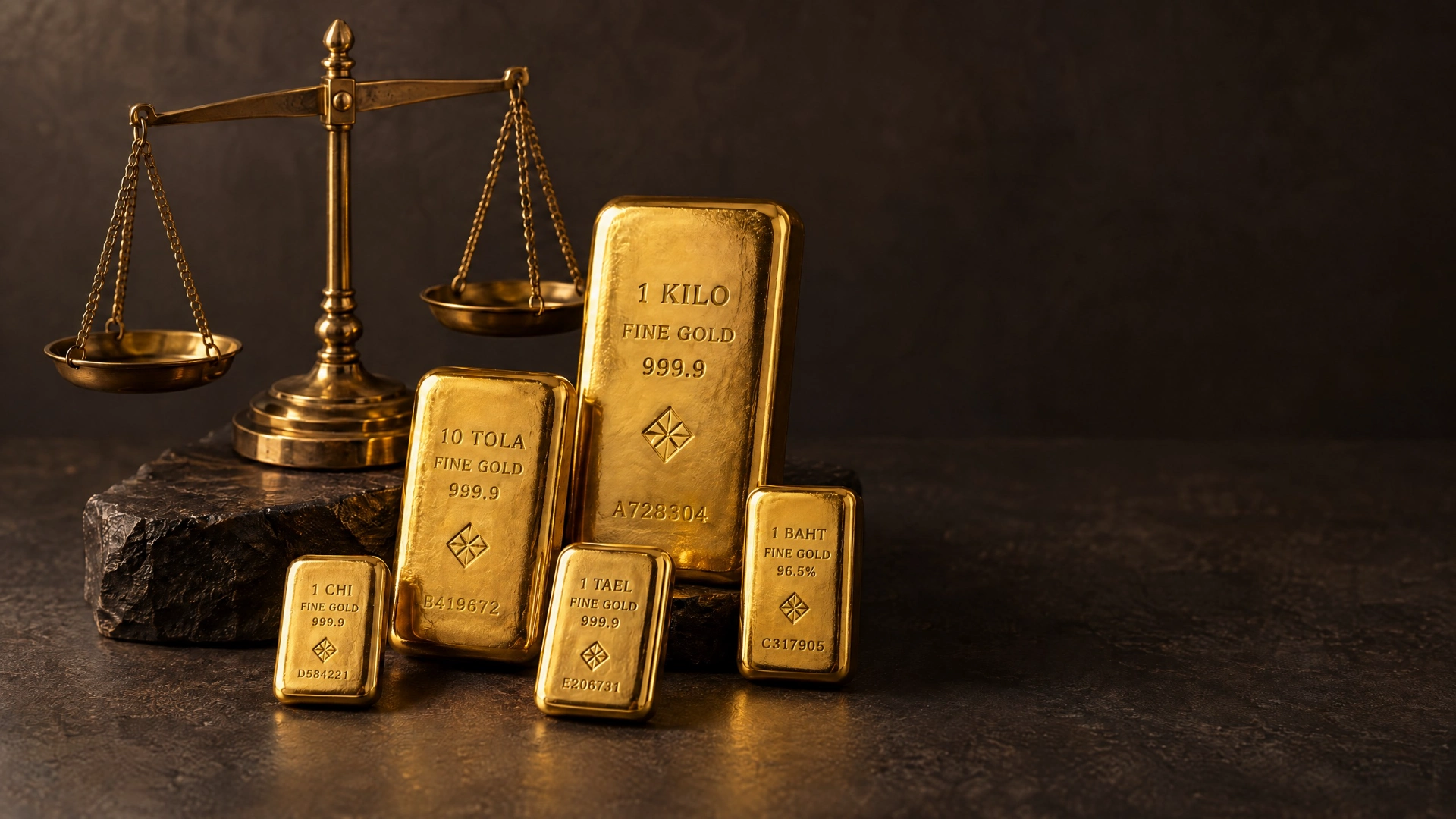
Consider mixing types of bullion—Krugerrands, American Eagles, or gold bars—to balance premiums, IRA eligibility, and resale flexibility.
Why choose The Bullion Bank
If you're evaluating where to buy or sell Krugerrands, The Bullion Bank offers practical advantages that matter once you move beyond basic research.
We operate as a licensed dealer with two physical locations in Northern Virginia and provide in-house XRF testing for on-the-spot authentication, transparent spot-plus-premium pricing, and a documented buyback policy for qualified purchases; you can read more about our background on our company history page.
Those capabilities shorten the verification process, reduce uncertainty for first-time buyers, and make resale smoother for investors who want trusted, local liquidity in the DMV.
FAQ
Q: What is a Krugerrand?
A: A Krugerrand is a South African gold bullion coin first issued in 1967 that contains one troy ounce of fine gold and trades based on the gold spot price plus a dealer premium.
Q: Is a Krugerrand a good investment?
A: It can be a good choice for many investors because Krugerrands are liquid and widely recognized; whether it is right for you depends on your goals, diversification plans, and time horizon.
Q: How does a Krugerrand compare to an American Eagle?
A: Krugerrands contain one troy ounce of fine gold and have no face value, while American Eagles are 22-karat U.S. legal-tender coins. These differences influence IRA eligibility, typical premiums, and sometimes resale behavior.
Q: How do dealers price Krugerrands?
A: Dealers add a premium over the current spot price to cover costs and profit, and premiums vary by demand, coin condition, and whether the coin is fractional or proof. Many dealers reference live gold market data when setting prices.
Q: Can I buy Krugerrands in the USA?
A: Yes. Reputable online dealers sell Krugerrands with insured shipping, and licensed local dealers in the DMV region offer in-person purchases and authentication. For in-person buying, The Bullion Bank has two Northern Virginia locations: Chantilly — 4086 Airline Pkwy, Chantilly, VA 20151, (703) 705-5151, Mon–Fri 11am–6pm, Sat 11am–5pm; and Vienna — 131 Maple Ave W, Vienna, VA 22180, (703) 705-5252, Mon–Fri 11am–6pm, Sat 11am–5pm; Sunday Closed.
Q: How can I authenticate a Krugerrand?
A: Use weight and dimension checks, visual inspection, and a magnet test as initial screens, then rely on XRF testing or third-party grading for definitive verification. Buying from licensed dealers adds another layer of protection.
Q: Are Krugerrands subject to capital gains tax in the U.S.?
A: Yes; selling physical gold generally triggers capital gains tax on the profit, and your rate depends on how long you held the coin and your overall tax situation.
Q: Where can I sell my Krugerrand near me (DMV)?
A: Licensed dealers in Northern Virginia offer in-person evaluations and buybacks with real-time valuation. The Bullion Bank buys Krugerrands at its Chantilly and Vienna locations: Chantilly — 4086 Airline Pkwy, Chantilly, VA 20151, (703) 705-5151; Vienna — 131 Maple Ave W, Vienna, VA 22180, (703) 705-5252. Hours at both locations are Mon–Fri 11am–6pm and Sat 11am–5pm; Sunday Closed.
Q: Are fractional Krugerrands worth it?
A: Fractional Krugerrands make gold accessible at lower entry cost but typically carry higher premiums per ounce, so they are useful for smaller purchases yet more expensive on a per-ounce basis.
Q: Can I hold Krugerrands in an IRA?
A: Some Krugerrands may qualify for precious-metal IRAs if they meet IRS purity and product standards, but you should confirm with your IRA custodian before funding an account with them.
Ready to Buy or Sell Your Krugerrand?
Ready to inspect Krugerrands in person or get a live price?
Visit The Bullion Bank at:
- Chantilly: 4086 Airline Pkwy, Chantilly, VA 20151 | (703) 705-5151 | Mon–Fri 11am–6pm, Sat 11am–5pm, Sun Closed
- Vienna: 131 Maple Ave W, Vienna, VA 22180 | (703) 705-5252 | Mon–Fri 11am–6pm, Sat 11am–5pm, Sun Closed
Or browse Krugerrands in our online store with insured shipping.
Call our licensed-dealer team for a live quote or to schedule an in-store appraisal.