Published by
Gold Expert
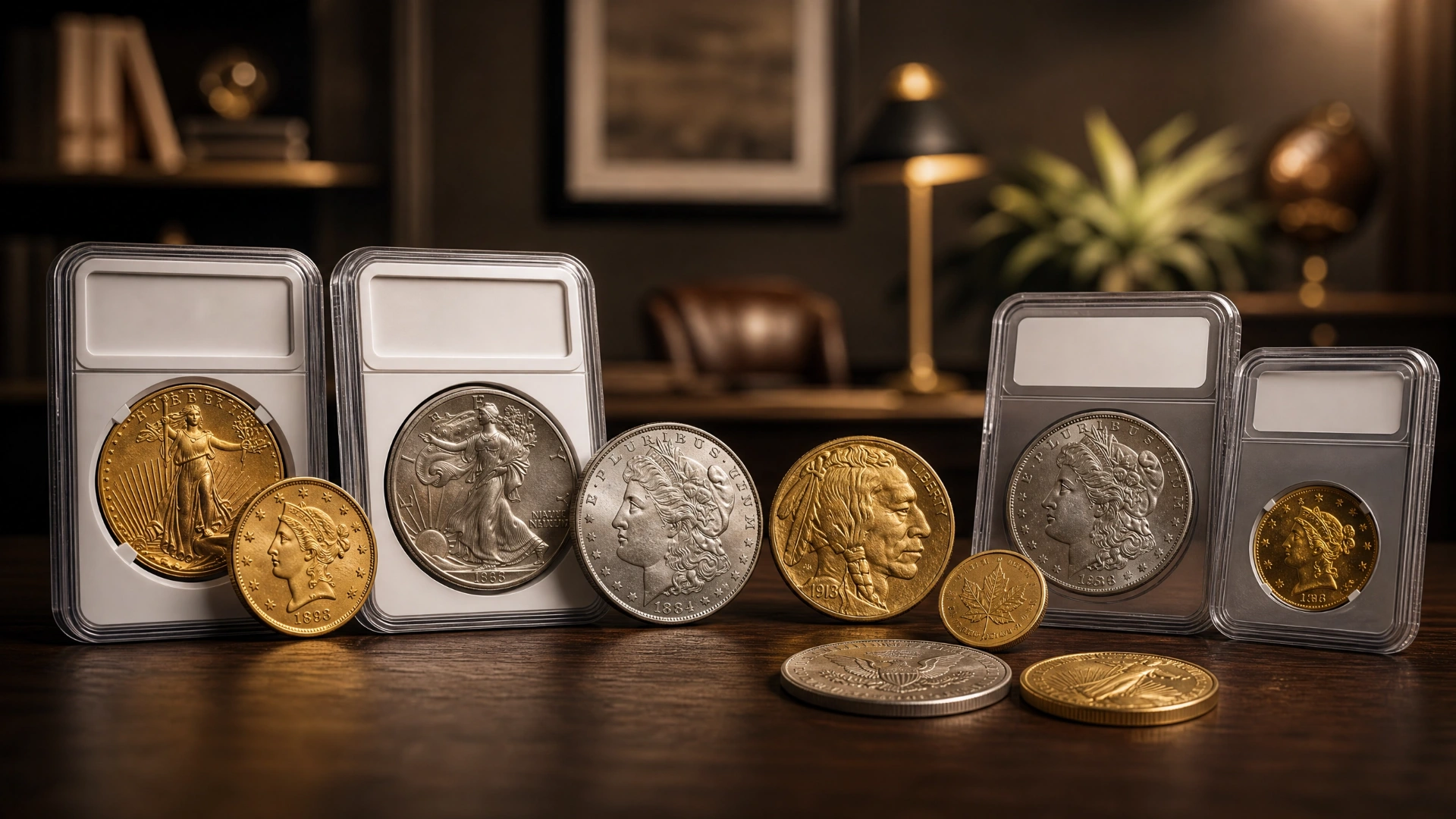
This article explains coin grading in clear terms and shows why grade matters for investors, not just collectors. You will see how grading works, how it affects value and liquidity, and when it makes financial sense to grade a coin before selling or buying.
The Bullion Bank serves both local clients in Northern Virginia and online buyers nationwide, so the guidance here applies whether you prefer in-person visits or insured shipping. If you are in the DMV region, you can also use these concepts when you visit our Chantilly or Vienna locations for an appraisal or to review graded coins in stock.
What is coin grading?
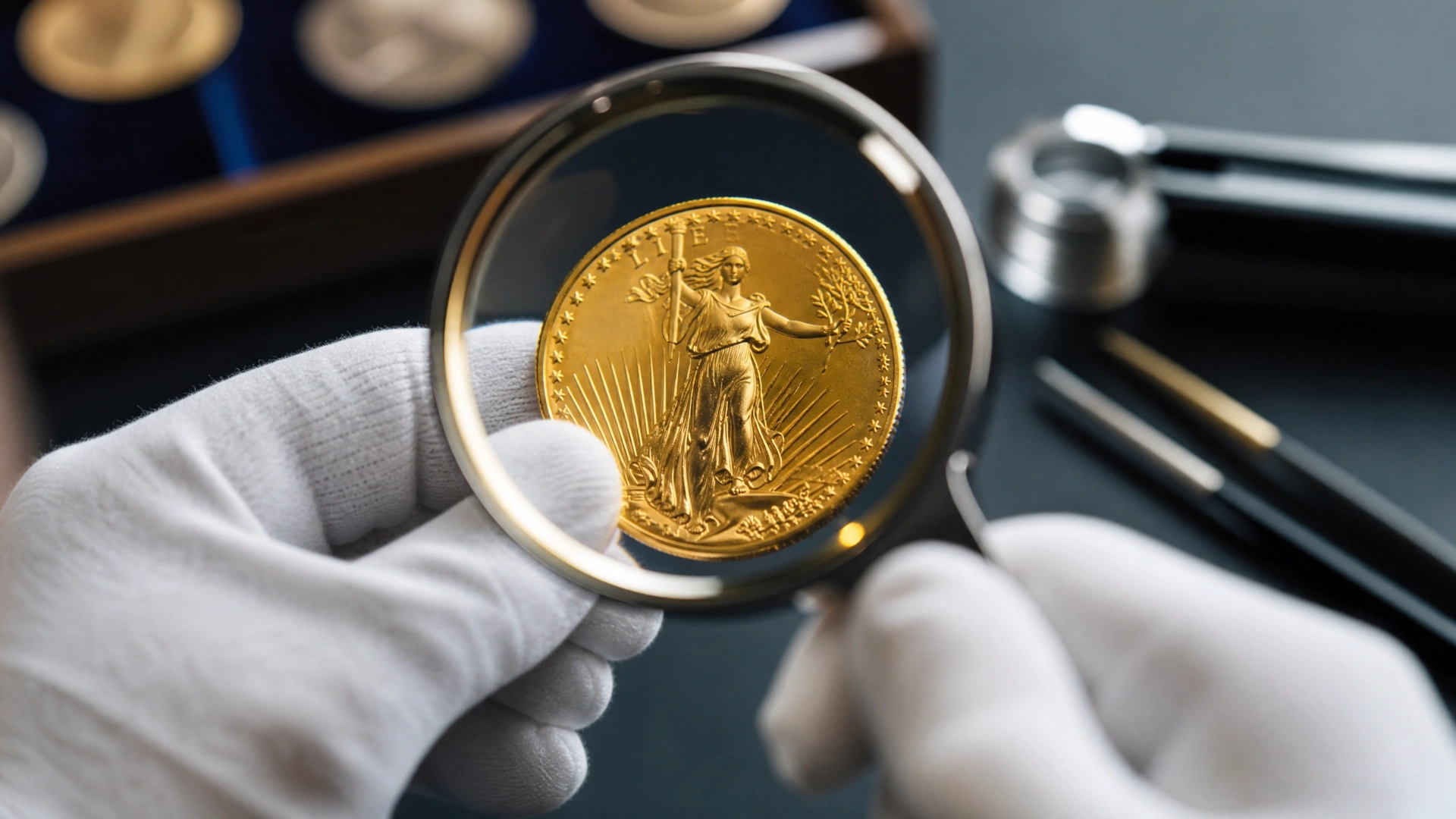
Coin grading is the professional assessment of a coin's condition and authenticity, expressed as a standardized grade. Grade is different from face value or metal content; it describes the coin's state of preservation and is a major factor in market value, especially for numismatic (collectible) coins.
Bullion refers to coins or bars valued primarily for their metal content, usually tracked against the spot price, which is the live market price for immediate delivery of a metal. Numismatic coins carry extra value because of their rarity, condition, and collector demand, so precise grading is critical when you browse our numismatic coin collection or sell pieces you already own.
Professional grading companies examine coins under controlled lighting and magnification, then seal them in tamper-evident holders (often called slabs) with a certification label and unique number. This independent opinion, guided by standards maintained through groups like the American Numismatic Association, reduces disputes between buyers and sellers and makes it easier to trade higher-value coins confidently.
How grading systems work
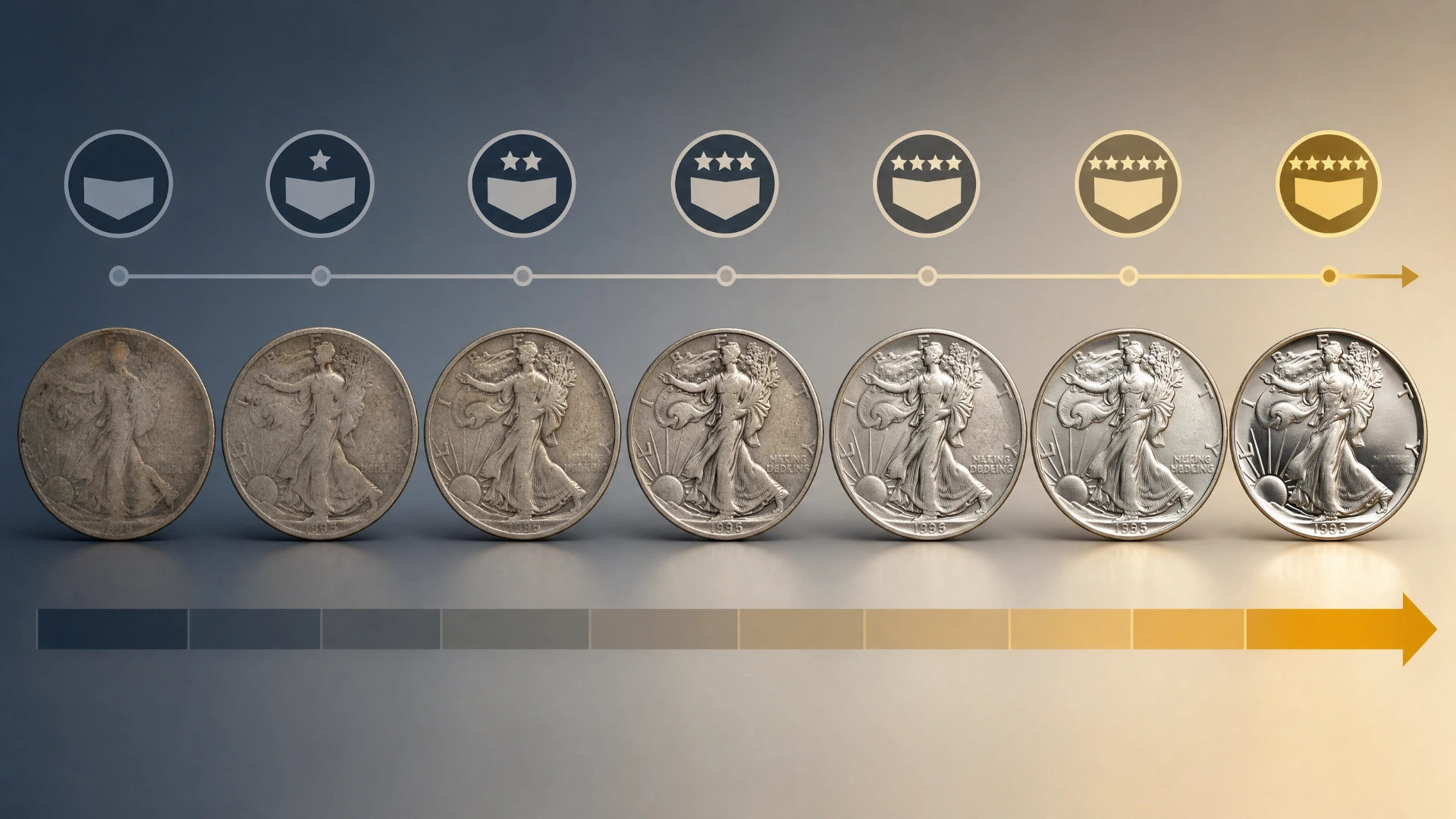
The industry standard grading method is the Sheldon 70-point scale, where grades run from 1 (poor) to 70 (perfect). Grades are commonly abbreviated: MS (Mint State) for uncirculated coins, PF or PR (Proof) for specially struck coins with mirror-like surfaces, and AU (About Uncirculated) for pieces showing only slight wear.
Grading considers several technical criteria: strike (how sharply the design was impressed), surface condition (marks, scratches, and contact marks), luster (how light reflects from the metal), and color or toning. Wear on high points of the design, signs of cleaning, or damage also affect the final grade.
Professional graders compare each coin to reference standards and to other known examples before assigning a final numeric grade. Even small grade differences can translate into noticeably different market prices, especially in higher ranges such as MS63 versus MS65.
Major grading services: PCGS vs NGC (comparison)
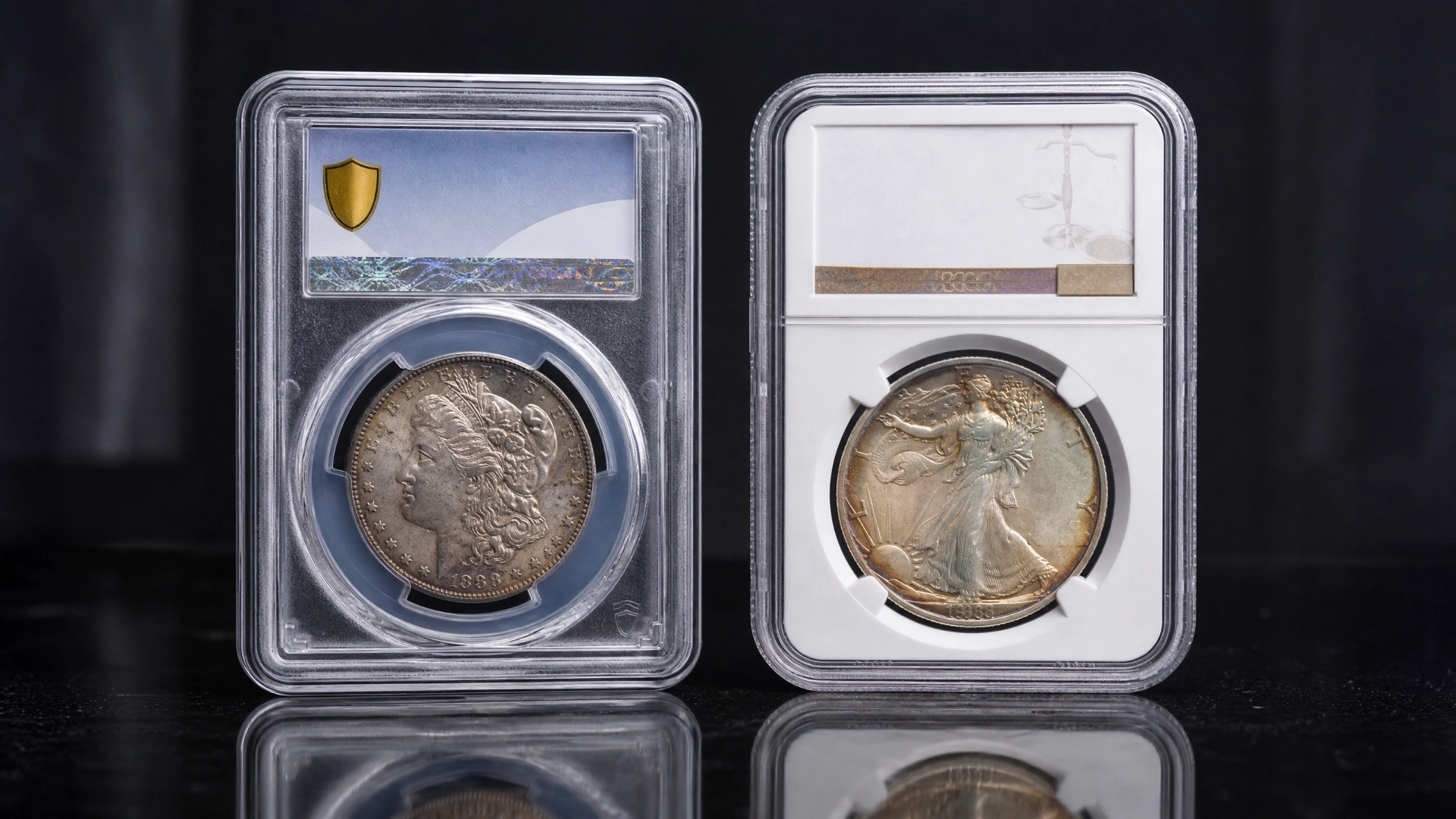
Two of the most widely recognized third-party grading services are PCGS (Professional Coin Grading Service) and NGC (Numismatic Guaranty Company). Both provide certification, tamper-evident holders, and online databases where you can verify a coin's certification number and grade.
For investors, the most important point is market recognition and liquidity, not subtle differences in branding. Auction houses, dealers, and advanced collectors are generally comfortable trading coins certified by either PCGS or NGC, which helps graded coins move quickly when you decide to sell.
Both companies also publish population reports that show how many coins of each date and grade have been certified. These reports help investors judge how rare or common a specific grade is, which often influences premiums.
PCGS highlights
PCGS is widely used in U.S. coin markets and has a strong presence in major auctions. Its online grading and certification tools allow you to search certification numbers, view population data, and, in some cases, see price guides for standard types.
PCGS offers multiple service tiers based on declared value and turnaround time, from economy to express. Many investors use PCGS for classic U.S. series where auction demand and registry competition are especially strong.
NGC highlights
NGC is broadly recognized for both U.S. and world coins and offers detailed attribution services, such as identifying varieties and special design features. Its numeric grading scale and registry programs are popular with collectors who track sets and compare their holdings to other collections.
NGC also publishes population reports and works with major auction platforms, which supports resale liquidity. For many modern and world issues, NGC-certified coins are common and trade efficiently at shows and through dealers.
Does coin grade affect value?
Yes, coin grade often has a direct and sometimes dramatic impact on value. For many collectible series, prices increase nonlinearly as grade improves, with sharp jumps at key thresholds where the coin becomes notably scarcer in higher condition.
For example, a common-date coin might only increase modestly from AU58 to MS60, but the difference between MS63 and MS65 can be many times greater because MS65 coins may be far rarer. Population reports and recent auction results are essential tools for understanding where those breakpoints occur for your specific coin.
Grade interacts with rarity: a rare date in low grade can still command a strong price, while a very common date may only become valuable at extremely high grades. This is why a professional valuation and a look at market data should always precede grading decisions.
When should you get a coin graded?
Grading is not free, so the key question is when the potential premium justifies the cost. Many investors start by asking whether the coin is rare, in high condition, or frequently counterfeited, since these factors tend to benefit most from third-party certification.
A practical decision checklist includes rarity, expected premium versus grading and shipping fees, authentication needs, and your resale plan. If you plan to sell through auctions or to advanced collectors, a slabbed coin from our rare U.S. coins category usually attracts more serious bids than the same coin offered raw.
The Bullion Bank often advises clients in Northern Virginia to consider grading for coins that are already trading at meaningful premiums above melt value or that appear likely to jump substantially in price at the next grade level. For lower-value common pieces, our team may recommend selling them raw to keep your net return higher.
How to submit a coin for grading (step-by-step)
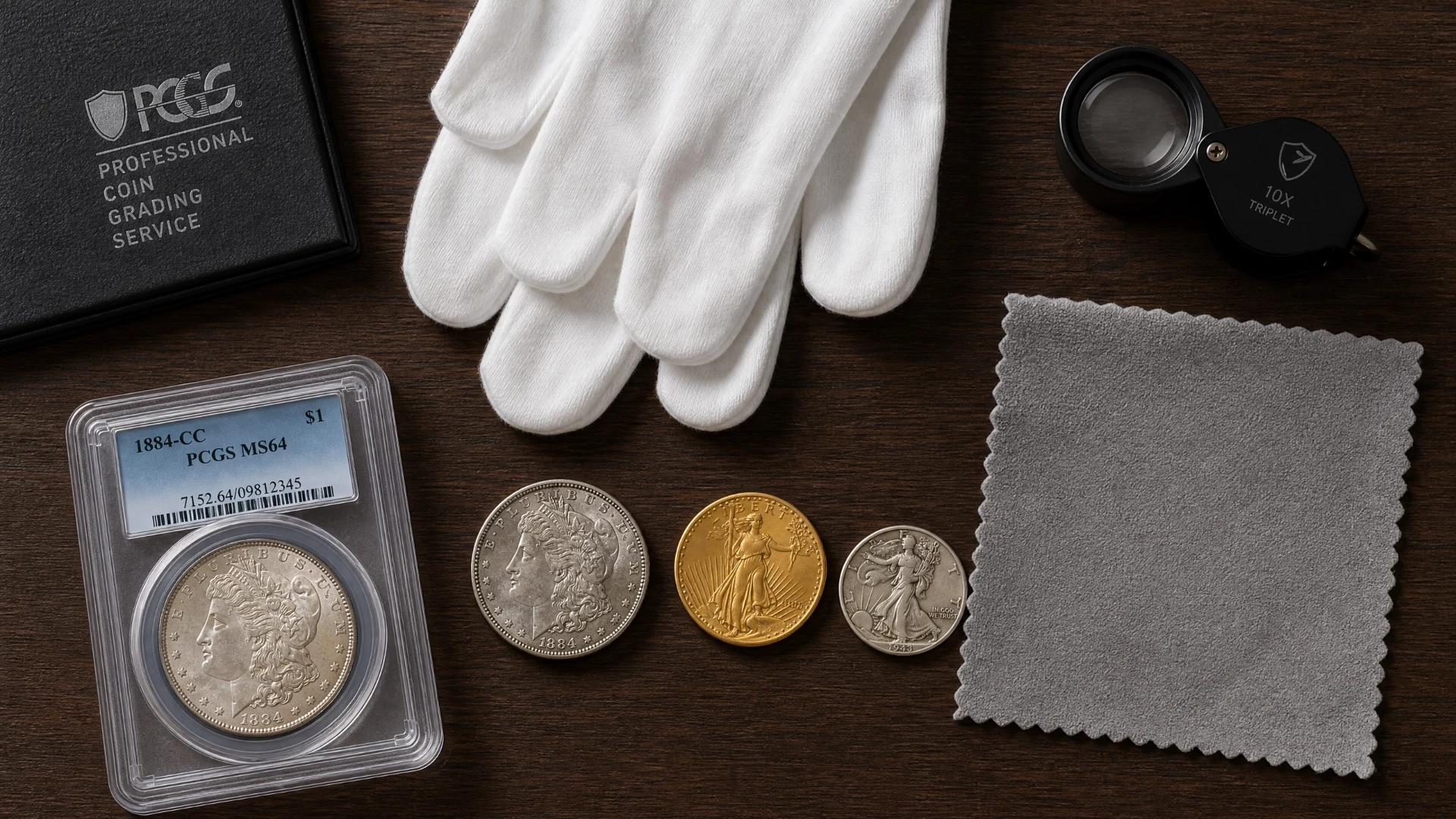
The basic process for submitting to PCGS or NGC is straightforward, though attention to detail matters. First, you choose a service tier based on the coin's estimated value and your desired turnaround time, then complete an online submission form including declared value and service type.
Next, you package your coins securely using non-abrasive holders and internal padding, then ship them via an insured, trackable carrier. Insuring for full replacement value helps protect you against loss or damage in transit.
Once the grading company receives the package, the coins move through authentication, grading, encapsulation, and quality-control stages before being returned to you. You can usually track the status of your submission through an online account and later verify your new certification numbers.
Red flags and common grading disputes
Even with major grading services, issues can arise, and investors should know the main red flags. Overgrading concerns, cleaning or improper conservation, and label errors are among the most common points of dispute.
Cleaning can dramatically reduce a coin's value, and many cleaned coins receive a "details" grade that signals problems without assigning a straight numeric grade. Fake or tampered holders are another risk; always confirm the certification number on the grading service's website and examine the slab for signs of damage or re-sealing.
Both PCGS and NGC offer review or reconsideration services if you believe a coin has been misgraded. However, because each additional review carries cost and turnaround time, we generally suggest seeking an expert opinion before initiating a formal dispute.
Buying and selling graded coins (investor perspective)
Graded coins typically offer better liquidity and lower risk than comparable ungraded pieces, especially in higher price ranges. Certification helps standardize expectations about quality, which in turn makes it easier to buy and sell through dealers, auctions, and online marketplaces.
When pricing graded coins, focus on actual completed sales rather than asking prices. Look at recent auction results, dealer transaction data, and any price guides provided by grading firms, while remembering that real-world prices can move with broader market conditions and spot price changes for bullion-heavy issues.
The Bullion Bank encourages clients to treat high-grade, certified coins as part of their broader diversification strategy rather than as isolated gambles. Our team can help compare potential graded purchases with more straightforward bullion options, depending on your risk tolerance and time horizon.
Why working with a trusted dealer matters
For investors, the practical benefits of grading extend beyond the label itself: grading helps reduce fraud risk, improves resale liquidity, and establishes provenance for higher-value pieces. Working with a trusted, licensed dealer can further de-risk the process by providing a realistic pre-submission appraisal and guidance on which coins are worth grading and which are better sold raw.
The Bullion Bank has been serving Northern Virginia and the wider DMV region since 2008, combining transparent pricing with real-time valuation tools. You can read more about The Bullion Bank's company history and approach. When you bring coins to our Chantilly or Vienna locations, our team can review them with you, explain potential grading outcomes, and help match your strategy to your budget and goals.
Why The Bullion Bank recommends grading before you sell
We typically recommend grading when a coin's estimated premium over melt is likely to exceed the combined cost of grading, shipping, and insurance. In these cases, certification can unlock a wider pool of buyers and may justify offering the coin through channels such as auctions or specialty dealers.
For many DMV sellers, a local appraisal at The Bullion Bank clarifies whether grading is the right move or whether a direct in-store sale provides a better net outcome after costs. This balanced approach helps investors avoid over-spending on grading fees for coins that will not realistically recoup the expense.
Local options in the DMV (Chantilly + Vienna) — where grading and appraisal help investors
If you live in Northern Virginia or the broader DMV region, in-person appraisal and submission help can save you time and reduce risk. Visit our Chantilly and Vienna store locations for secure environments where you can review coins, discuss grading expectations, and consider next steps with an experienced team.
Local appraisal is especially valuable for first-time graders who want a second opinion before committing to fees. In addition, The Bullion Bank can assist with cert lookup, population report interpretation, and safe packing for shipments to PCGS or NGC when grading is the right choice.
For buyers, our online store features graded coins with insured shipping nationwide, backed by the same licensed-dealer standards used in-store. This gives you a consistent, transparent experience whether you walk into our shop or complete your purchase from anywhere in the United States.
Quick decision checklist for investors
Use this checklist when deciding whether to grade a coin or sell it as is.
- Grade when rarity, high condition, or counterfeit risk suggests certification will meaningfully increase confidence and price.
- Compare grading fees, shipping, and insurance to the expected premium at the next grade level.
- Consider selling raw to a licensed local dealer, such as The Bullion Bank, for lower-value coins where fees would consume most of the potential upside.
- Use PCGS and NGC population reports and auction data to sanity-check your expectations before submitting.
Resources and tools
Before you submit, review the official resources from PCGS and NGC, including fee schedules, submission forms, and certification lookup tools. These sites also provide population reports and, in some cases, price guides that help you understand how grade affects value.
The U.S. Mint's coin terminology resources offer educational material on coin design, which can help you understand what graders look for in terms of strike and detail. You can also bring coins to The Bullion Bank in Chantilly or Vienna for a local perspective, especially if you prefer in-person explanations rather than navigating the process alone online.
FAQ
Q: What is coin grading?
A: Coin grading is the professional evaluation of a coin's condition and authenticity, resulting in a standardized numeric grade that helps determine its market value and liquidity.
Q: What does MS vs PF mean?
A: MS (Mint State) indicates an uncirculated coin struck for general use or collectors, while PF or PR (Proof) identifies specially made coins with high-quality strikes and mirror-like fields.
Q: How does the Sheldon 70 scale work?
A: The Sheldon scale runs from 1 (poor) to 70 (perfect), with higher numbers indicating better condition and less wear. Collectors often focus on key boundaries where small grade changes cause large price differences, such as between MS64 and MS65.
Q: PCGS vs NGC — which is better?
A: Both PCGS and NGC are widely recognized, trusted grading companies, and coins certified by either generally sell well in the marketplace. Choice often depends on the coin type, your preferred services, and how the market for a given series historically responds to each brand.
Q: Does coin grade affect value?
A: Yes, grade is one of the most important drivers of value for collectible coins, with prices often rising sharply at certain high-grade thresholds. Always check recent auction results and population data for your specific coin to understand real-world price spreads.
Q: How much does grading cost?
A: Grading fees vary by company, service tier, and declared value, but many standard submissions fall in the roughly $8–$50 per coin range, while express and high-value tiers can run $50–$200 or more. You also need to account for insured shipping, which commonly adds $20–$75 per shipment, and any dealer submission fees if you use a middleman.
Q: Is it worth getting a coin graded?
A: It is usually worth grading when the expected premium from certification is likely to exceed grading and shipping costs and when authentication will ease resale. For common, lower-value coins, grading may not pay off, and a direct sale to a reputable dealer can be more efficient.
Q: How do I verify a graded coin's authenticity?
A: Enter the certification number on the grading service's website, confirm that the grade and description match your coin, and inspect the holder for tampering. If anything looks inconsistent, seek a second opinion from an experienced dealer like The Bullion Bank before buying or selling.
Q: Can cleaning or damage change a coin's grade?
A: Yes, improper cleaning, scratches, and other damage can significantly lower a coin's grade and value. Many cleaned coins receive a "details" designation that warns buyers of problems, even if the numeric grade might otherwise appear high.
Q: How long does grading take?
A: Turnaround times depend on the service tier and current demand, but expedited services may take only a few days to two weeks, standard tiers often run about 4–12 weeks, and economy or bulk submissions can take several months. Always check current estimated turnaround times directly with the grading service before sending your coins.
Q: Where can I get a coin graded in Virginia / DMV?
A: The Bullion Bank offers in-person appraisal and submission assistance at two Northern Virginia locations: 4086 Airline Pkwy, Chantilly, VA 20151 (phone: 703-705-5151) and 131 Maple Ave W, Vienna, VA 22180 (phone: 703-705-5252). Both stores are open Monday–Friday 11:00 AM–6:00 PM, Saturday 11:00 AM–5:00 PM, and closed on Sunday, providing convenient access for DMV investors who prefer to work with a licensed local dealer.
Q: Do grading companies guarantee value?
A: No, grading companies certify a coin's condition and authenticity, but they do not guarantee a specific market price. Actual value depends on supply and demand, overall market conditions, and, for bullion-heavy coins, the underlying metal's spot price.
Call to action
If you are weighing whether to grade your coins, bring them to The Bullion Bank for a free, no-obligation appraisal and clear guidance on your options. Our team in Chantilly and Vienna can help you decide which coins to grade, which to sell as is, and how they fit into your broader investment strategy.
Visit The Bullion Bank in person (Northern Virginia / DMV):
Chantilly: 4086 Airline Pkwy, Chantilly, VA 20151 | Phone: 703-705-5151
Vienna: 131 Maple Ave W, Vienna, VA 22180 | Phone: 703-705-5252
Hours (both locations): Monday–Friday 11:00 AM–6:00 PM; Saturday 11:00 AM–5:00 PM; Sunday closed.
If you prefer to buy graded coins online, explore The Bullion Bank's national online store for certified pieces with fully insured shipping, and contact us if you would like help comparing grading options for your own collection.