Published by
Gold Expert

The gold-to-silver ratio compares the spot price of gold with the spot price of silver. Investors use it to identify which metal may be relatively better priced and to guide their next purchase—for example, adding silver when the ratio is historically high or favoring gold when the ratio is relatively low.
The ratio is not a prediction tool by itself, but it can make purchase decisions more systematic. The most practical approach is to use the ratio alongside product premiums, storage needs, liquidity, and your personal objectives. Buyers in Virginia and the broader DMV region can then compare actual gold and silver products in person or online before placing an order.
What Is the Gold-to-Silver Ratio?

The gold-to-silver ratio measures how many ounces of silver have the same market value as one ounce of gold. It is calculated by dividing the spot price of gold by the spot price of silver. Spot price means the current market price of a metal before a dealer adds a product premium.
For example, if gold trades at $2,400 per ounce and silver trades at $30 per ounce, the ratio is 80:1. In other words, 80 ounces of silver have the same spot-market value as one ounce of gold.
The ratio measures relative value. It does not tell you whether gold or silver is objectively “cheap,” and it does not predict the absolute direction of either metal’s price.
How to Calculate the Gold-to-Silver Ratio
The gold-silver ratio formula
The formula is:
Gold-to-silver ratio = gold spot price per ounce ÷ silver spot price per ounce
Both prices should use the same currency and unit, normally U.S. dollars per troy ounce. A troy ounce is the standard weight used for precious metals and is slightly heavier than a regular household ounce.
A simple calculation example
Assume gold has a spot price of $3,000 per ounce and silver has a spot price of $40 per ounce:
$3,000 ÷ $40 = 75
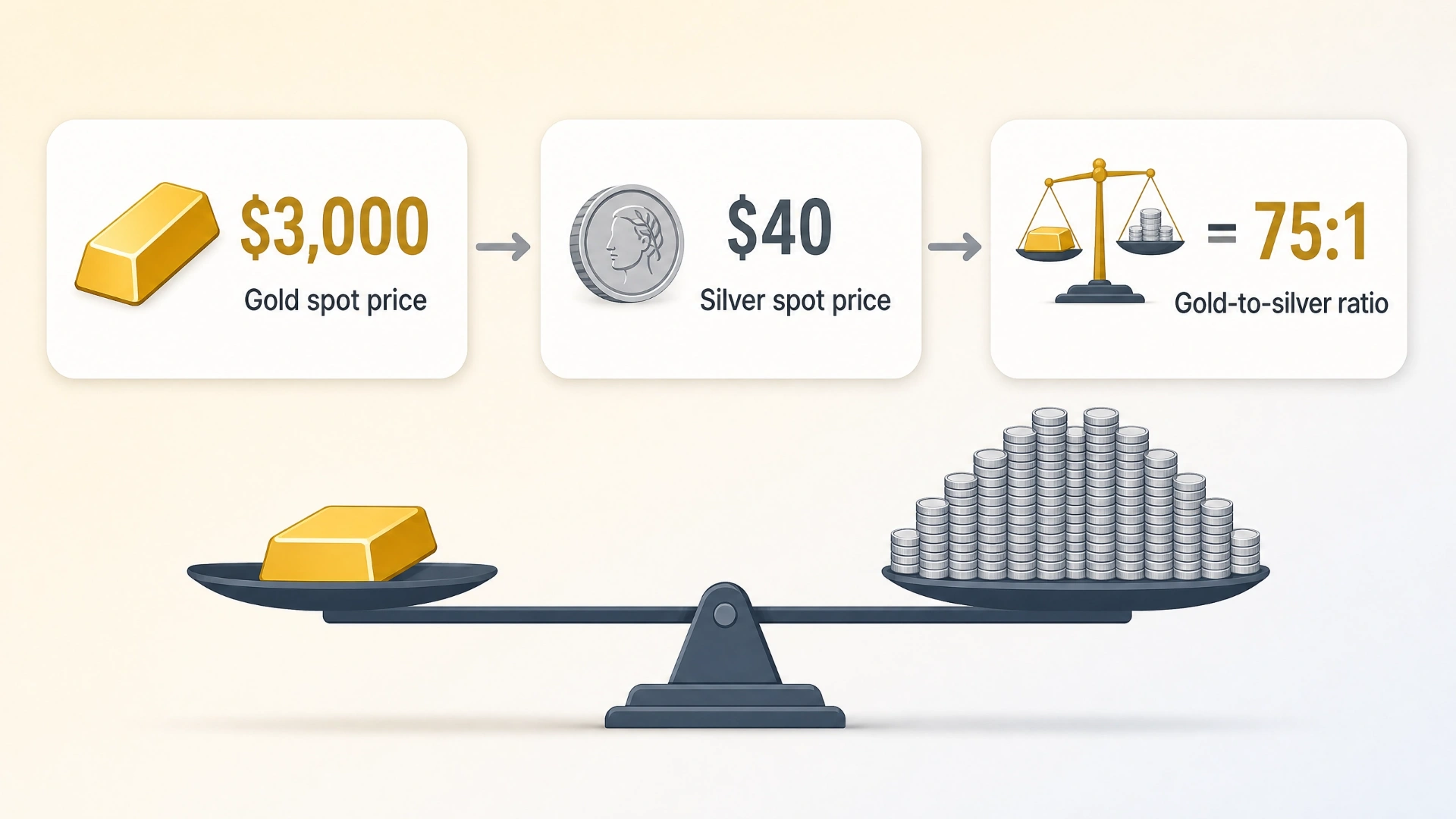
The gold-to-silver ratio is therefore 75:1. If gold remains at $3,000 while silver rises to $50, the ratio falls to 60:1.
Investors can monitor the ratio by checking current gold and silver spot prices. However, the ratio shown on a market chart may differ from the actual relationship between the retail prices of physical coins and bars because each product can carry a different premium.
What Does a High Gold-to-Silver Ratio Mean?
A high gold-to-silver ratio means gold is priced higher relative to silver than it is at a lower ratio reading. For example, a ratio of 90:1 means it takes 90 ounces of silver to equal the spot value of one ounce of gold.
Investors often treat a high reading as a prompt to evaluate silver purchases. The practical question is not simply “Is silver going up?” but “Does silver offer better relative value than gold after considering its premium, storage requirements, and expected use?”
A high ratio supports researching silver — it doesn't require selling any gold or timing an exact market bottom. The strategy section below covers how to act on this without disrupting your existing holdings.
Silver also has demand drivers that differ from gold. The World Gold Council’s market research separates precious-metals demand into investment, consumer, central-bank, and technology-related categories, illustrating why gold and silver can respond differently to economic conditions.
Why investors may consider silver at a high ratio

Investors may consider silver when the ratio is elevated because silver generally has a lower dollar price per ounce. That can make it easier to build a position through regular purchases of silver coins, rounds, and bars.
A practical three-step approach is:
- Check whether the ratio is meaningfully above the range you normally monitor.
- Compare the total retail premium on available silver products with the premium on comparable gold products.
- Decide whether the additional storage and price volatility fit your plan before buying.
This approach turns the ratio into an actionable research signal without treating it as a guarantee. Silver can remain relatively inexpensive for a long time, and its price may fluctuate more sharply than gold.
What Does a Low Gold-to-Silver Ratio Mean?
A low gold-to-silver ratio means silver is priced higher relative to gold than it is at a high ratio reading. This may happen when silver is outperforming gold or when gold is experiencing weaker demand.
Some investors use a low ratio as a reason to compare gold purchases. Gold may be attractive to buyers who want a compact way to own a larger dollar value of precious metal.
A low ratio does not automatically mean gold is inexpensive in dollar terms. It only describes the relationship between the two metals.
Why investors may prefer gold at a low ratio
Gold is more value-dense than silver. A relatively small physical amount of gold coins and bars can represent a significant purchase, which may simplify storage and transportation.
Gold is also widely used as a long-term wealth-preservation and portfolio-diversification asset. It may be a better fit for buyers who prioritize compact ownership and are less comfortable with silver’s potentially wider price movements.
How the Gold-Silver Ratio Strategy Works
A gold to silver ratio strategy uses relative prices to guide the timing and composition of future purchases. The basic process is simple: monitor the ratio, identify whether it is comparatively high or low, compare real product costs, and direct new purchases toward the metal that better fits your objectives.
For most physical bullion buyers, the strategy works best as a gradual allocation method rather than a series of rapid trades. The goal is to improve purchase discipline—not to predict every short-term price movement.
The 80:1 and 50:1 framework
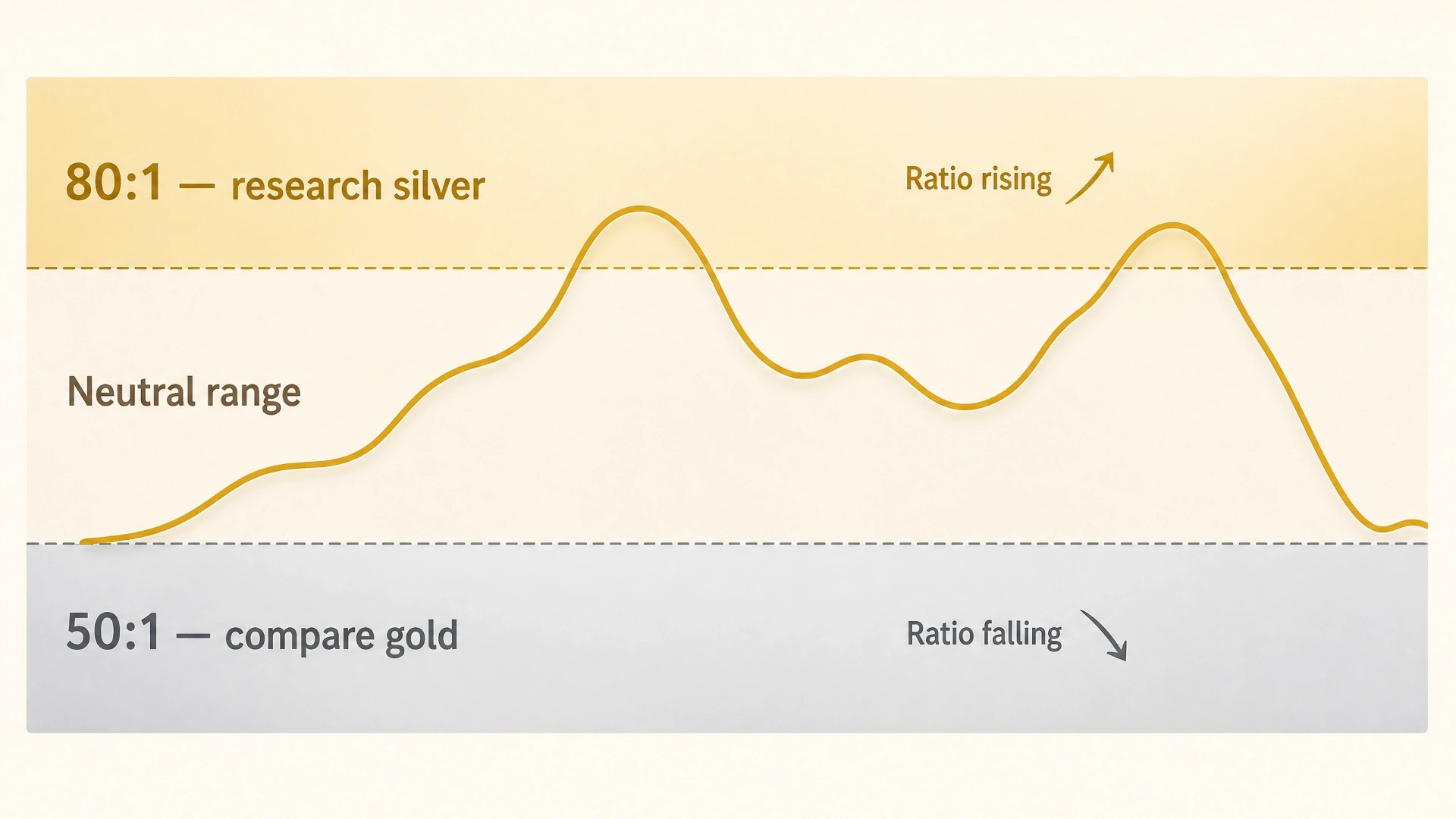
The 80:1 and 50:1 levels are commonly used reference points. A ratio near or above 80:1 may lead some investors to research silver more closely, while a ratio near or below 50:1 may lead them to compare gold more carefully.
Use the framework in four steps:
- Monitor the direction: Determine whether the ratio is rising, falling, or moving sideways.
- Compare the products: Review the spot price, premium, size, purity, and resale considerations.
- Choose an action: Direct new purchases toward the relatively more attractive metal, maintain a balanced buying schedule, or wait.
- Review periodically: Reassess the ratio and your allocation rather than reacting to every daily change.
These levels are reference points, not universal triggers. A ratio can move well beyond 80:1 or 50:1, and the benefit of acting may disappear after dealer spreads, premiums, shipping, and taxes are included.
Buying more of one metal without selling the other
The simplest version of the strategy is to keep your existing holdings and direct future purchases toward the relatively less expensive metal. For example, an investor who already owns gold may emphasize silver when the ratio is high, then revisit gold purchases if the ratio later declines.
This approach reduces the number of transactions and avoids the risk of selling one metal too early. It also works well with dollar-cost averaging, a strategy in which an investor contributes a consistent amount over time instead of waiting for a perfect entry point.
Trading gold for silver or silver for gold
Exchanging one metal for another can make sense for some experienced investors, but the calculation must use current bullion pricing and deals rather than the charted ratio alone. Compare the buyback price of your current bullion with the complete replacement cost of the new product.
The trade should be evaluated after accounting for premiums, dealer spreads, taxes, shipping, and storage. If those costs materially reduce the amount of metal you can acquire, directing future contributions may be more efficient than making an immediate exchange.
When to Buy Silver vs. Gold
There is no single answer to when to buy silver versus gold. The ratio can provide context, but your budget, storage capacity, risk tolerance, and reason for owning precious metals are equally important.
| Consideration | Gold may be a better fit | Silver may be a better fit |
|---|---|---|
| Budget | Larger purchase amount available | Lower-cost entry points |
| Storage | Compact and value-dense | More space required |
| Price movement | Often preferred by more conservative buyers | Greater volatility may suit risk-tolerant buyers |
| Primary objective | Wealth preservation and diversification | Monetary and industrial-demand exposure |
| Purchase style | Fewer, higher-value purchases | Regular purchases of smaller units |
Whichever metal fits your goals, comparing product type, weight, and premium — not just the ratio itself — should guide the final decision.
Why the Ratio Is Not a Standalone Buy Signal
The gold-silver ratio does not account for every factor that affects a purchase decision. It does not measure interest rates, currency movements, economic growth, investor demand, industrial use, market liquidity, or the buyer’s personal financial objectives.
It is also possible for the ratio to move in the opposite direction from what an investor expects. A high ratio can become even higher, while a low ratio can remain low for longer than anticipated.
Premiums and spreads matter
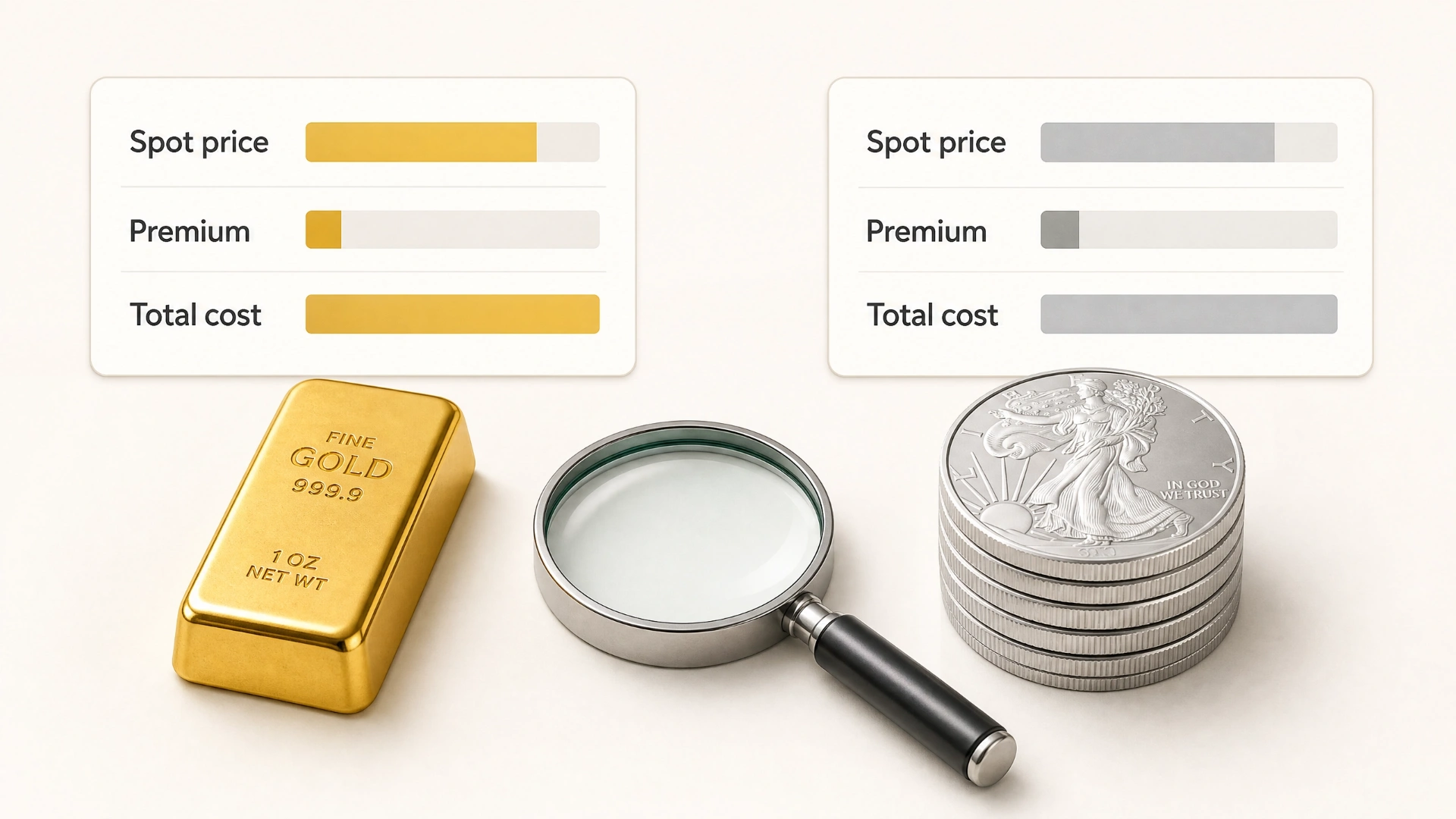
A premium is the amount added to a bullion product’s spot value. It can reflect manufacturing, distribution, fabrication, scarcity, dealer costs, and demand for a particular coin or bar.
Two silver products may contain the same amount of metal but carry different premiums. The same is true for gold products. When comparing gold and silver, evaluate the total purchase price and potential resale value—not just the ratio between spot prices.
Physical bullion is different from paper trading
Physical bullion means owning tangible coins, bars, or rounds. Paper-market products, such as futures contracts or exchange-traded products, may provide price exposure without requiring the investor to store and secure metal.
Physical ownership introduces practical considerations, including authenticity, storage, insurance, shipping, dealer reputation, and liquidity. Working with a dealer who publishes clear pricing can help buyers understand these differences before placing an order.
The U.S. Mint’s bullion coin program confirms that bullion coins are valued primarily by their weight in a specific precious metal, with the government guaranteeing the weight, content, and purity of its bullion products.
How to Use the Gold-Silver Ratio Responsibly
Set a target allocation
Decide what role precious metals should play in your broader financial plan before using the ratio. Some investors want gold for wealth preservation, some prefer silver because of its lower purchase price, and others choose a combination.
There is no universally correct allocation. Even broad percentage ranges should be treated as starting points rather than rules that apply to every investor.
Use a range instead of one exact number
Avoid reacting to a single daily reading. Instead, observe whether the ratio is moving toward a historically higher or lower range and consider whether the broader market supports your decision.
Regular purchases can also reduce the pressure to identify a perfect entry point — the same dollar-cost averaging approach described above applies just as well to timing decisions based on the ratio.
Compare the full purchase cost
Before buying, compare the spot price, premium, payment method, shipping, storage, and likely resale terms. Product size matters as well: smaller pieces may offer flexibility but sometimes carry higher premiums per ounce.
Comparing these factors side by side — rather than looking at spot price alone — is what turns a ratio reading into an informed purchase decision.
Buying Gold and Silver in Northern Virginia or Online
A local purchase can be useful for buyers who want to examine products, ask questions, and discuss pricing before committing. The Bullion Bank’s Chantilly and Vienna locations provide an in-person option for DMV-area customers seeking gold and silver bullion from a licensed dealer.
Customers outside the region can shop through the online store with fully insured shipping. Whether buying locally or online, look for clear product descriptions, weight and purity information, transparent pricing, and understandable resale policies.
Why Buy Gold and Silver Through The Bullion Bank

The gold-to-silver ratio is only useful when it's backed by accurate pricing and a dealer you can verify. The Bullion Bank’s story since 2008 includes helping thousands of DMV-area investors turn ratio research into an actual purchase decision, with transparent premiums and no pressure to buy on any single reading.
Our role isn't to tell you when to buy — it's to make sure you have accurate numbers before you decide. If you're comparing options ahead of a purchase, we're happy to walk you through current pricing with no obligation to buy.
Frequently Asked Questions
Q: What is the gold-to-silver ratio?
A: The gold-to-silver ratio shows how many ounces of silver have the same market value as one ounce of gold. It is calculated by dividing the gold spot price by the silver spot price.
Q: How do you calculate the gold-to-silver ratio?
A: Divide the current price of one ounce of gold by the current price of one ounce of silver. For example, gold at $3,000 and silver at $40 produces a ratio of 75:1.
Q: What does a high gold-to-silver ratio mean?
A: A high ratio means gold is priced higher relative to silver than it is at lower readings. Some investors use this as a reason to research silver, but it is not a guaranteed prediction that silver will rise.
Q: What does a low gold-to-silver ratio mean?
A: A low ratio means silver is priced higher relative to gold than it is at higher readings. Some investors may use this as a reason to compare gold purchases, while still considering premiums and personal goals.
Q: When should I buy silver instead of gold?
A: Investors may consider silver when the ratio is relatively high, especially if they want lower-cost entry points or exposure to silver’s industrial and monetary demand. Volatility, storage, premiums, and liquidity should also be considered.
Q: When should I buy gold instead of silver?
A: Gold may suit buyers who prioritize compact storage, high value density, and long-term wealth preservation. A lower ratio can support a relative-value case for gold, but it is not a standalone buy signal.
Q: Is the 80:1 gold-silver ratio a buy signal for silver?
A: No. The 80:1 level is a commonly discussed reference point, not a universal trigger. Investors should also compare premiums, market conditions, storage needs, and their own objectives.
Q: Is the 50:1 ratio a signal to buy gold?
A: It can serve as an educational reference point for investors who follow ratio strategies, but it does not guarantee that gold will outperform. Transaction costs and the buyer’s time horizon also matter.
Q: Is it better to buy gold and silver together?
A: Owning both can provide exposure to two metals with different characteristics. The appropriate mix depends on your budget, storage capacity, risk tolerance, liquidity needs, and the role precious metals play in your financial plan.
Q: Where can I buy gold and silver in Northern Virginia?
A: You can visit The Bullion Bank’s Chantilly location at 4086 Airline Pkwy, Chantilly, VA 20151, or its Vienna location at 131 Maple Ave W, Vienna, VA 22180. Call 703-705-5151 for Chantilly or 703-705-5252 for Vienna to confirm current availability and discuss your options.
Q: Can I buy gold and silver online from Virginia?
A: Yes. The Bullion Bank offers gold and silver through its online store, and Virginia customers can also visit a Northern Virginia location in person. National online orders are available with fully insured shipping.
Q: Can I exchange gold for silver based on the ratio?
A: You can, but physical exchanges may involve dealer spreads, premiums, shipping, taxes, and other costs. For many buyers, directing future purchases toward the relatively less expensive metal may be simpler than frequently exchanging existing holdings.
Compare Your Options Before Buying
Use the gold-to-silver ratio as a structured way to compare your next purchase—not as a promise of future performance. The Bullion Bank can help you review gold and silver products, premiums, sizes, and current availability.
Visit us in person:
- Chantilly: 4086 Airline Pkwy, Chantilly, VA 20151; 703-705-5151.
- Vienna: 131 Maple Ave W, Vienna, VA 22180; 703-705-5252.
- Hours: Monday–Friday, 11 a.m.–6 p.m.; Saturday, 11 a.m.–5 p.m.; Sunday, closed.
You can also shop gold and silver online with fully insured shipping or call before visiting to discuss whether gold, silver, or a combination best fits your purchase goals.