
Published by
Gold Expert
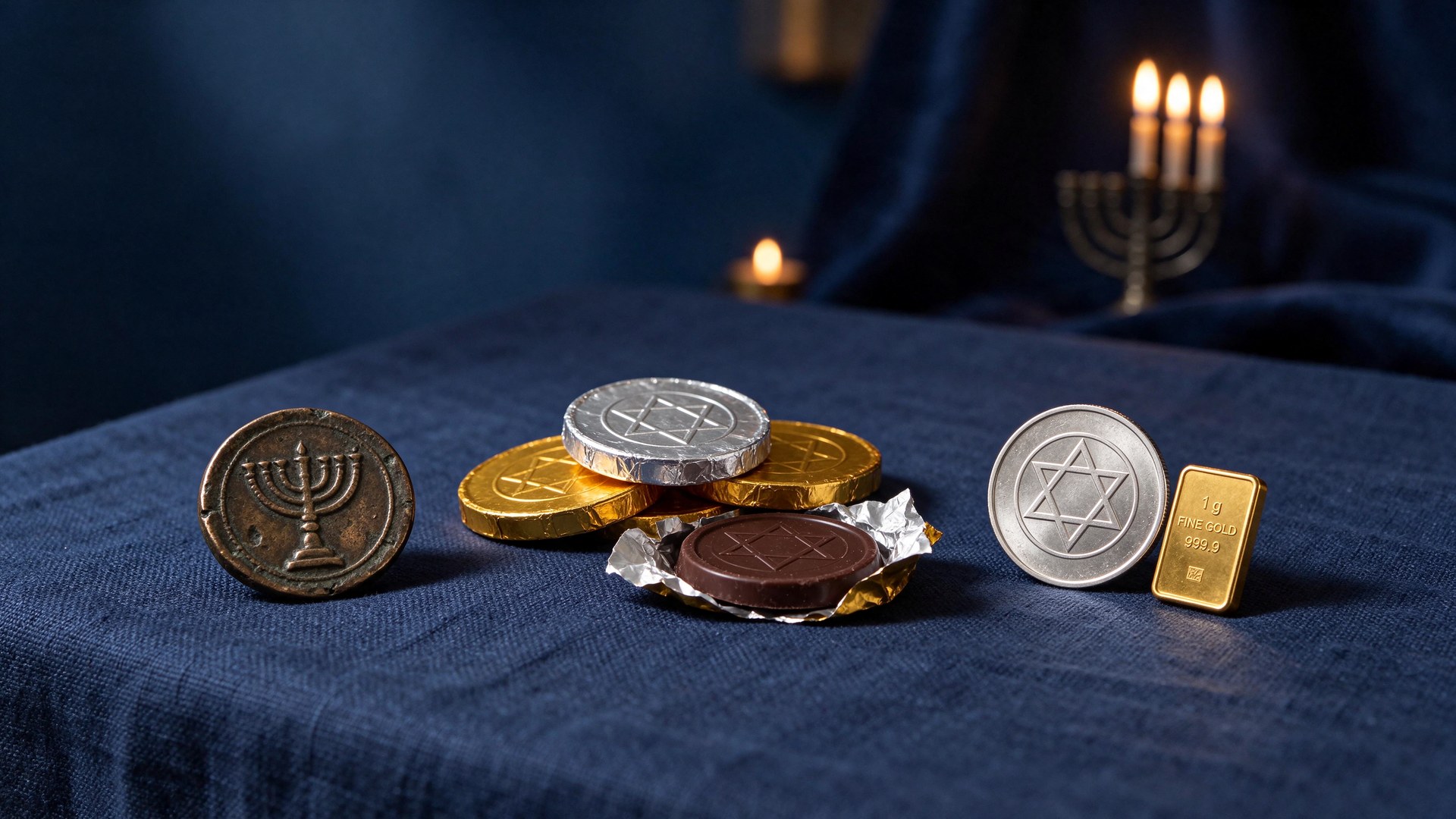
Hanukkah gelt is money given during Hanukkah, today mostly to children, and "gelt" is simply the Yiddish word for money. The custom began with real coins given to the poor and passed to teachers in Eastern European Jewish communities. In 1920s America it turned into gold- and silver-foil chocolate, and some families now give small silver and gold pieces again. In 2026 Hanukkah begins at sundown on Friday, December 4, and ends at nightfall on Saturday, December 12, according to Hebcal.
What Hanukkah gelt is
Hanukkah gelt, also spelled Chanukah gelt, is a gift of money given during the eight nights of Hanukkah. In a 2021 study of the custom in the journal Hakirah, Zvi Ron notes that giving money is often treated as a more traditional Jewish practice for the holiday than giving presents.
Families differ on when it is given. Chabad.org writes that the widespread tradition was to give gelt once, usually on the fourth or fifth night, and that the Lubavitcher Rebbe proposed giving it every night, even in small amounts, except on Shabbat, when it can be given before or after. Ron likewise finds the custom tied especially to the fifth night. In 2026 the first and eighth nights both begin on a Friday evening, so the Shabbat exception applies to both.
Chabad.org also ties the custom to teaching: it explains that gelt is given to children so they can give some of it to charity, and as a reward for Torah study.
Coins in the Hanukkah story
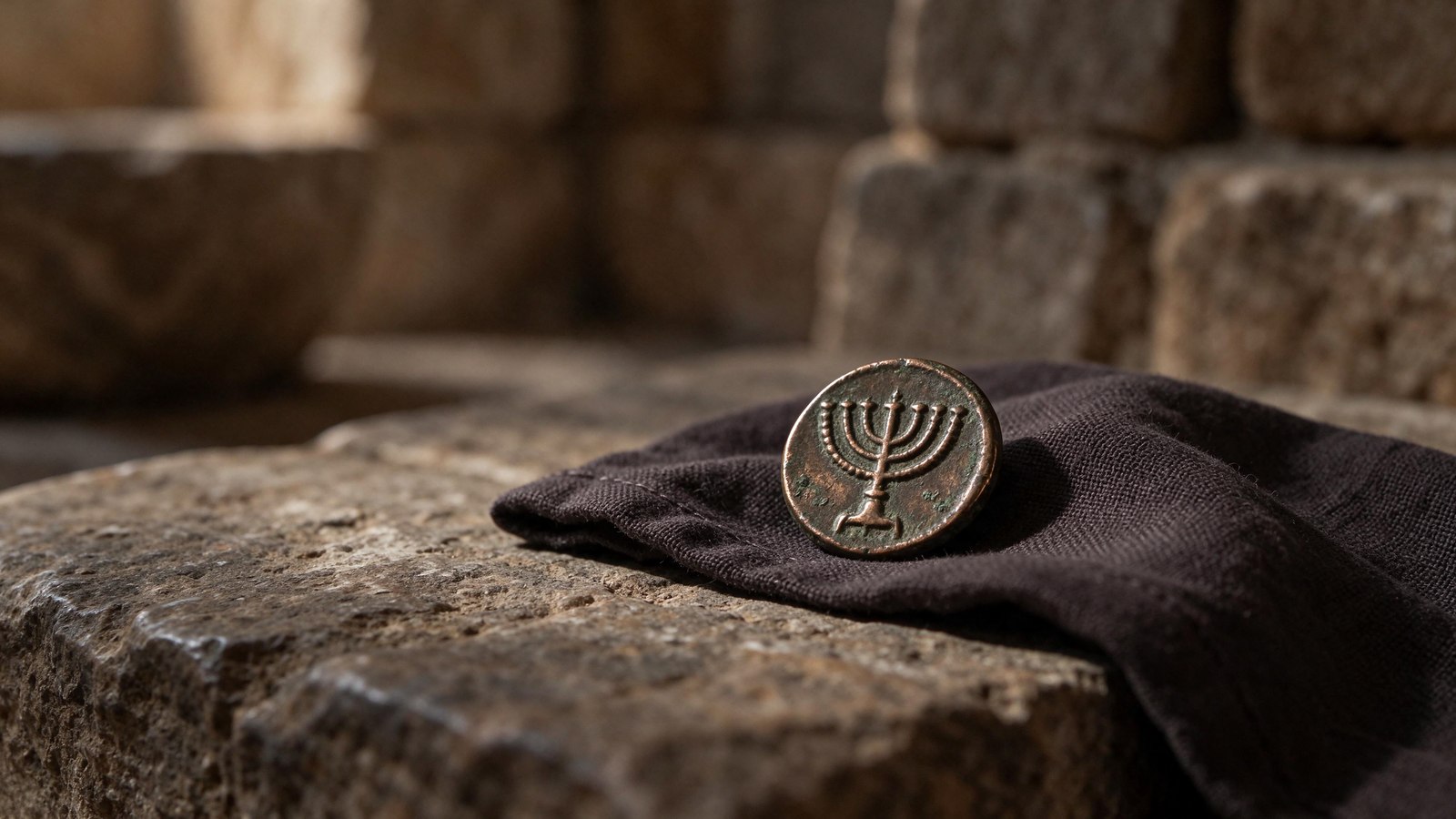
Coins appear in 1 Maccabees, the book that tells the Hanukkah story, in a chapter set decades after the Temple was rededicated. In the King James Version of the Apocrypha, Antiochus VII writes to Simon, the last of the Maccabee brothers: "I give thee leave also to coin money for thy country with thine own stamp" (1 Maccabees 15:6).
Whether Simon ever used that permission is another question. The Jewish Virtual Library's page on the Syrian-Judean coin connection says that no Jewish coins from Simon's time are known. Later rulers of the Hasmonean dynasty, the family line of the Maccabees, did strike small bronze coins, and the last of them, Mattathias Antigonus, who ruled from 40 to 37 BCE, put a seven-branched menorah on one. When one of his menorah coins was returned to Israel in 2026, the Times of Israel, as quoted in The E-Sylum, described it as bearing the earliest known depiction of the seven-branched Jewish menorah.
Ron concludes that Jews did not treat the Maccabean coins as particularly significant and that they were not what inspired gelt. Eliezer Segal, in his book Holidays, History, and Halakhah as quoted by the Forward, points to gifts for religious teachers around Hanukkah as the more direct ancestor.
From alms and teachers' tips to children's gifts
The documented history of gelt starts with money given to the needy and to teachers, not to children. Ron traces it to Magen Avraham, a commentary on Jewish law by Rabbi Avraham Gombiner (c. 1635-1682), which describes the custom of poor young men going door to door to collect money on Hanukkah. Chabad.org adds that this gave the poor money for Hanukkah candles without embarrassment.
Teachers came next. According to Ron, parents at first gave money to their small children to hand to their teachers, and in time money was also given to the children to keep for themselves. Gina Glasman of Binghamton University told NPR in 2014 that in the shtetls, the small, largely Jewish towns of Eastern Europe, gelt was a year-end tip for traveling workers such as teachers and kosher butchers.
Gelt as a gift to children for its own sake is recorded from the 1800s, per Ron. Jonathan Sarna of Brandeis University, in the same NPR piece, says that as Christmas grew into a national holiday in the United States, Hanukkah grew with it, and its focus shifted to gift-giving and children.
How gelt turned into chocolate
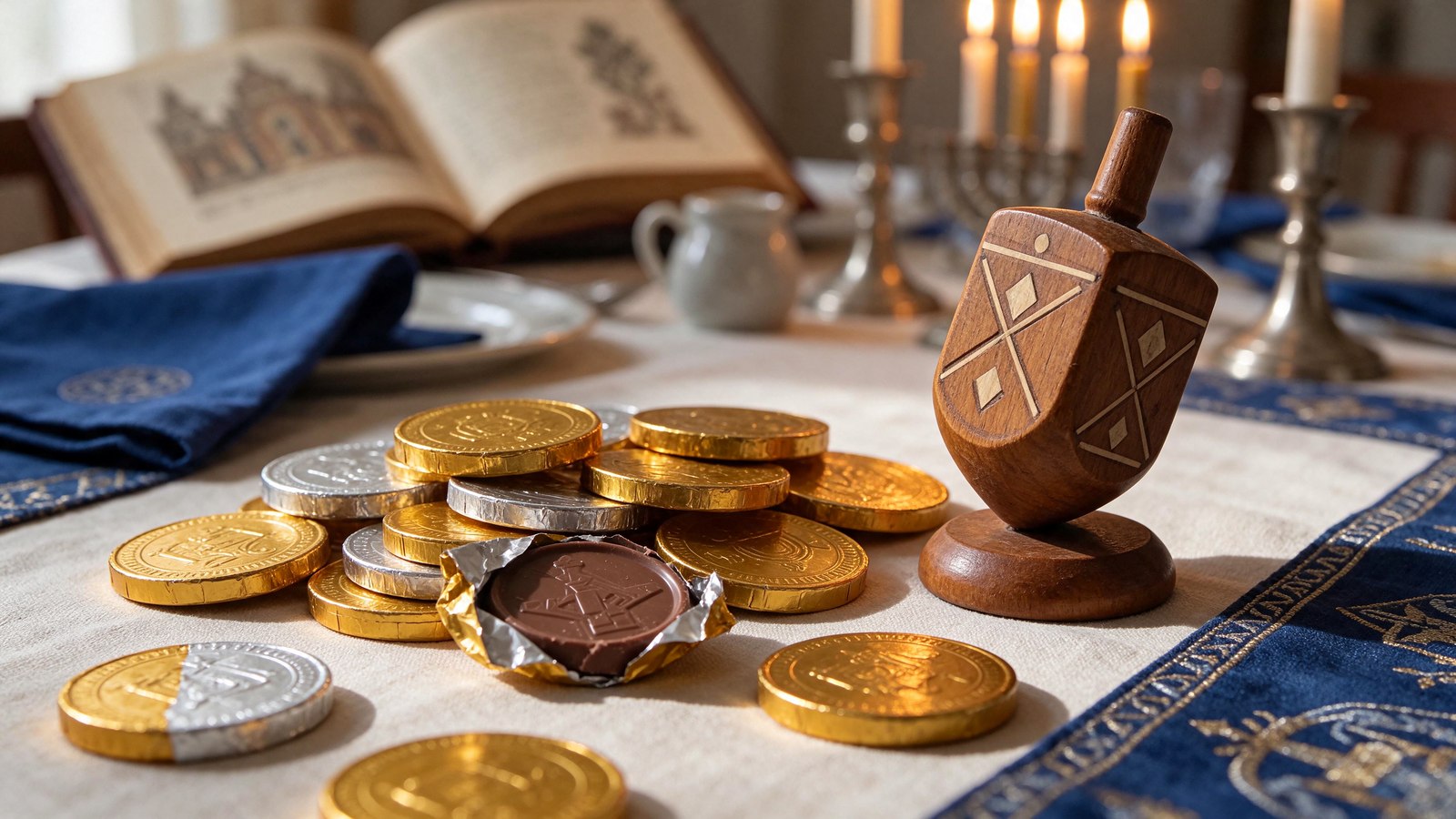
Chocolate gelt arrived in the 1920s, when American candy companies such as Loft's began selling gold- and silver-foil chocolate coins, according to the Forward. My Jewish Learning describes Loft's coins as sold in pouches designed to resemble bank bags.
The candy makers may have borrowed the idea. Rabbi Deborah Prinz, quoted by the Forward, suggests they were inspired by the chocolate coins given to children for the St. Nicholas holiday in Belgium and the Netherlands each December. Ron also links chocolate coins to the Christmas and St. Nicholas traditions.
Most chocolate gelt eaten by American children today is made in Israel or the Netherlands, according to My Jewish Learning, and it is often the stake in a game of dreidel.
Hanukkah coins from the State of Israel
Israel issued its first Hanukkah coin in 1958. The 1 lira coin, titled "Law is Light," shows a menorah above the Hebrew words Torah Or, taken from Proverbs 6:23, which calls the commandment a lamp and the Torah light.
The Israel Coins and Medals Corporation, the state's coin and medal company, lists it as part of its Hanukka Series and says the menorah chosen "for the first of the Hanukka coins" first appeared on the coins of Mattathias Antigonus. The coin was struck in copper-nickel at the Swiss Federal Mint in Bern.
Real gold and silver as Hanukkah gelt
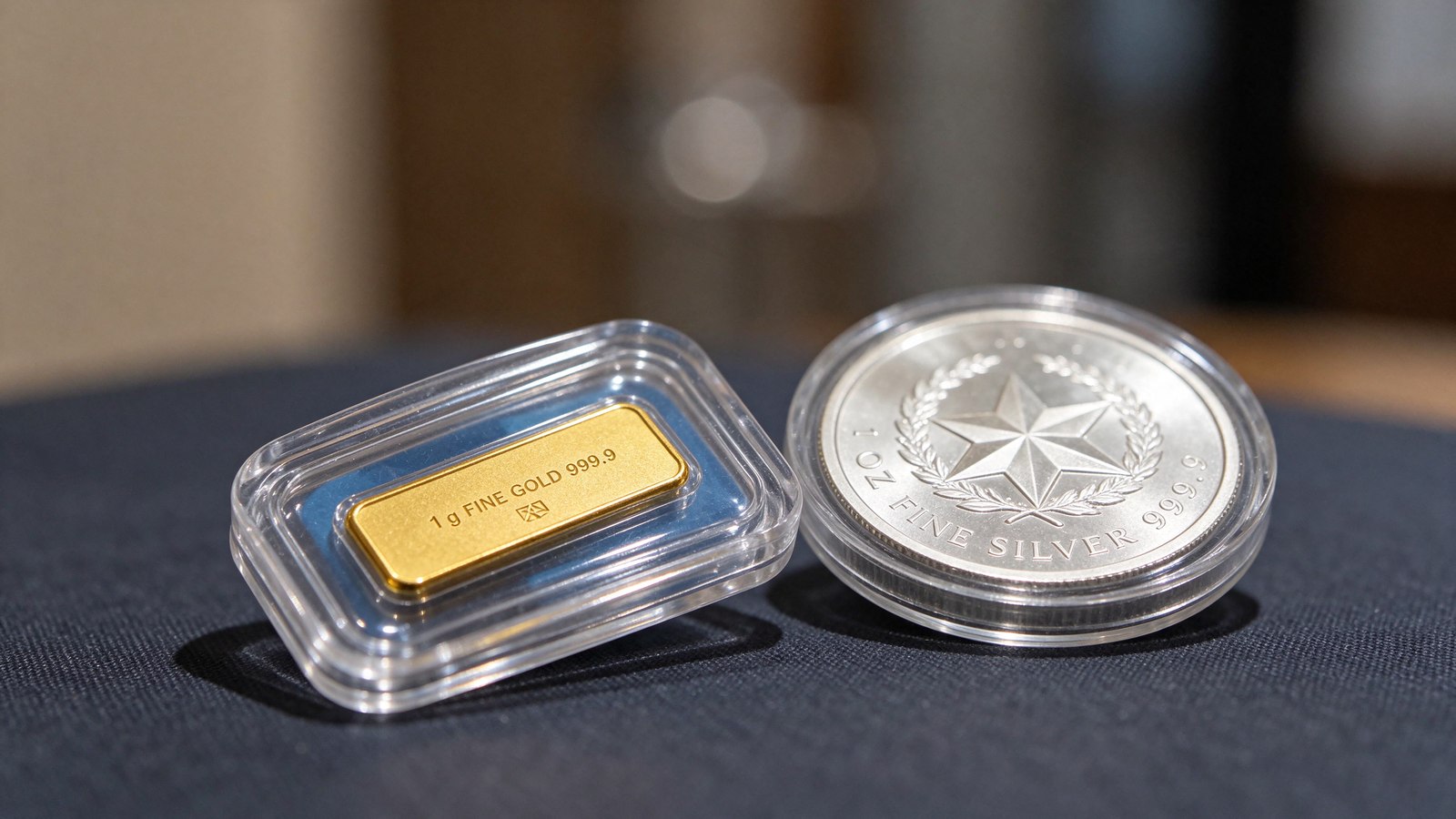
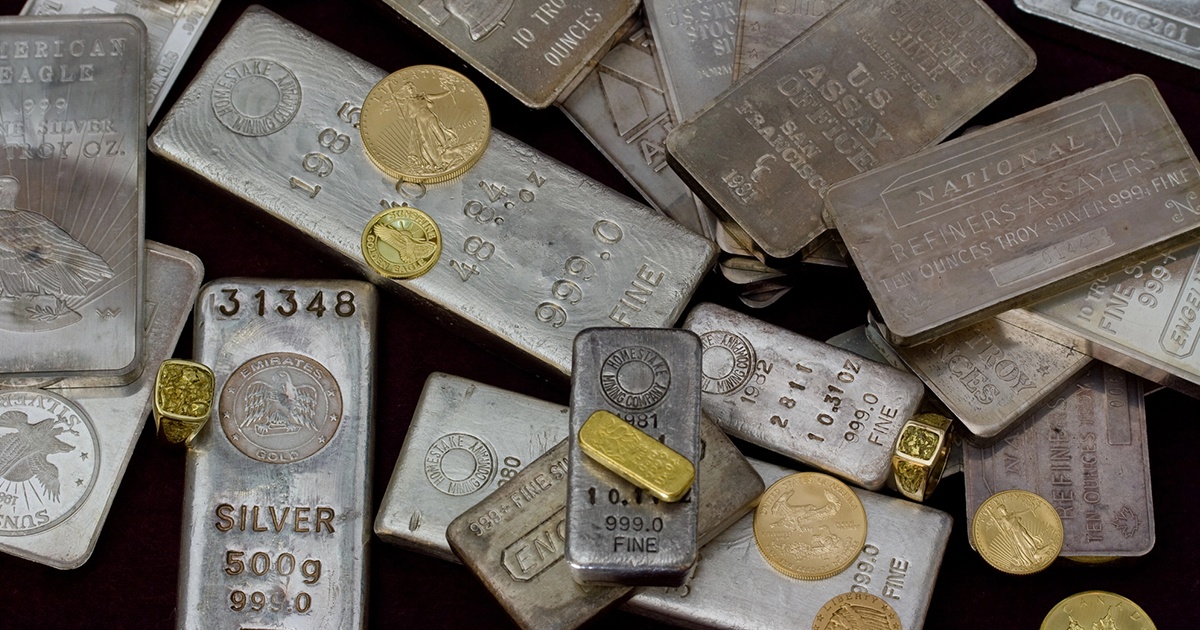
Giving real metal as gelt is a step back toward the original custom of giving coins rather than chocolate. Gelt-sized pieces are small, such as a silver coin, a silver round or a 1 gram gold bar. A silver round is a coin-shaped piece made by a private mint, with no face value, while a coin such as a Silver Eagle is issued by a government and carries a legal-tender denomination.
The price of any of these pieces is the spot price, which is the current market price of one troy ounce of the raw metal, plus a premium, which is the amount charged above spot for making and selling the piece. The article How to Read Gold and Silver Prices explains both. The premium per ounce on a 1 gram bar is higher than on a 1 ounce bar, and our guide to gram gold and silver bars shows how it changes with size. A piece meant to be kept should stay in its capsule or card, since handling marks the surface.
For a wider look at metal as a December gift, with sizes from one gram to one ounce, see our holiday and New Year gift guide.
Gelt sizes in our catalog
A search of our online catalog on 21 November 2026 for Hanukkah, Chanukah, menorah and Israel returned no products, and we would rather say so than send you looking.
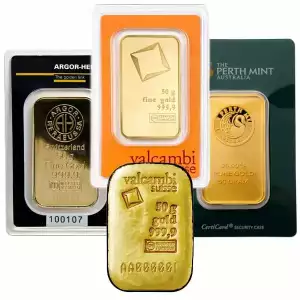
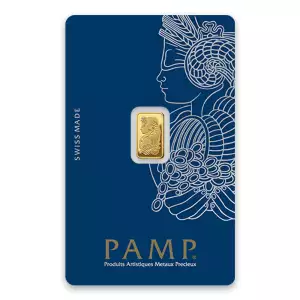
In gelt sizes, the catalog that day listed 1 gram gold bars from PAMP and Valcambi, a generic 1 gram gold bar, a 1/20 ounce Chinese Gold Panda, 1 ounce generic silver rounds and bars, and 1 gram silver bars; the full bullion catalog shows current stock.
Walk-ins are welcome during normal business hours at both stores, and online orders can be picked up in store or sent with fully insured shipping.
This article is educational and reflects general information about precious metals and collectible coins. It is not investment, tax or legal advice, and The Bullion Bank is not a registered investment adviser, broker-dealer or tax professional. Metal prices fluctuate and past performance does not indicate future results. Consult a qualified professional about your own situation.
Frequently asked questions
What is Hanukkah gelt?
Hanukkah gelt is money given during Hanukkah, usually to children; "gelt" is Yiddish for money. It began as money given to the poor and passed through children to their teachers in Eastern Europe. Today it is often chocolate coins in gold or silver foil, and some families give real coins or small bars.
Why do people give chocolate coins on Hanukkah?
Chocolate coins stand in for the real money once given as gelt. American candy makers such as Loft's began selling foil-wrapped chocolate gelt in the 1920s, possibly inspired by the St. Nicholas chocolate coins of Belgium and the Netherlands. Children often play dreidel for them.
When is Hanukkah in 2026?
Hanukkah 2026 begins at sundown on Friday, December 4, and ends at nightfall on Saturday, December 12, according to Hebcal. Because the first night falls on a Friday, the first candle is lit before sundown that evening. Hanukkah always begins on the 25th of Kislev in the Hebrew calendar.
On which night of Hanukkah is gelt given?
Customs vary by family. Chabad.org writes that the widespread tradition was to give gelt once, usually on the fourth or fifth night, and that the Lubavitcher Rebbe encouraged giving some every night, with Shabbat gelt given before or after Shabbat. Historical sources collected by Zvi Ron tie the custom especially to the fifth night.
Has Israel issued Hanukkah coins?
Yes. Israel issued its first Hanukkah coin in 1958, a copper-nickel 1 lira titled "Law is Light," and the Israel Coins and Medals Corporation lists it in its Hanukka Series. Its menorah design is taken from a coin of Mattathias Antigonus, the last Hasmonean king.
Can real silver or gold be given as Hanukkah gelt?
Yes. Gelt-sized options include a 1 ounce silver coin or round, a 1 gram silver bar and a 1 gram gold bar. Expect a higher premium per ounce on small pieces than on larger ones, and keep each piece in its original capsule or assay card so it stays in the condition it was bought.
Gram bars and silver rounds in Chantilly and Vienna
Call either store to ask which gram bars and silver rounds are on hand, or come to the counter during the hours below.
The Bullion Bank - Chantilly
4086 Airline Pkwy
Chantilly, VA 20151
(703) 705-5151
Monday-Friday 11am-6pm, Saturday 11am-5pm, Sunday closed
The Bullion Bank - Vienna
131 Maple Ave W
Vienna, VA 22180
(703) 705-5252
Monday-Friday 11am-6pm, Saturday 11am-5pm, Sunday closed