Published by
Gold Expert
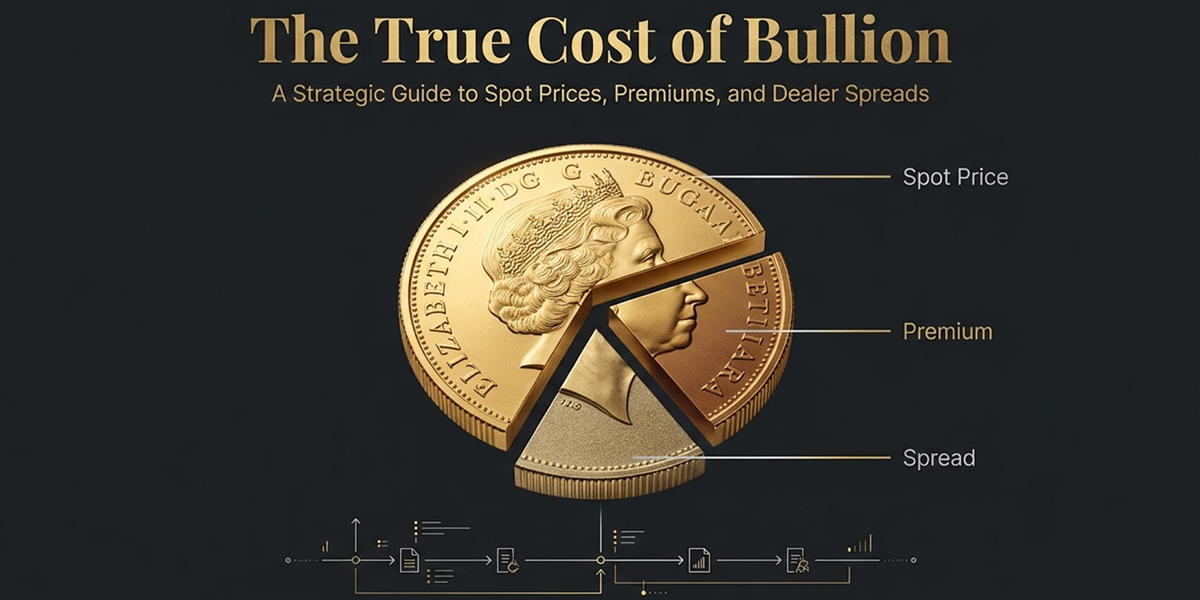
How to read gold and silver prices comes down to understanding three pieces: the spot price, the premium you pay above spot, and the dealer spread between buy and sell prices. When you can read those three numbers, you can quickly tell whether a bullion quote is fair or expensive.
How to read gold and silver prices at a glance
When you pull up a gold or silver chart, the number you see is usually the spot price—the wholesale market price for one troy ounce, quoted for immediate settlement. That is the starting point, not the final price, for physical coins and bars.
The physical price you pay is spot plus a premium, and the dealer spread is the gap between what a dealer will sell to you for and what they will buy back for. Once you know spot, premium, and spread for a specific product, you can compare dealers and see your round‑trip cost.
Gold and silver spot price vs physical bullion price
What the spot price really tells you
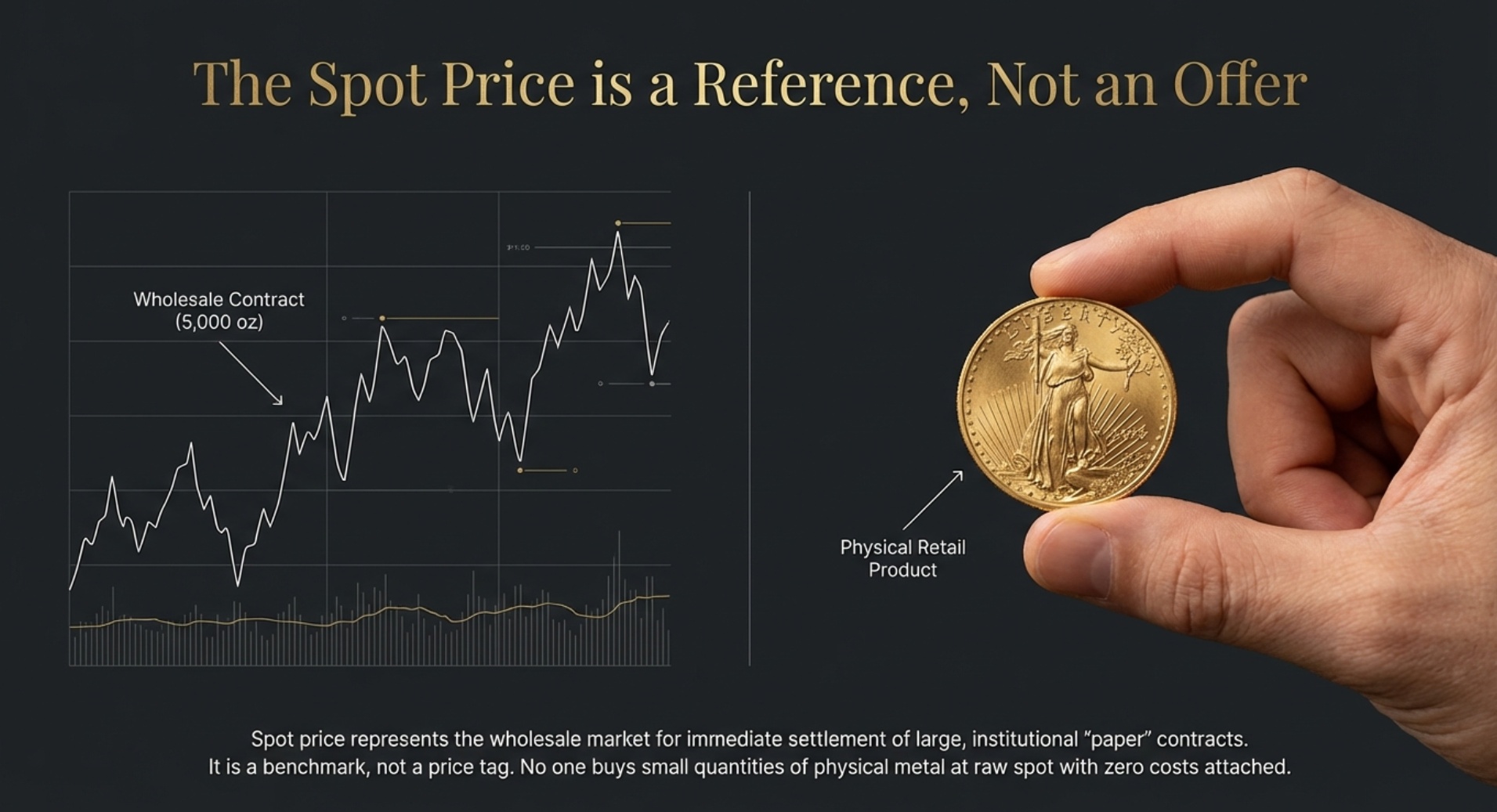
The gold spot price is the current wholesale price per troy ounce in major markets such as COMEX or London, usually quoted in real time by data providers and dealers. It reflects large, institutional trading in “paper” contracts and wholesale bars, not retail coin and bar sales.
The same applies to the silver spot price: it is a benchmark for immediate settlement in wholesale markets, not a retail offer to ship you a tube of coins. Retail buyers and sellers use spot as the reference point for calculating premiums and offers, but no one can buy small quantities of physical metal at raw spot with no costs attached.
Why physical metal always costs more than spot
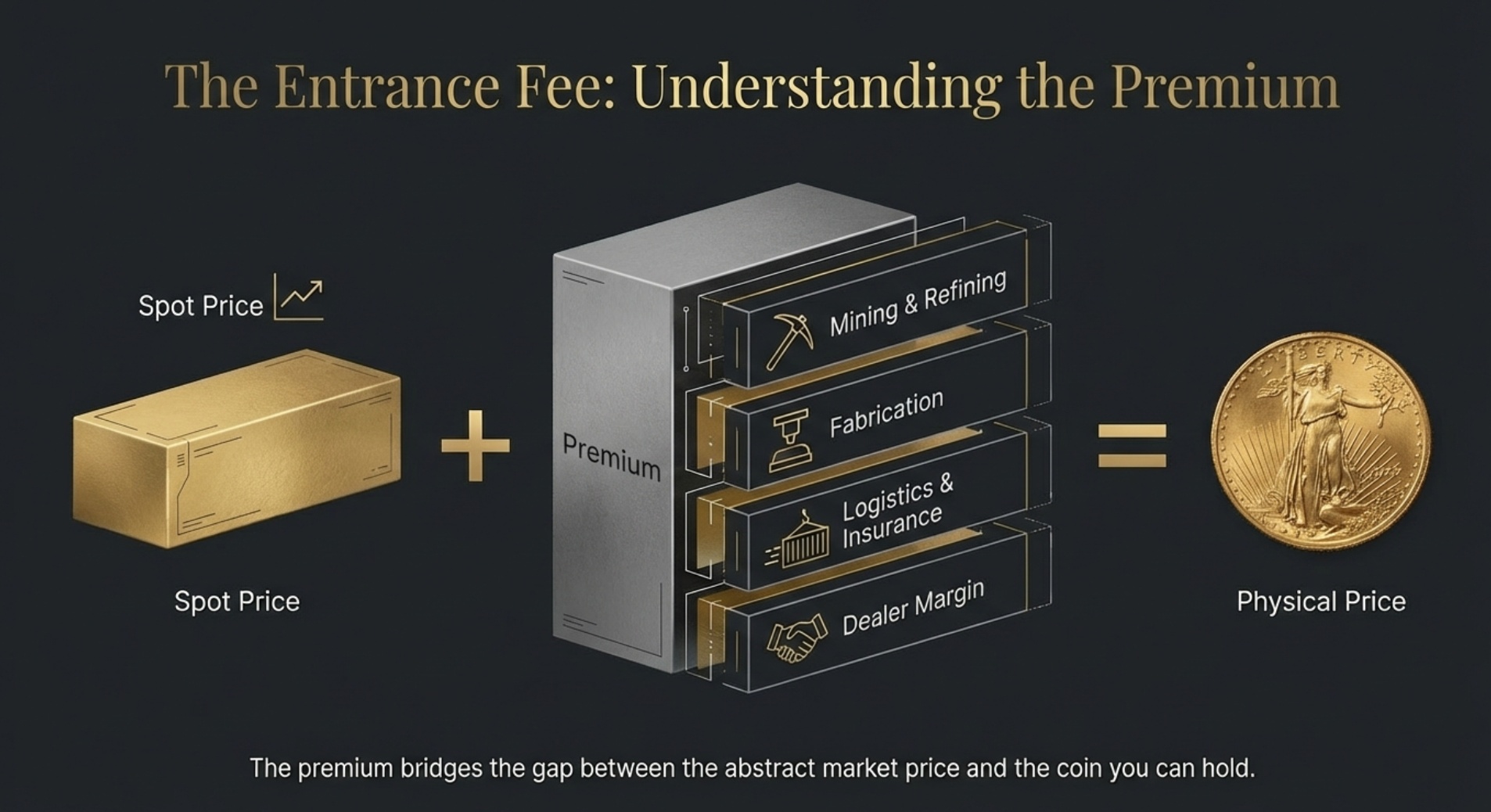
Physical gold and silver must be mined, refined, minted into bars or coins, stored, insured, shipped, and handled by dealers, which all add costs on top of spot. Dealers also need a margin to cover operating expenses and risks such as price movements between purchase and sale.
That is why gold and silver bullion are typically quoted as “spot + premium.” The premium is what bridges the gap between the abstract market price and a real coin or bar you can hold.
Gold vs silver: how each behaves around spot
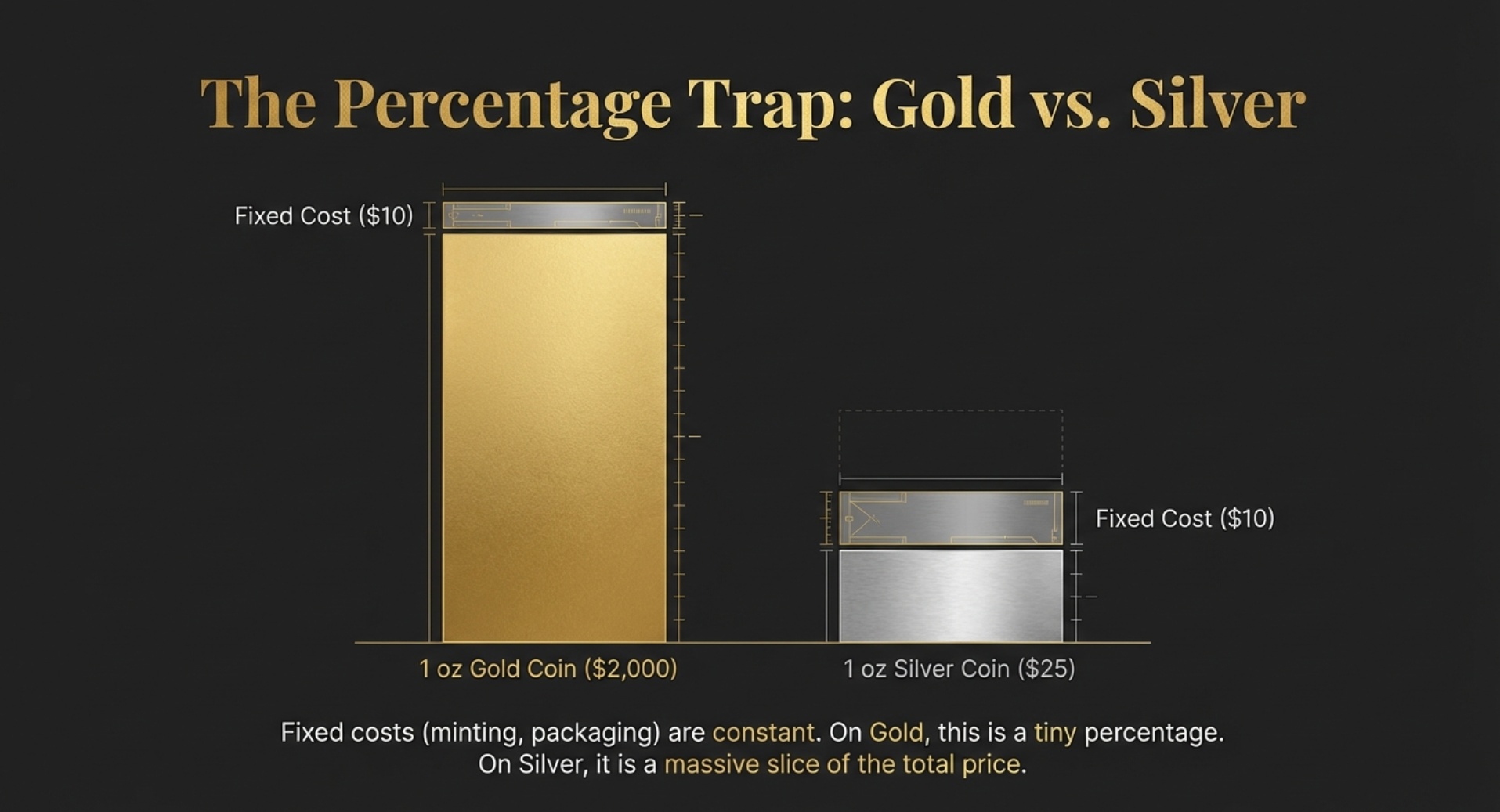
Gold premiums are often lower in percentage terms than silver premiums because a 1 oz gold coin represents much more value, so fixed costs are a smaller share of the price. Silver premiums look higher as a percentage because the metal is cheaper per ounce, but shipping, handling, and fabrication are still significant.
Popular sovereign coins like American Eagles or Maple Leafs often carry higher premiums than generic bars or rounds because they are widely recognized and easier to resell. In exchange, those coins may also enjoy tighter spreads and stronger demand when it is time to sell.
Gold premiums explained: what you pay above spot
Types of premiums on gold bullion
Premiums on gold can reflect several factors:
- Product type: coins vs bars vs specialty products.
- Brand or mint reputation.
- Design and collectability.
- Market demand and supply at the time you buy.
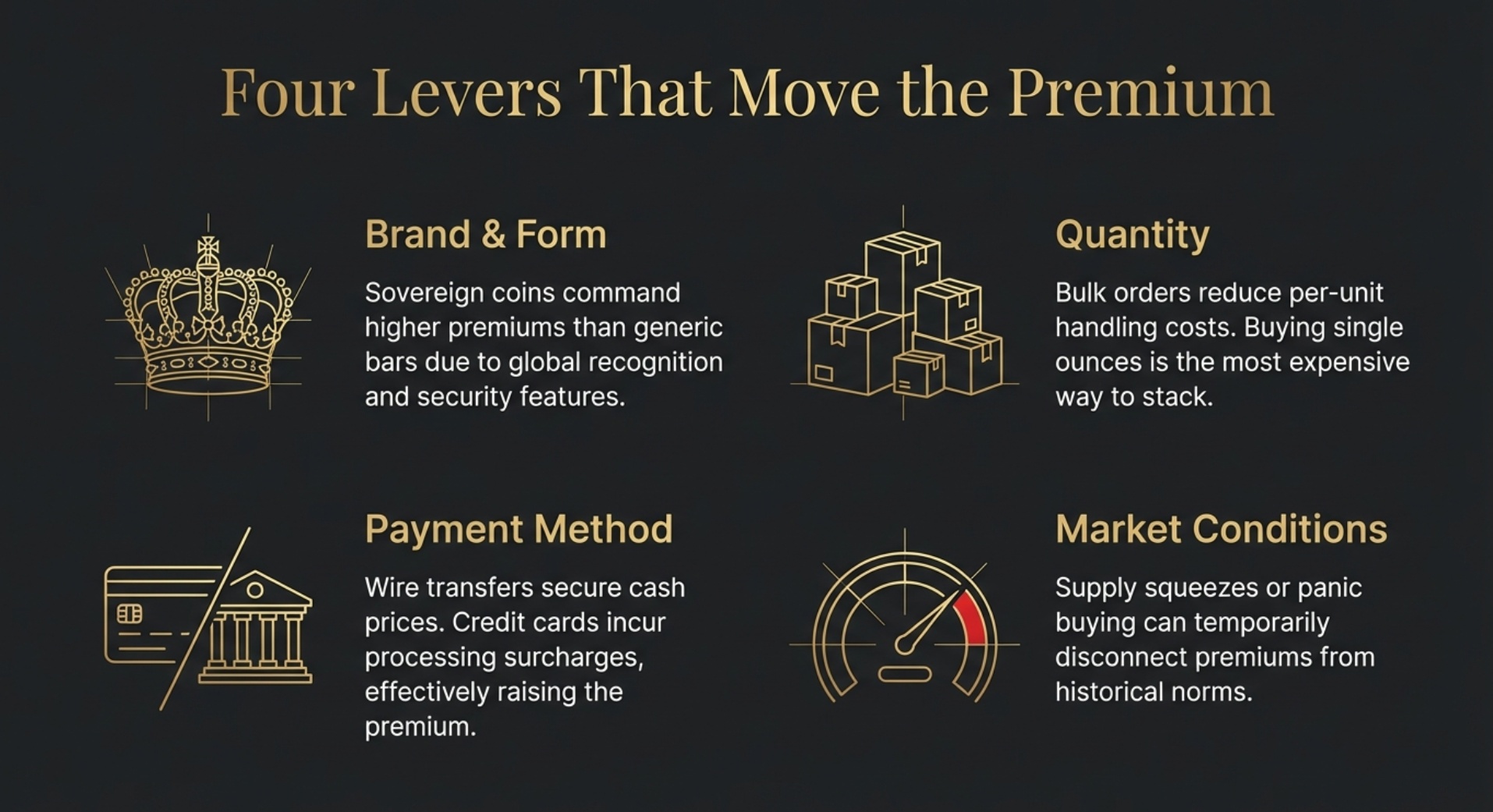
Not all premiums are created equal. A modestly higher premium on a well‑known coin can be worthwhile if that coin trades easily and commands strong resale prices, leading to a tighter overall spread.
Typical premium ranges for common gold products
While exact numbers move with the market, evergreen patterns are fairly consistent:
- Generic 1 oz gold bars from reputable refiners often sit at relatively low single‑digit percentages over spot.
- Popular 1 oz gold coins typically carry medium single‑digit to high single‑digit percentage premiums, reflecting brand and demand.
- Proofs, limited‑mintage products, and numismatic coins can carry much higher premiums due to collectability rather than pure metal value.
Premiums can also vary by order size and payment method: larger orders and bank‑wire payments frequently secure better pricing than small, card‑funded purchases.
Silver premium vs spot: why it looks “expensive”
Why silver premiums are usually higher in percentage terms
Because silver trades at a much lower dollar price per ounce than gold, per‑unit costs like fabrication, packaging, shipping, and dealer handling make up a bigger slice of the total price. As a result, it is normal to see silver rounds and coins with double‑digit percentage premiums over spot, even in calm markets.
Government‑minted silver coins usually carry higher premiums than generic rounds or bars, again because of recognition, security features, and collector demand. Those higher premiums can sometimes be offset by stronger resale demand and tighter spreads when you go to sell.
When a higher silver premium can still make sense
A higher premium can make sense if you value liquidity and ease of resale. Widely recognized silver coins may cost more upfront but can be easier to move at competitive prices during busy periods than obscure or illiquid products.
If you plan to sell back to a dealer later, it is worth comparing both the buy price and the sell price for different product types, not just choosing the lowest advertised premium.
Dealer spreads on gold and silver: the hidden cost of trading
What is a dealer spread and how does it work?
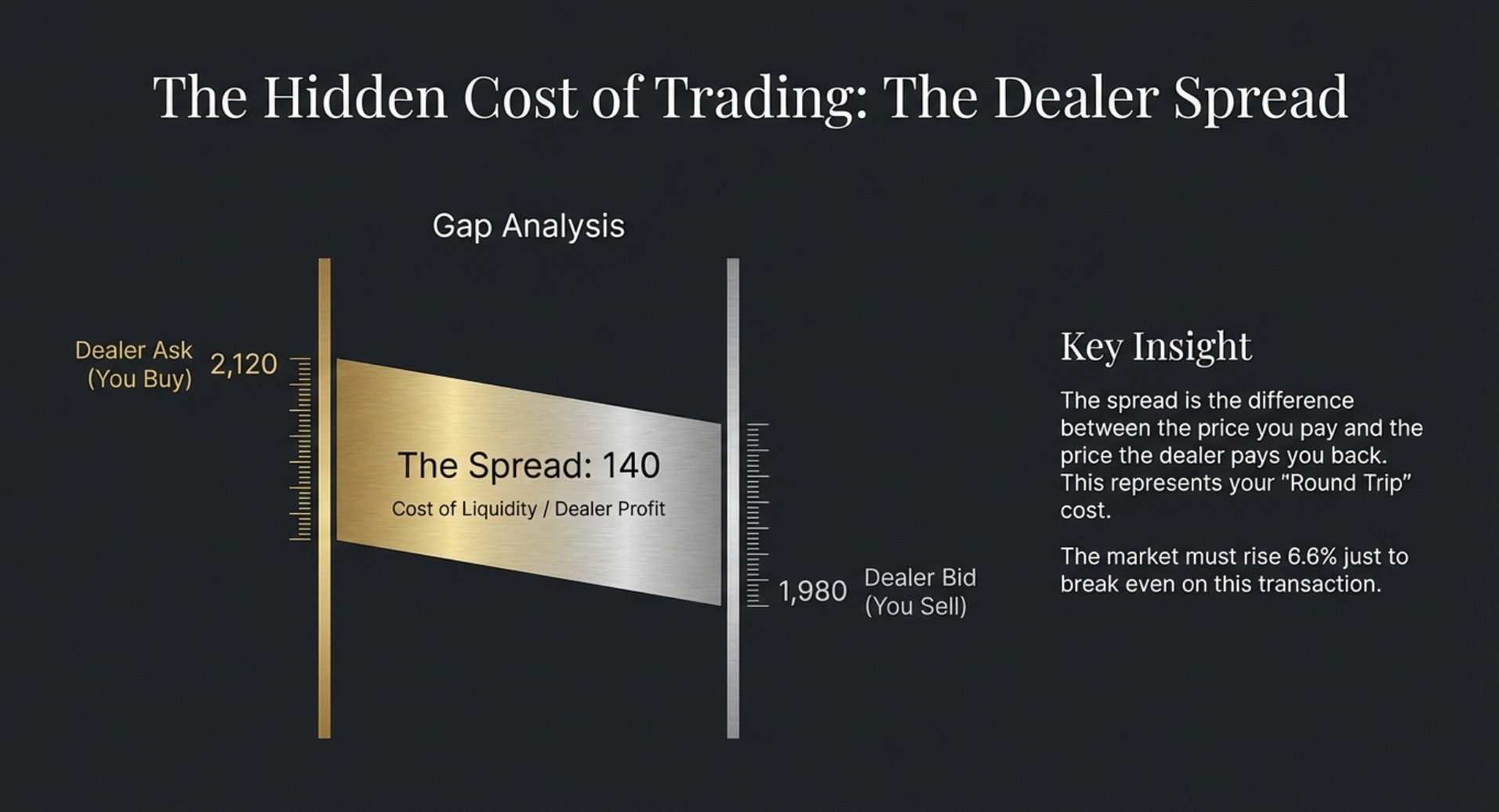
The dealer spread is the difference between the price a dealer will sell you a coin or bar for (ask) and the price they will buy the same item back for (bid). It represents the dealer’s gross margin on that product and is one of the most important numbers for long‑term investors.
For example, if the gold spot price is 2,000 and a dealer sells a 1 oz coin for 2,120 but will buy it back for 1,980, the spread is 140 on that coin, or about 6.6% of the buy‑back price. That 6.6% is your approximate round‑trip cost if you bought and sold immediately.
Typical spread ranges by product type
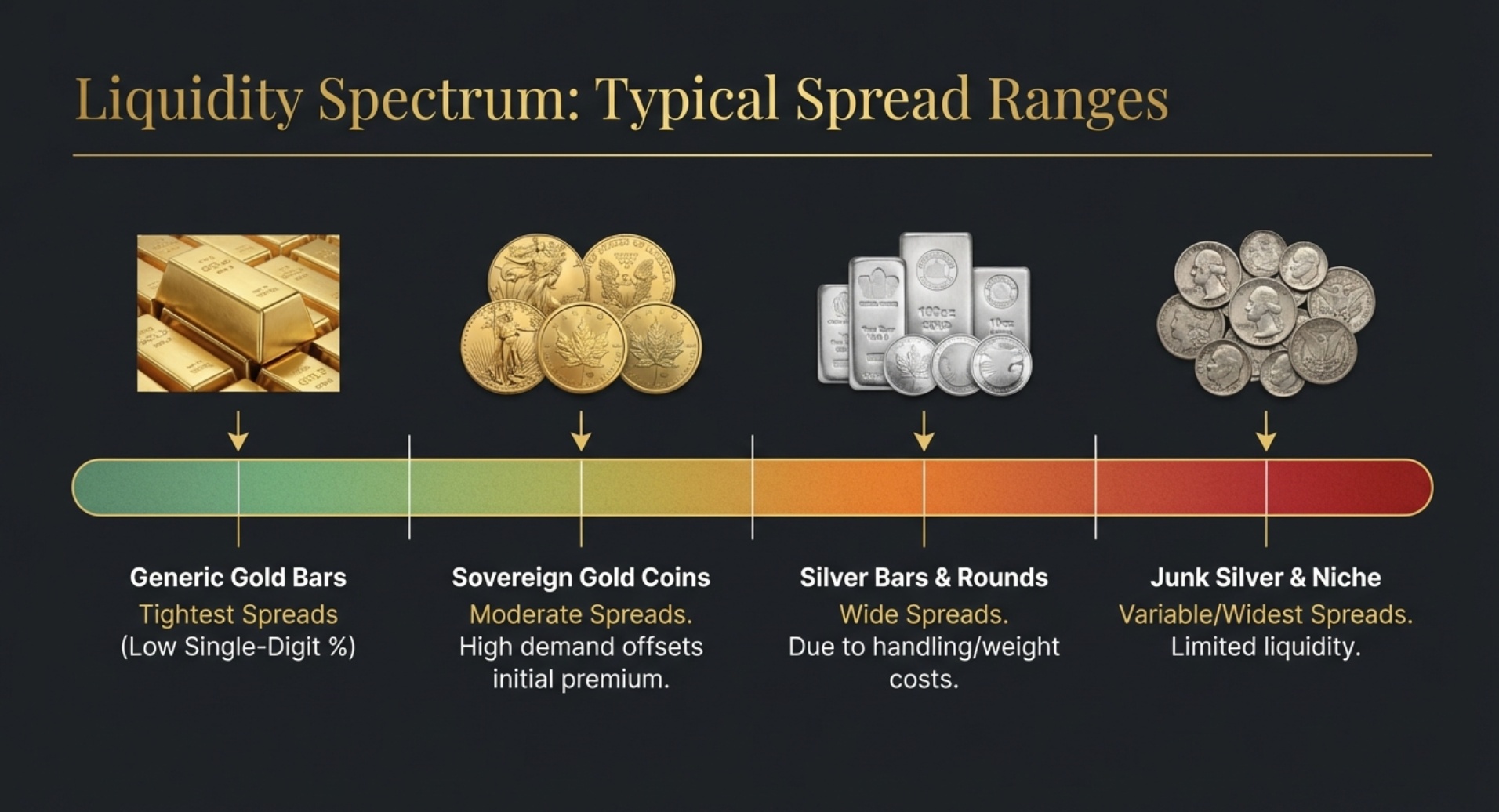
Spread ranges vary by product, metal, and market conditions, but patterns tend to be:
- 1 oz generic gold bars: generally among the tightest spreads, often in the low single‑digit percentage range.
- Popular 1 oz gold coins: slightly wider spreads, commonly in the mid‑single‑digit percentage range, reflecting higher premiums but strong demand.
- Silver bars and rounds: wider spreads in percentage terms, often mid‑single‑digit to low double‑digit, because of lower price per unit and higher handling costs.
- Junk silver, niche products, and some collectibles: spreads can be significantly wider and highly variable due to limited demand and pricing complexity.
Local coin shops may run slightly wider spreads than high‑volume online dealers because they have higher overhead and provide walk‑in service and immediate liquidity. That does not make them worse by default; it just means you should understand what you are paying for.
A simple bullion pricing guide you can reuse
Three steps to read any gold or silver quote
You can analyze almost any quote for physical gold or silver using three steps:
- Find current spot: Check a reliable live spot price feed for gold or silver in your preferred currency.
- Calculate the premium: Subtract spot from the quoted price, then divide by spot to see the premium as a percentage.
- Ask for the buy‑back price: Ask the dealer what they would pay for that same item right now; the difference between their sell and buy price is your spread.
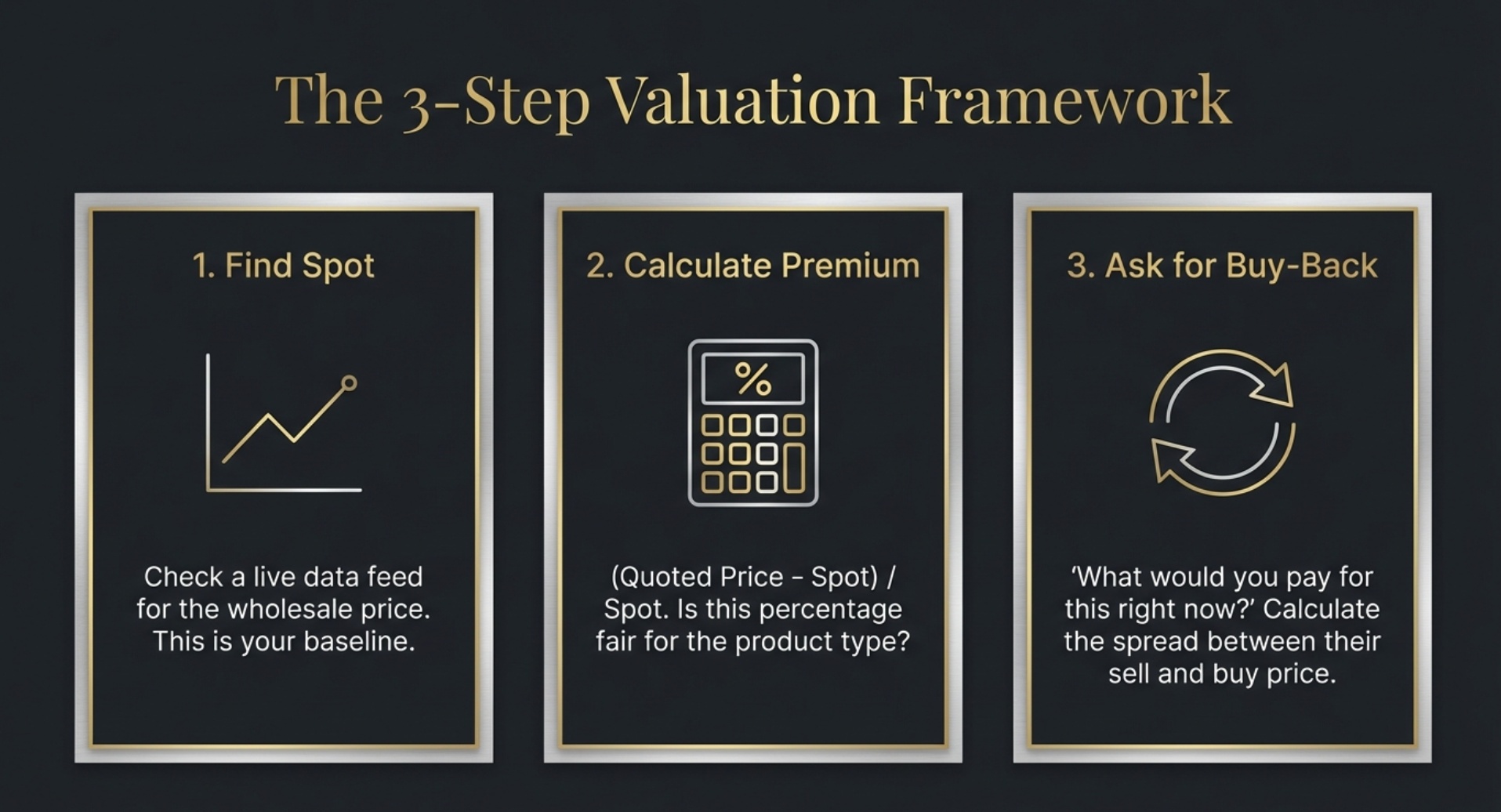
This framework works for 1 oz coins, bars, junk silver bags, and more, regardless of whether you are dealing with a local shop or an online bullion dealer.
How to compare dealers using spot, premiums, and spreads
When comparing dealers, do not focus only on the headline sales price. Instead, compare:
- Premium over spot for the exact same product.
- Buy‑back price (if offered) to gauge the spread.
- Any extras such as shipping fees, card surcharges, or minimum order sizes.
Sometimes a slightly higher premium at a dealer that offers a strong buy‑back price, transparent policies, and good service will give you a lower total round‑trip cost than the rock‑bottom premium from an unknown source.
If you want to see real‑world examples for common products and local markets, it can help to read a beginner‑friendly bullion buying guide before you start comparing dealers.
Common mistakes when reading gold and silver prices
Confusing low premium with best value
A very low premium can sometimes be a red flag, not a bargain. Products with unusually low premiums may be harder to resell, may carry wider spreads, or may not come from mints and brands that dealers are eager to buy back.
The better question is not “What is the lowest premium?” but “What is my total cost to buy and then sell this product in the future?”—which brings spreads back into focus.
Ignoring payment method, quantity, and timing
Payment method, order size, and market timing all affect your final price. Small orders paid by credit card often carry higher premiums than larger orders paid by bank transfer, and buying during panics or supply squeezes can temporarily push premiums much higher than their usual ranges.
Planning purchases during calmer periods, consolidating small orders, and using lower‑fee payment methods where sensible can all improve your effective price per ounce.
To see how this plays out when you actually sell gold or silver, you can review a dedicated guide on how buyers calculate offers for jewelry and bullion.
FAQs: spot price, premiums, and dealer spreads
What is the gold spot price and how is it set?
The gold spot price is the current wholesale price for one troy ounce of gold, quoted for immediate settlement on major exchanges and over‑the‑counter markets. It reflects large transactions and futures trading, and is used as the benchmark for retail bullion pricing.
Why is the price of physical gold higher than the spot price?
Physical gold carries additional costs for refining, minting, packaging, storage, shipping, and dealer margins, which are added as a premium over spot. That is why coins and bars are usually quoted as “spot + premium” rather than at the raw spot price.
What is a premium on gold and silver, and what is a normal premium?
A premium is the amount you pay above spot for a specific product, expressed in dollars and as a percentage. “Normal” premiums vary by product and market conditions, but generic bars tend to have lower percentage premiums, while popular coins and collectibles cost more above spot.
Why are silver premiums so high compared with spot?
Silver’s lower price per ounce means fixed costs like minting and shipping represent a larger percentage of the price, pushing percentage premiums higher than for gold. Popular silver coins can also command extra premium due to demand and brand recognition.
What is a dealer spread on gold and silver, and how does it affect me?
The dealer spread is the difference between the price a dealer sells an item for and the price they will buy it back for. It represents your round‑trip transactional cost if you were to buy and then immediately sell the same piece of bullion.
How do I know if a gold or silver price quote is fair?
To judge fairness, compare the quoted price to spot to calculate the premium, ask for the dealer’s current buy‑back price, and compare that spread to typical ranges for the same product type. Checking at least one other reputable dealer for the same item at roughly the same time provides a useful reality check.
Is it better to buy low‑premium bullion or popular coins with higher premiums?
Low‑premium bullion is efficient if you prioritize ounces per dollar, but popular coins with higher premiums can offer stronger demand and potentially tighter spreads when you sell. The best choice depends on your time horizon, resale plans, and whether you value maximum metal weight or maximum liquidity.
How do online dealer prices compare with local coin shops?
High‑volume online dealers sometimes offer slightly lower premiums and spreads on common products, thanks to scale and lower overhead. Local coin shops may charge a bit more but provide in‑person service, immediate settlement, and easier selling of mixed or smaller lots.
If you are ready to move beyond watching charts and start evaluating real‑world bullion quotes, use spot, premium, and dealer spread as your three checkpoints before every purchase or sale. With those tools, plus a solid bullion investment guide and a trusted dealer, you can approach gold and silver pricing with confidence instead of guesswork.