Published by
Gold Expert
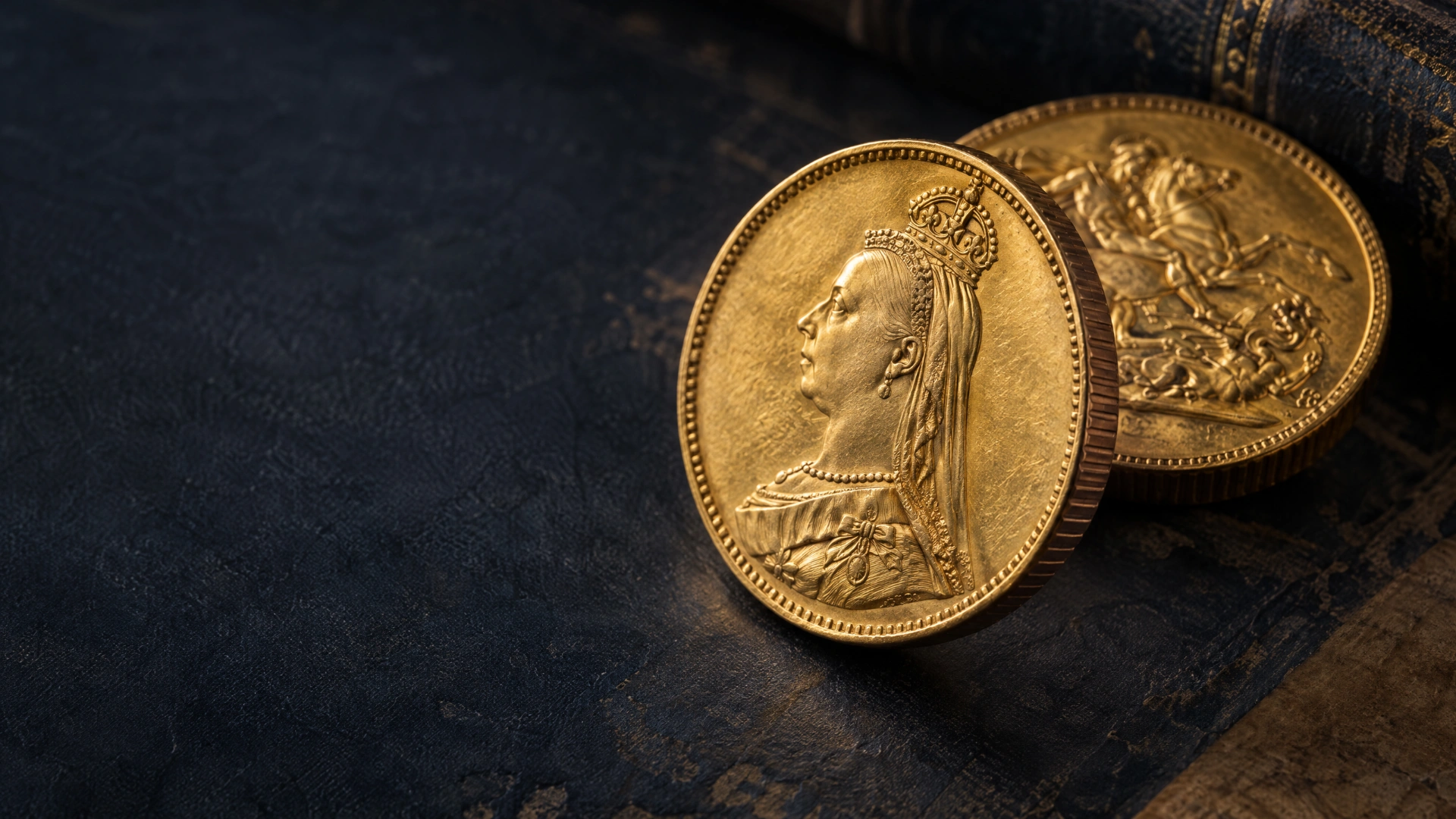
The gold sovereign is a British gold coin with a face value of one pound, struck in 22 karat gold to a weight of 7.98 grams. That puts 7.322 grams of fine gold, about 0.2354 troy ounce, in every full sovereign as struck, whether it was made for Queen Victoria or by the Royal Mint this year. The modern coin dates from 1817, carries the reigning monarch on the obverse and, for most of its history, Benedetto Pistrucci's St George and the dragon on the reverse.
Because the gold content has stayed the same, what separates one sovereign from another is the monarch, the date, the mint and the condition, and on a branch-mint coin the mint is read from a letter usually placed above the date.
Gold sovereign specifications
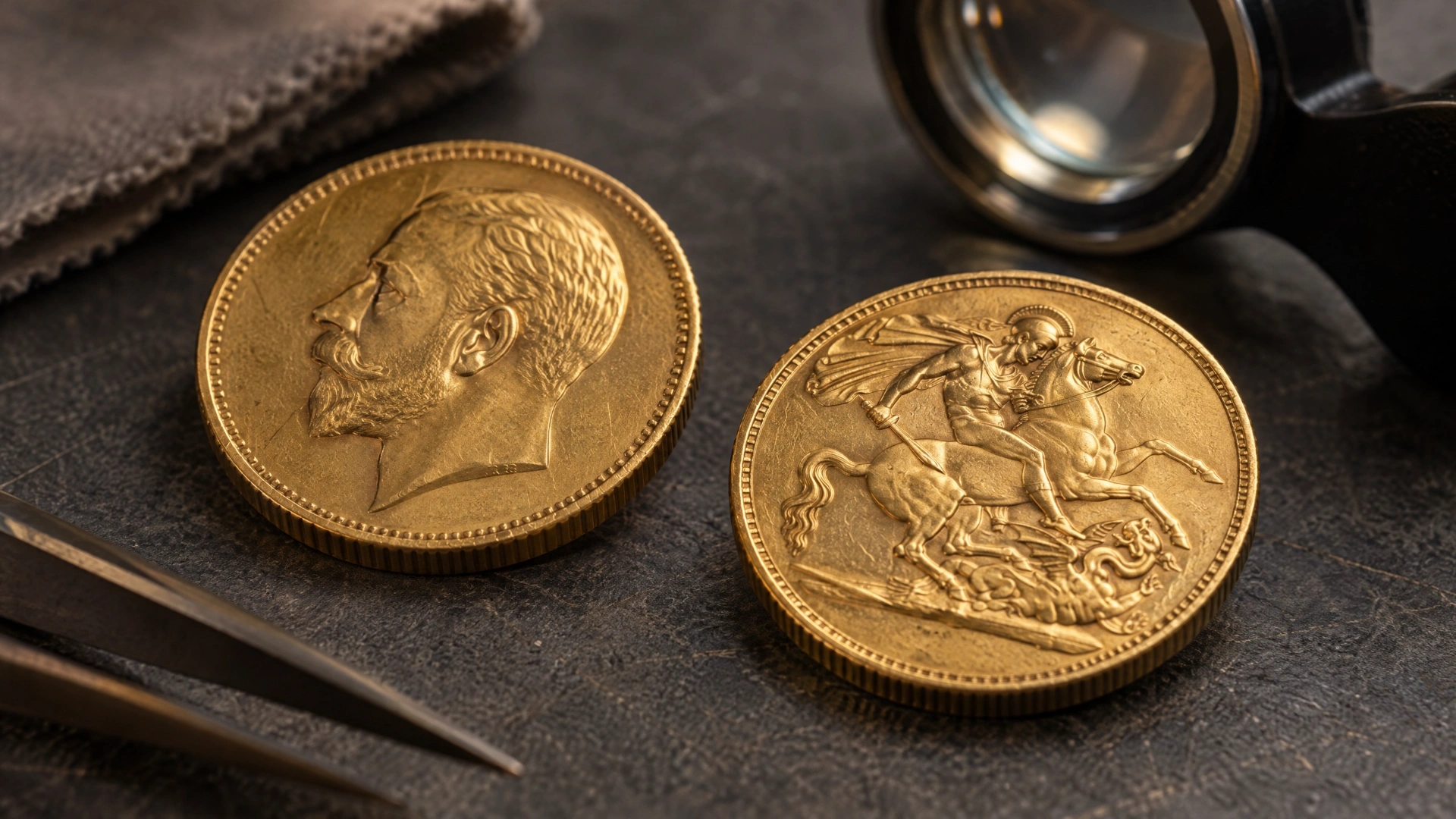
A full sovereign weighs 7.98 grams, measures 22.05 mm across and is 22 karat gold, a fineness of 0.9167, according to the Royal Mint's specification for its bullion sovereign, which gives the gold content as 7.322 grams. Fineness is the share of pure metal in an alloy, written in parts per thousand or as a decimal. The Royal Mint, writing in British English, spells it carat; the standard is the same.
Twenty-two karat means 22 parts gold in 24. The remaining twelfth is alloy, which makes the coin harder-wearing than pure gold, and the Royal Mint's history of the sovereign describes the 22 carat standard as unchanged since 1817.
The sovereign also comes in fractions and multiples. Weights and diameters below are the Royal Mint's figures for its 2022 five-coin gold proof set. Each size is a fixed fraction or multiple of the sovereign, so its fine gold is the sovereign's 7.322 grams scaled to match.
| Coin | Weight | Diameter | Fine gold |
|---|---|---|---|
| Quarter sovereign | 2.00 g | 13.50 mm | 1.83 g (0.0589 troy oz) |
| Half sovereign | 3.99 g | 19.30 mm | 3.66 g (0.1177 troy oz) |
| Sovereign | 7.98 g | 22.05 mm | 7.32 g (0.2354 troy oz) |
| Double sovereign | 15.98 g | 28.40 mm | 14.64 g (0.4708 troy oz) |
| Five-sovereign piece | 39.94 g | 36.02 mm | 36.61 g (1.1770 troy oz) |
The quarter sovereign is the newest size; the Royal Mint added it to the family in 2009. A troy ounce is 31.1035 grams, and the ounce figures in the table are the fine gold divided by that number.
The monarchs on the sovereign
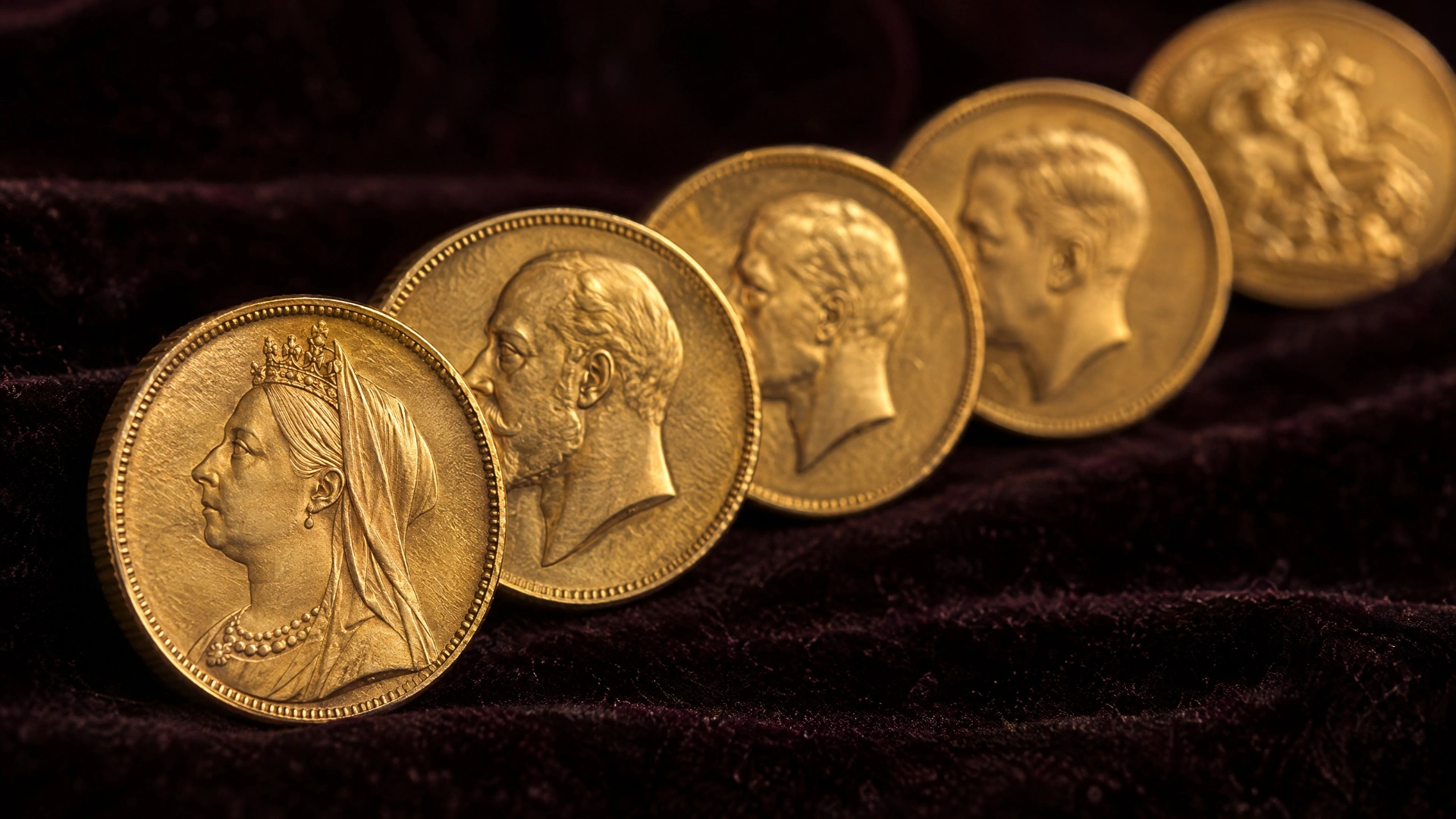
Every sovereign carries the portrait of the monarch it was struck for, and the reverse has most often carried one of two designs: Pistrucci's St George and the dragon, or the Royal Arms. The table follows the Royal Mint's account of significant moments for the sovereign; the 1957 date is from its sovereign history.
| Monarch | Reign | What the sovereigns show |
|---|---|---|
| George III | 1760-1820 | The modern sovereign was revived in 1817, with Pistrucci's St George on the reverse |
| George IV | 1820-1830 | First issued in 1821; the Royal Arms shield replaced St George in 1825 |
| William IV | 1830-1837 | Royal Arms shield reverse |
| Victoria | 1837-1901 | Young Head portrait by William Wyon, Jubilee Head by Joseph Edgar Boehm from 1887, Old Head by Sir Thomas Brock from 1893; St George returned in 1871 |
| Edward VII | 1901-1910 | Issued from 1902, with St George on the reverse |
| George V | 1910-1936 | First issued in 1911, with a portrait by Bertram Mackennal |
| Edward VIII | 1936 | A 1937 pattern in very limited numbers, never circulated |
| George VI | 1936-1952 | Limited specimen coins struck in 1937 |
| Elizabeth II | 1952-2022 | First proof sovereign in 1953; large-scale minting resumed in 1957 |
| Charles III | From 2022 | The Memorial Sovereign was the first with his portrait; the 2023 Coronation Sovereign brought back Pistrucci's design |
Queen Victoria's long reign is why "shield" and "St George" both appear in her sovereigns. The Royal Mint's sovereign history calls her early coins "Shield Sovereigns" and records that the Pistrucci design returned in 1871 and was used exclusively from 1887.
George V sovereigns and the branch mints
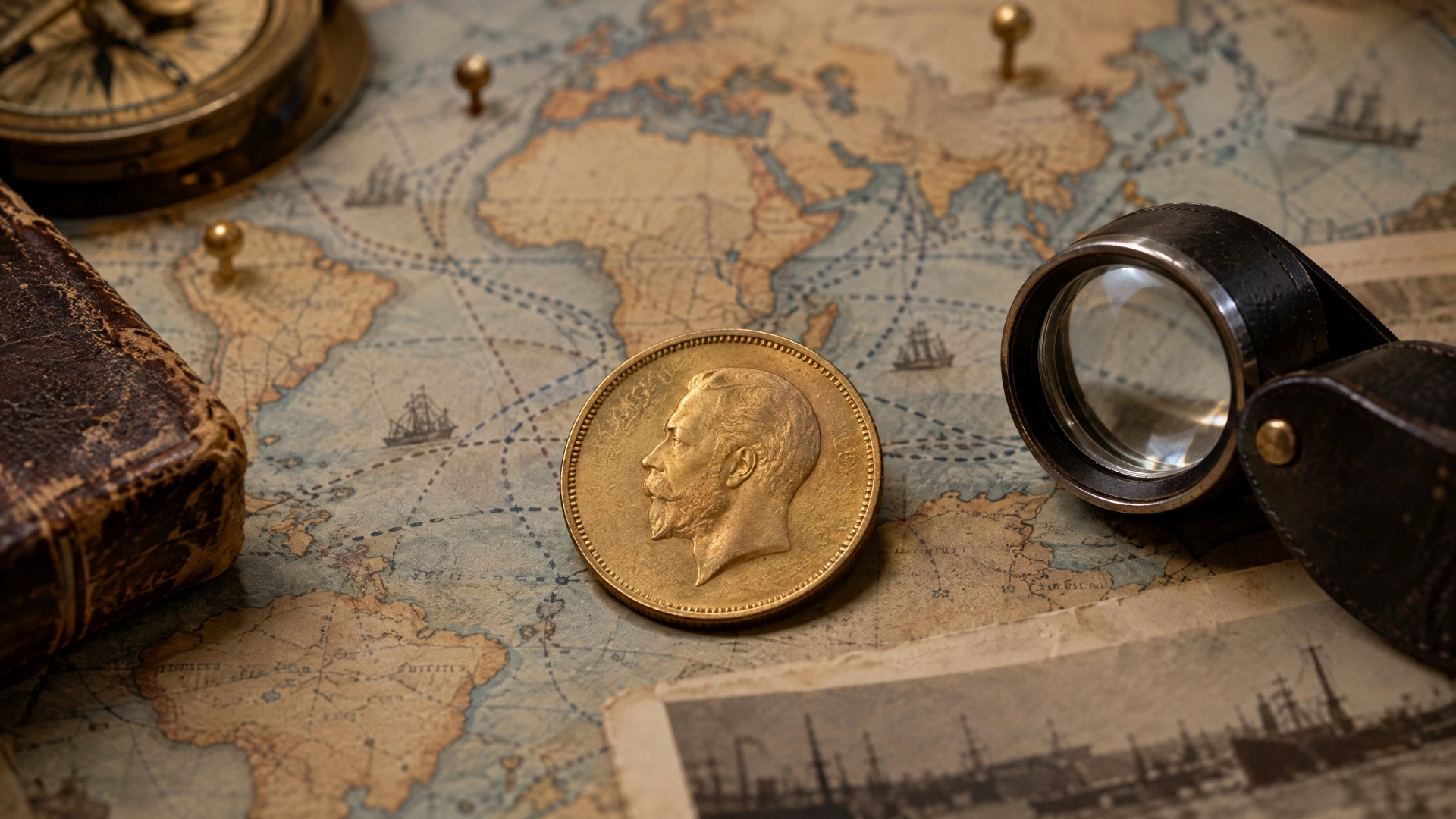
George V sovereigns were first issued in 1911 and were struck in London and at branch mints across the British Empire. The Royal Mint Museum's history of the coinage of George V records something approaching £100,000,000 of gold coin at large by 1914, a little under half of it supplied by the branch mints.
The First World War ended the sovereign as everyday money in Britain. According to the Royal Mint, within days of the outbreak of war on 4 August 1914 the government urged the public to hand in its gold sovereigns, and by the summer of 1915 gold was no longer a regular part of the nation's coinage. London stopped striking sovereigns in 1917, apart from a brief run in 1925, when the United Kingdom returned to the gold standard, of coins intended for the national reserve rather than circulation.
A branch mint is an overseas branch of the Royal Mint, and its sovereigns carry a mintmark, a letter identifying where the coin was struck, usually placed above the date. The opening years below are from the Royal Mint's sovereign history; the last year of George V sovereigns at each mint is from the Royal Mint Museum.
| Mint | Mintmark | Branch opened | Last George V sovereigns |
|---|---|---|---|
| London | None | Headquarters | 1917, plus the 1925 run |
| Ottawa | C | 1908 | 1919 |
| Bombay | I | 1918 | 1918, its only year |
| Sydney | S | 1855 | 1926 |
| Melbourne | M | 1872 | 1931 |
| Perth | P | 1899 | 1931 |
| Pretoria | SA | 1923 | 1932 |
So a George V sovereign can be a London coin dated 1911 to 1917 or 1925 with no mintmark, or a branch-mint coin dated as late as 1932 with an SA above the date. The mintmark is the first thing to read after the date, because it tells you which of seven mints you are holding.
Old issues and modern bullion sovereigns
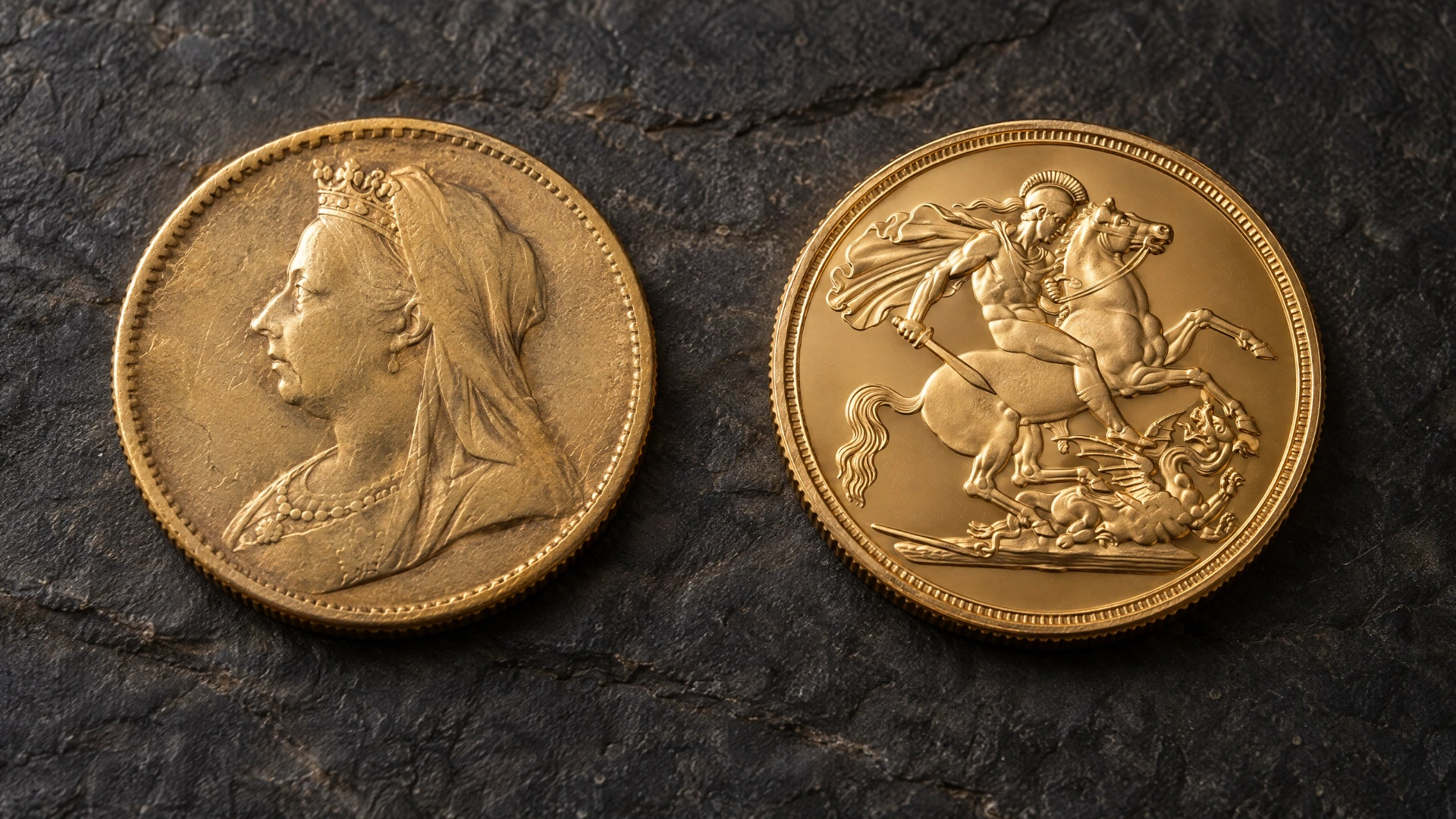
Every full sovereign is struck with the same 7.322 grams of fine gold, so apart from a little metal lost to wear on older coins, the difference between a Victorian coin and a new bullion strike is the premium paid above that gold. A premium is the amount a coin sells for above the value of its metal at spot, and on a sovereign it depends on date, mint, condition and demand.
Modern bullion sovereigns have a counterfeiting story behind them. An NGC article drawing on Robert Matthews, a retired Assay Master of the Royal Mint, describes how Britain struck more than 45 million sovereigns between 1957 and 1968. They were not meant for use at home.
The aim was to undercut counterfeits flooding markets such as Greece and the Middle East, where sovereigns traded at a significant premium to their metal content. The same article notes that none were struck in 1960 or 1961.
Old issues can carry collector value on top of the gold when the date and mint are scarce or the coin is well preserved. Grading is an expert opinion of a coin's condition on a 70-point scale, and PCGS and NGC grade sovereigns along with other world coins. A worn common-date Victorian sovereign and a high-grade example of a scarce branch-mint date were struck with the same gold, and the market can price them very differently.
Counterfeit sovereigns, and what an XRF test can tell you
Sovereigns have long been a popular target for counterfeiters, as NGC puts it, and some fakes carry real gold. In an NGC review of counterfeit sovereigns, an Australian 1892-M tested at about 85% gold and a 1918-P at about 89%, against 91.7% in genuine coins, while a fake 1911-C was gold and within weight tolerance. NGC's write-up of two counterfeit 1913 London sovereigns describes coins within tolerance on weight and metal purity that were still fake, given away by die rust and weak detail.
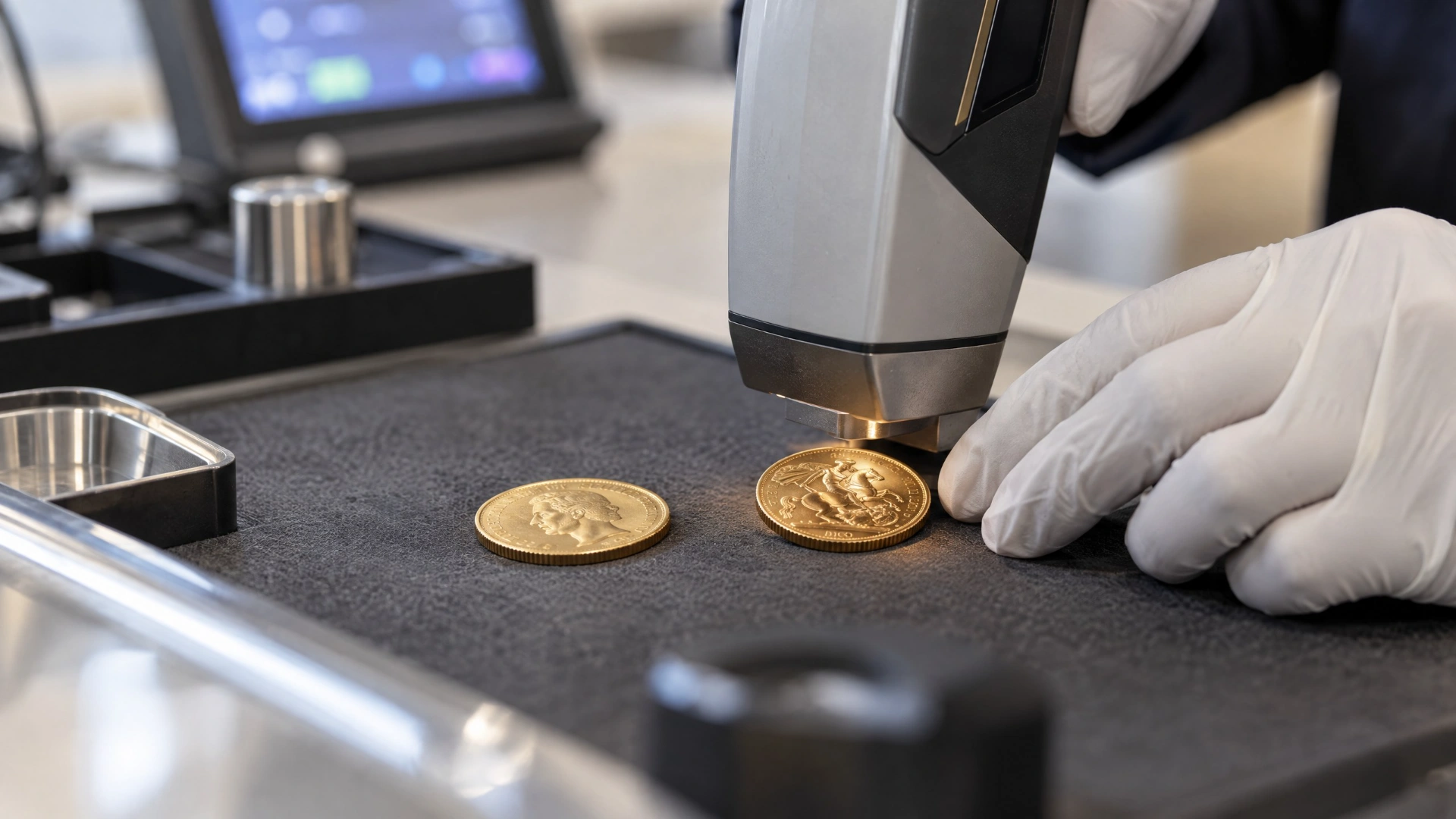
That is the useful limit of a composition test. X-ray fluorescence, or XRF, identifies the elements in a metal by the energy they give off under X-rays, and the analyzer at our counter identifies 26 different metals. It flags a coin whose surface is short of gold or made from the wrong alloy, though it reads only the surface, so a thick plating can pass.
A counterfeit struck from good 22 karat gold passes a composition test, so weight, diameter and the die details NGC describes matter as much as the reading. Our guide to XRF gold testing covers what the instrument measures and what it misses.
Sovereigns at The Bullion Bank
When this guide was written in November 2026, our online catalog listed no sovereigns, so call either store before making the trip. The British gold coin it did list was the Britannia, which the Royal Mint introduced in 1987 and has struck in 24 carat gold since 2013; our Britannia guide explains the change.
Selling a sovereign works like selling any gold coin at our counter. We test and evaluate it in front of you, make a same-day offer based on current precious metals prices and pay the same day if you accept. No appointment is needed, and the full process is on our cash for gold page.
Va. Code § 54.1-4100 defines precious metals as any item except coins, and a sovereign is a coin. The record-keeping, police reporting and 15-day hold that Virginia sets for jewelry and scrap therefore stay out of a sovereign sale, and our guide to Virginia's precious metals dealer law walks through them.
This article is educational and reflects general information about precious metals and collectible coins. It is not investment, tax or legal advice, and The Bullion Bank is not a registered investment adviser, broker-dealer or tax professional. Metal prices fluctuate and past performance does not indicate future results. Consult a qualified professional about your own situation.
Frequently asked questions
How do I work out the gold value of a sovereign?
Multiply the sovereign's fine gold, about 0.2354 troy ounce, by the current gold spot price. That gives melt value, the worth of the gold alone. A dealer's buy or sell price adds or subtracts a premium, and an old issue may carry collector value on top, so melt value is the starting point of the calculation rather than the answer.
What is a full sovereign?
A full sovereign is the standard one-pound coin, 7.98 grams of 22 karat gold, as opposed to the half sovereign and quarter sovereign. The word separates it from the fractions, which hold a half and a quarter of its gold. Double sovereigns and five-sovereign pieces also exist and are struck to the same 22 karat standard.
What is a George V gold sovereign worth?
A George V sovereign contains about 0.2354 troy ounce of gold, and its date, mint and condition can add collector value on top of that gold. London struck them from 1911 to 1917 and in 1925, and branch mints struck them as late as 1932. The mintmark above the date and the grade decide where a particular coin sits.
How can I tell if a sovereign is real?
Start with the measurements: a full sovereign is struck at 7.98 grams and 22.05 mm, and wear can take a little off a circulated one. Then test the metal, because NGC has documented fakes at about 85% to 89% gold. A coin that passes both can still be counterfeit, so look at the detail of the portrait and the reverse design, or have it certified by PCGS or NGC.
Does The Bullion Bank buy gold sovereigns?
Yes. We buy gold coins, including sovereigns, at our Chantilly and Vienna stores. We test with XRF in front of you, make a same-day offer based on current metal prices and pay the same day if you accept. Walk-ins are welcome during normal business hours, Monday to Friday 11am to 6pm and Saturday 11am to 5pm.
Bring your sovereigns to Chantilly or Vienna
The Bullion Bank has bought and sold precious metals in Northern Virginia since 2008, and a single sovereign from a family collection gets the same test and the same explanation as a run of George V dates. Bring them to either store and we will show you how the offer is calculated.
The Bullion Bank, Chantilly
4086 Airline Pkwy
Chantilly, VA 20151
(703) 705-5151
Monday-Friday 11am-6pm, Saturday 11am-5pm, Sunday closed
The Bullion Bank, Vienna
131 Maple Ave W
Vienna, VA 22180
(703) 705-5252
Monday-Friday 11am-6pm, Saturday 11am-5pm, Sunday closed