Published by
Gold Expert
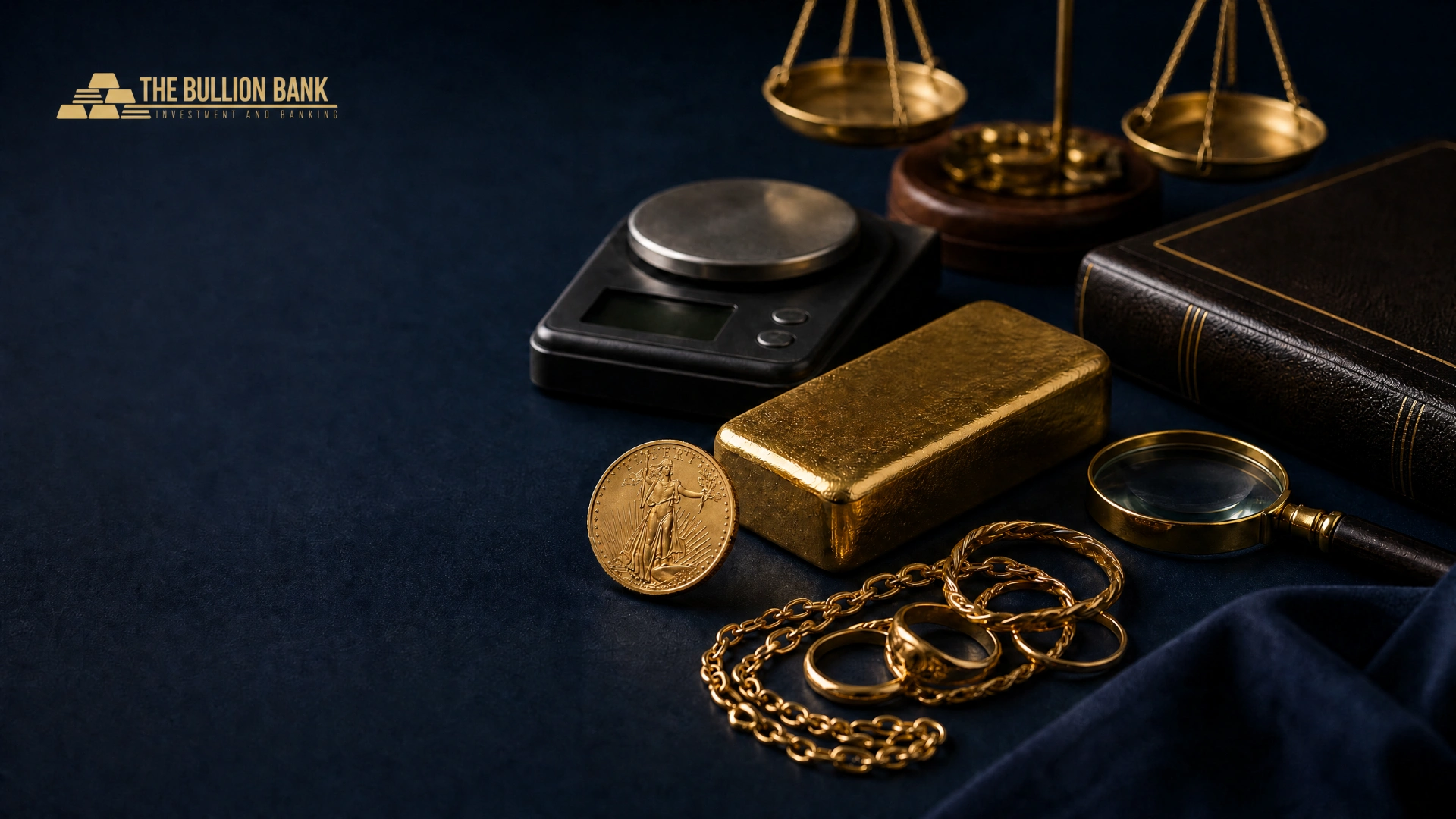
If you are selling gold jewelry, scrap, silver flatware or bullion bars in Virginia, the counter will ask you for an unexpired government photo ID showing your current legal address, plus a second form of identification. It will record the transaction and photograph your ID for its own records, and it will send a copy of the bill of sale to local law enforcement within 24 hours. It will then hold what it bought for at least 15 calendar days before it can sell or alter it.
Two things about that list surprise nearly everyone. None of it delays your payment — the 15-day hold restricts what the dealer may do with the item, not when you get paid. And none of it applies to coins at all, because the statute excludes them by name.
All of it comes from one place: Title 54.1, Chapter 41 of the Code of Virginia, the chapter governing precious metals dealers. Here is what it says, section by section, from the seller's side of the counter.
What the law covers when you sell gold in Virginia — and the coin exclusion
Start with the definition, because it decides everything that follows. Section 54.1-4100 defines precious metals as:
"[A]ny item except coins composed in whole or in part of gold, silver, platinum, or platinum alloys."
Coins are carved out on the face of the definition. And in case that left any room, § 54.1-4109(B) closes it:
"Neither the provisions of this chapter nor any local ordinances dealing with the subject matter of this chapter shall apply to the sale or purchase of coins."
That second sentence removes coins from the state chapter and from any local ordinance on the same subject, so a stricter county rule cannot reach a coin sale either.
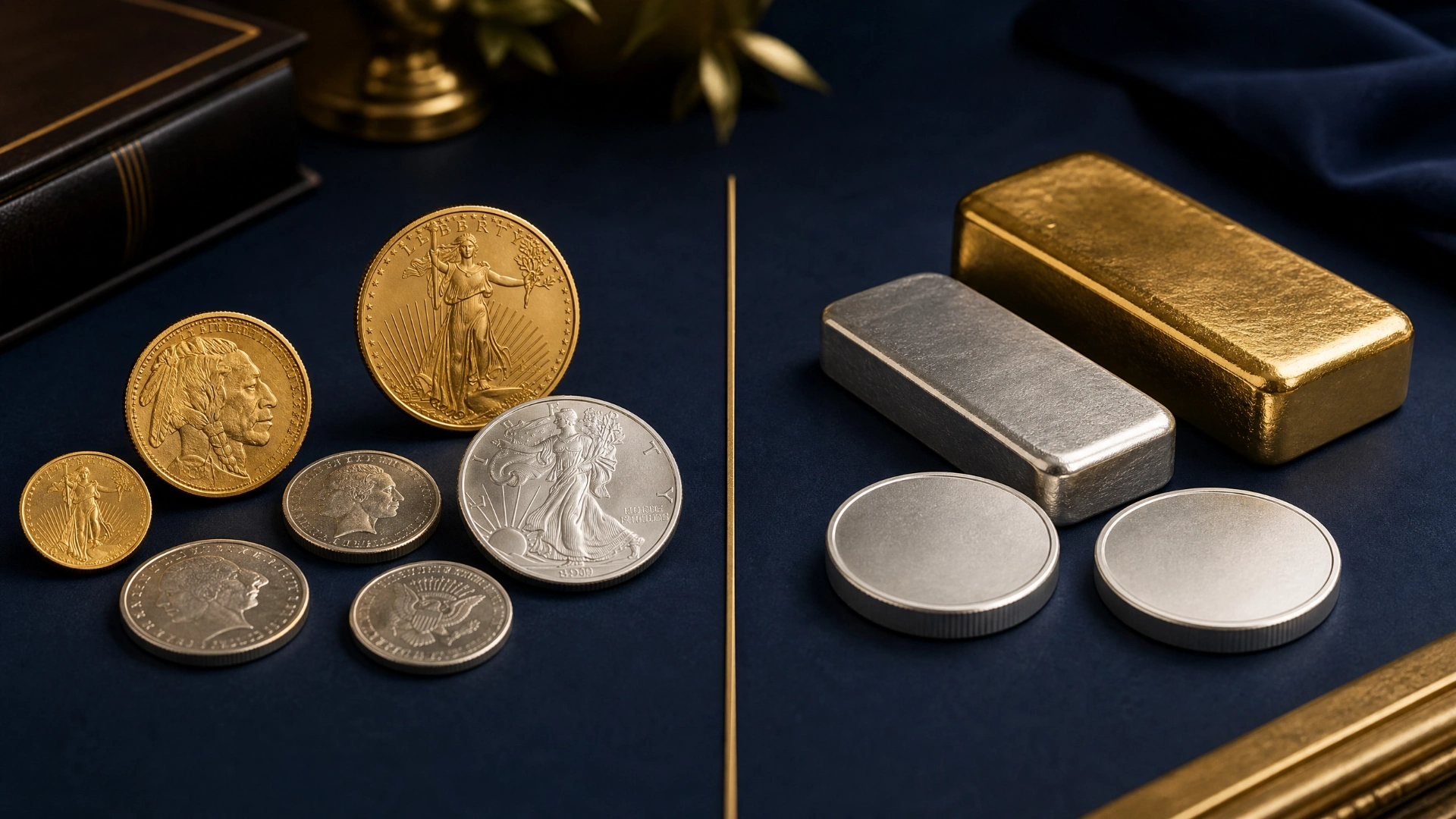
Bars and rounds are a different matter, and this is where people get it wrong. Section 54.1-4100 also defines a coin, as a piece "stamped by authority of a government with certain marks and devices, and having a certain fixed value as money." A privately minted 10-ounce silver bar or a generic one-ounce round carries no government authority and no face value, so it is not a coin — which places it squarely inside "any item except coins composed in whole or in part of gold, silver, platinum." Bullion bars and rounds are covered by Chapter 41. Bullion and numismatic coins are not.
The practical effect is that one visit can involve two different processes. A gold chain, a broken bracelet, a set of sterling flatware, a dental crown and a poured silver bar fall inside the chapter. An American Gold Eagle, a Morgan dollar and a Canadian Silver Maple Leaf — all denominated, all government-issued — fall outside it. Bring both in the same bag and you will see the paperwork attach to one pile and not the other. That is not a shop's preference; it is the statute.
What to bring when you sell gold in Virginia — § 54.1-4102

The identification requirement is more specific than most people expect, and it is the one most likely to send a seller home for a document. Section 54.1-4102 requires an:
"unexpired identification card issued by a governmental agency with the current legal address and a photograph of the seller thereon, and at least one other corroborating means of identification."
Three details in that sentence catch people out. The ID must be unexpired. It must show your current legal address — and if it does not, the statute requires you to "present other documentation verifying his current legal address", which is typically satisfied with something like a utility bill or a lease, though the locality sets what it will accept. And a second, corroborating ID is required on top of the first, not instead of it.
The same section also provides for a statement of ownership from the seller, the contents of which the local governing body may define. In substance, you are confirming the item is yours to sell.
What a Virginia gold buyer records, and who sees it — § 54.1-4101
Section 54.1-4101 sets the record the dealer must keep at its place of business. Subsection A requires, among other things, a complete description of everything purchased — "all names, initials, serial numbers, or other identifying marks or monograms on each item purchased, the true weight or carat of any gem, and the price paid for each item"; the date, time and place of the purchase; the seller's identifying details; the particulars of the ID used; a statement of ownership; and "a digital image of the form of identification used by the person involved in the transaction."
That whole record is retained by the dealer "for at least 24 months".
What goes to the police is narrower, and the distinction matters. Subsection B provides that the information required by subdivisions A 1 through A 3 — the item description, the date, time and place, and your identifying details — "shall appear on each bill of sale", and that a copy "shall be mailed or delivered within 24 hours of the time of purchase to the chief law-enforcement officer of the locality in which the purchase was made." The digital image of your ID is subdivision A 6. It is part of the dealer's own retained record, not part of the bill of sale that goes to law enforcement.
So the photograph of your driver's license is neither optional nor a shop policy — it is a statutory element of a 24-month record. It is simply not the same document as the daily report.
The 15-day hold on gold sold in Virginia — and what it does not mean — § 54.1-4104
This provision is easy to misread, and it is misread often. Section 54.1-4104(A) reads:
"The dealer shall retain all precious metals or gems purchased for a minimum of 15 calendar days from the date on which a copy of the bill of sale is received by the chief law-enforcement officer of the locality in which the purchase is made. Until the expiration of this period, the dealer shall not sell, alter, or dispose of a purchased item in whole or in part, or remove it from the county, city, or town in which the purchase was made."
Every restriction in that sentence lands on the dealer. Do not sell it, do not alter it, do not move it out of the locality. There is no clause about the seller, and none about payment. A seller who accepts an offer for a gold bracelet is paid on acceptance; the bracelet then sits, unaltered, for fifteen days while the reporting window runs. Our own cash for gold page states a same-day offer and payment the same day if you accept, and the holding period has no bearing on either.
Note also where the clock starts: not at the sale, but on the day law enforcement receives the bill of sale. Subsection B applies the same 15 days to a dealer who removes metals or gems from an article — both the removed material and the article itself have to be kept.
The permit, the bond and the scales — §§ 54.1-4108 and 54.1-4106
Section 54.1-4108 requires a permit from "the chief law-enforcement officer of each county, city, or town in which he proposes to engage in business" — one per locality, not one per company. The application fee is $200, the permit is valid for one year, and it renews annually. An applicant convicted of a felony or a crime of moral turpitude within the preceding seven years cannot hold one. A dealer operating in two jurisdictions is therefore facing two permit applications and two sets of reporting obligations rather than one.
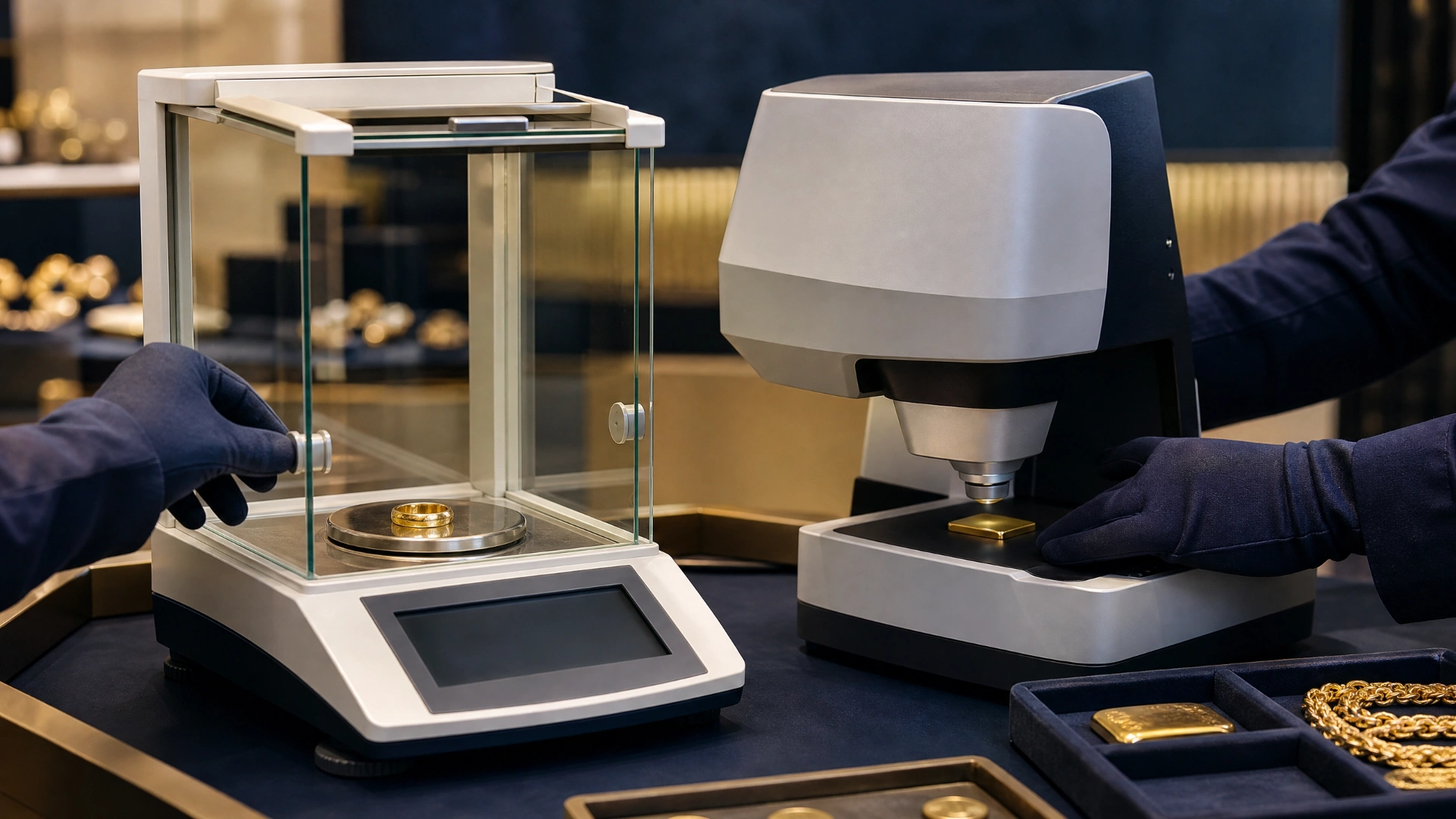
Buried in the same section is the provision a seller has the most direct interest in: weighing devices must be "inspected and approved by local or state weights and measures officials", with written evidence of that approval presented before the permit issues. The scale your gold is weighed on at a permitted Virginia counter is a regulated instrument.
Section 54.1-4106 adds a $10,000 bond or bank letter of credit at the time the permit is obtained, "conditioned upon due observance of the terms of this chapter", and § 54.1-4107 gives a private right of action on it. A seller wronged by a permitted dealer is not left with nothing to proceed against.
Two more provisions worth knowing: age and ownership
Section 54.1-4103(A): "No dealer shall purchase precious metals or gems from any seller who is under the age of eighteen." Subsection B of the same section bars a dealer from buying from someone the dealer believes is not the owner, absent written and authenticated authority from the owner to sell. If you are selling on behalf of a parent, a relative or an estate, bring the document that shows you may.
Section 54.1-4111: a county, city or town may enact its own ordinance that "parallels this chapter, or which imposes terms, conditions, and fees that are stricter, more comprehensive, or larger than those imposed by this chapter." Chapter 41 is a floor, not a ceiling — with the coin exclusion in § 54.1-4109(B) standing above local rules as well. If you want to know exactly what applies where you live, the locality's own ordinance is the document to read.
And § 54.1-4110 puts teeth in it: a first offense is a Class 2 misdemeanor and any subsequent violation a Class 1 misdemeanor — the two most serious misdemeanor classes in Virginia — with permit revocation available after a first conviction and mandatory after a second.
What the paperwork is actually for
| Requirement | Section | What it does for the seller |
|---|---|---|
| Photo ID with current address, plus a second ID | § 54.1-4102 | Makes it materially harder to sell property that belongs to someone else — including yours |
| Written record, kept 24 months | § 54.1-4101 A | A durable description of what you sold and the price paid, that you can point to later |
| Bill of sale to law enforcement within 24 hours | § 54.1-4101 B | Stolen property surfaces quickly, which is what makes a regulated counter a poor outlet for it |
| 15-day hold, unaltered and in-jurisdiction | § 54.1-4104 | Time for a wrongly-sold item to be identified while it still physically exists |
| Inspected and approved weighing devices | § 54.1-4108 | The weight your offer is calculated from is measured on a regulated instrument |
| $10,000 bond or letter of credit | §§ 54.1-4106, 54.1-4107 | Something to proceed against if a permitted dealer breaches the chapter |
What this looks like at our counter
The Bullion Bank has been buying and selling precious metals in Northern Virginia since 2008, from two stores in two separate jurisdictions: Chantilly, in unincorporated Fairfax County, and the Town of Vienna, an incorporated town inside Fairfax County with its own police department — and therefore its own chief law-enforcement officer for the purposes of the sections above.
What that means for you is short. Bring an unexpired government photo ID with your current address and one other form of identification. Expect the ID to be photographed and the transaction to be written down. Expect the paperwork on jewelry, flatware, scrap and bars, and not on coins. Metal content and purity are assessed by X-ray fluorescence analysis — XRF is a non-destructive test that identifies which metals an item contains and in what proportion — and our cash-for-gold page states that we explain how items are evaluated as the testing is done. The offer is made against current precious metals prices, and payment follows acceptance rather than the holding period.
If you are working through an estate, our guide to selling inherited coins and jewelry in Fairfax County covers the sorting side of it, and how to sell scrap gold deals with the pieces that are not worth keeping intact.
This article is educational and reflects general information about precious metals and collectible coins. It is not investment, tax or legal advice, and The Bullion Bank is not a registered investment adviser, broker-dealer or tax professional. Metal prices fluctuate and past performance does not indicate future results. Consult a qualified professional about your own situation.
Frequently asked questions
Do I have to wait 15 days to be paid when I sell gold in Virginia?
No. Section 54.1-4104 requires the dealer to retain the item for at least 15 calendar days without selling, altering or moving it out of the locality. Every restriction in the section applies to the dealer's handling of the item. It says nothing about payment to the seller, and it does not delay it.
Does Virginia's precious metals dealer law apply when I sell coins?
No. Section 54.1-4100 defines precious metals as "any item except coins" composed of gold, silver or platinum, and § 54.1-4109(B) states that neither the chapter nor any local ordinance on the same subject applies to the sale or purchase of coins. Bullion and numismatic coins are outside the chapter.
Does the law apply when I sell silver bars or rounds?
Yes. A privately minted bar or round is not a "coin" as § 54.1-4100 defines the word — it is not stamped by authority of a government and carries no fixed value as money — so it falls inside the definition of precious metals. Expect the identification, record-keeping and 15-day hold requirements to apply to bars and rounds, and not to government-issued coins.
What identification do I need to sell gold jewelry in Virginia?
An unexpired government-issued photo ID showing your current legal address, plus at least one other corroborating form of identification. If your photo ID does not carry your current address, § 54.1-4102 requires separate documentation verifying it. You will also give a statement of ownership, the contents of which your local governing body may define.
Why does the shop photograph my driver's license?
Because § 54.1-4101 A 6 requires the purchase record to include "a digital image of the form of identification used by the person involved in the transaction". That record stays with the dealer for at least 24 months. Separately, subsection B sends a copy of the bill of sale — the item description, the date and place, and your identifying details — to the locality's chief law-enforcement officer within 24 hours.
Can rules be stricter in my city or county?
Yes. Section 54.1-4111 allows any county, city or town to adopt an ordinance that parallels the chapter or imposes stricter or more comprehensive terms, conditions and fees. The state chapter is a minimum. The coin exclusion in § 54.1-4109(B) is the exception — it applies to local ordinances on the same subject as well.
Bring these three things and the counter can start
Your unexpired photo ID with your current address, a second form of identification, and the items themselves — sorted or not. Walk-ins are welcome during normal business hours at either store, testing is explained as it is done, and you will get a same-day offer.
Chantilly
The Bullion Bank
4086 Airline Pkwy
Chantilly, VA 20151
(703) 705-5151
thebullionbank.com/contact-location/chantilly
Vienna
The Bullion Bank
131 Maple Ave W
Vienna, VA 22180
(703) 705-5252
thebullionbank.com/contact-location/vienna
Both stores: Monday–Friday 11:00 a.m. – 6:00 p.m. · Saturday 11:00 a.m. – 5:00 p.m. · Sunday closed