Published by
Gold Expert
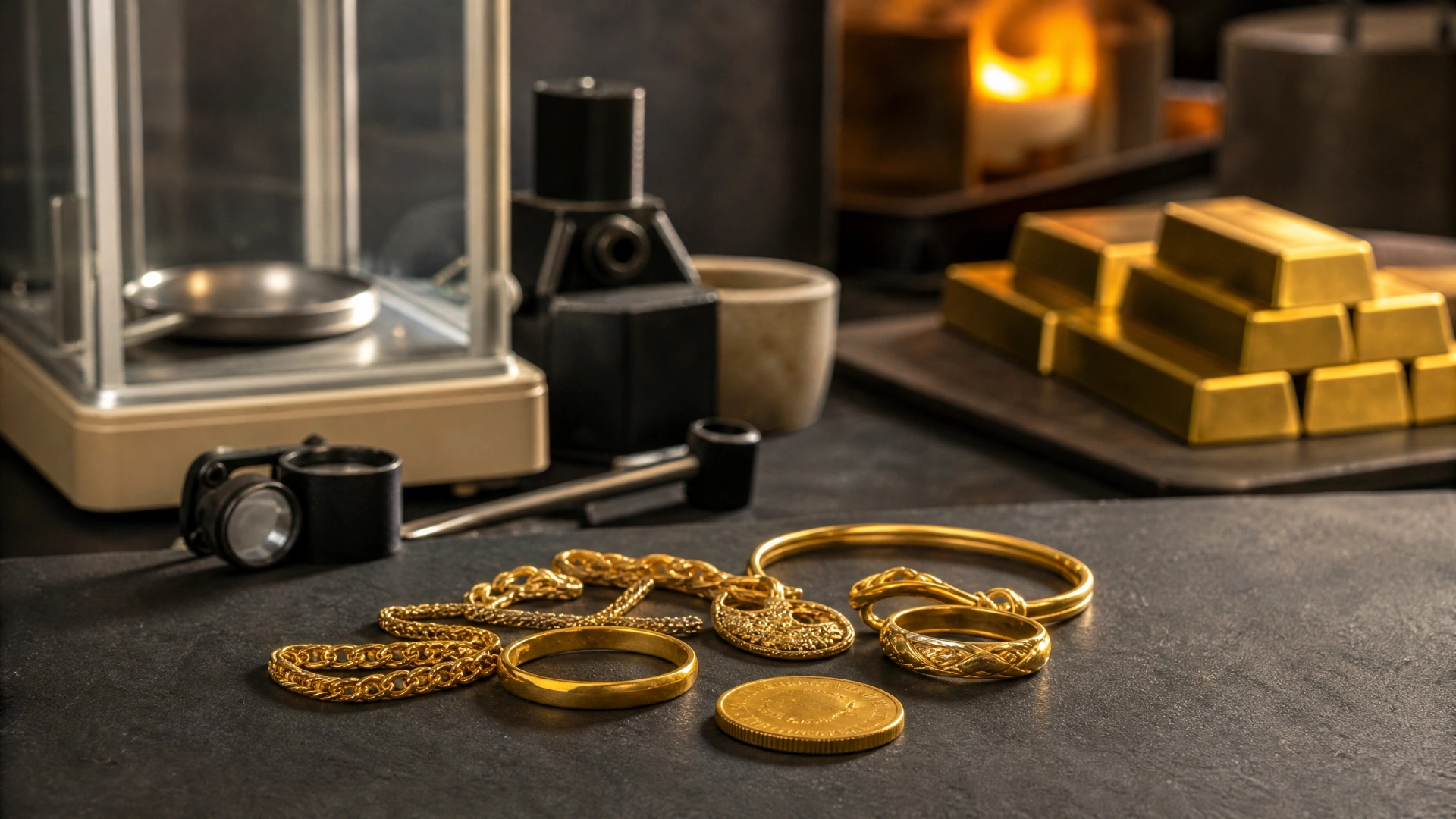
Gold sold across a dealer's counter goes to one of three places. Some of it is resold as it is, because the object is worth more than the metal in it. Some of it is traded onward into the wholesale market as recognised bullion. The rest is melted and refined back to pure gold, and returns to the market as new bars, new coins, new jewellery or industrial feedstock. Which path a particular item takes is decided in the first few minutes at the counter, and it is the main reason two pieces of similar weight can be valued differently.
This article follows a piece of gold from the counter to the refinery and back out again. It is worth understanding as a seller, because the steps in the chain are where the costs sit, and the costs are what the spread between spot and an offer is made of.
Step one: how a dealer identifies and tests what you brought in
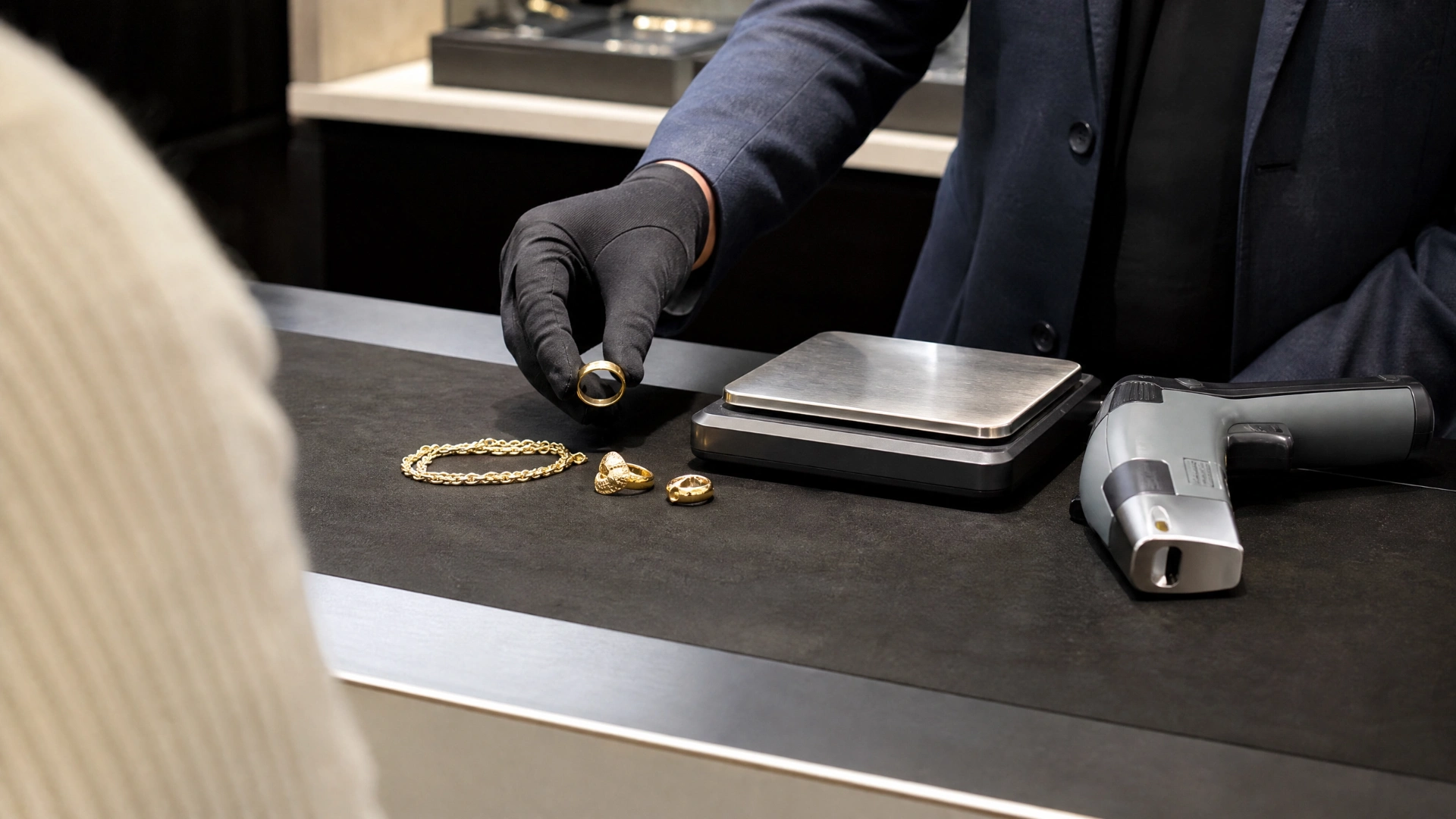
The first job is establishing what the item actually is, because nothing downstream can be decided without that.
Weight comes first, on a calibrated scale, in troy ounces or grams. Then composition. The Bullion Bank assesses metal content and purity using X-ray fluorescence analysis, which reads the elemental composition of the surface and reports the alloy, and we do it in front of the customer. XRF is fast and non-destructive, which is why it has largely replaced acid testing at the retail counter for scrap; its known limitation is that it reads a thin surface layer, so plated items and anything unusual get further checks rather than a reading taken on trust.
Alongside the metal test comes the question that determines everything after it: is this piece worth more as an object than as gold?
Step two: how a dealer sorts scrap gold from resale pieces
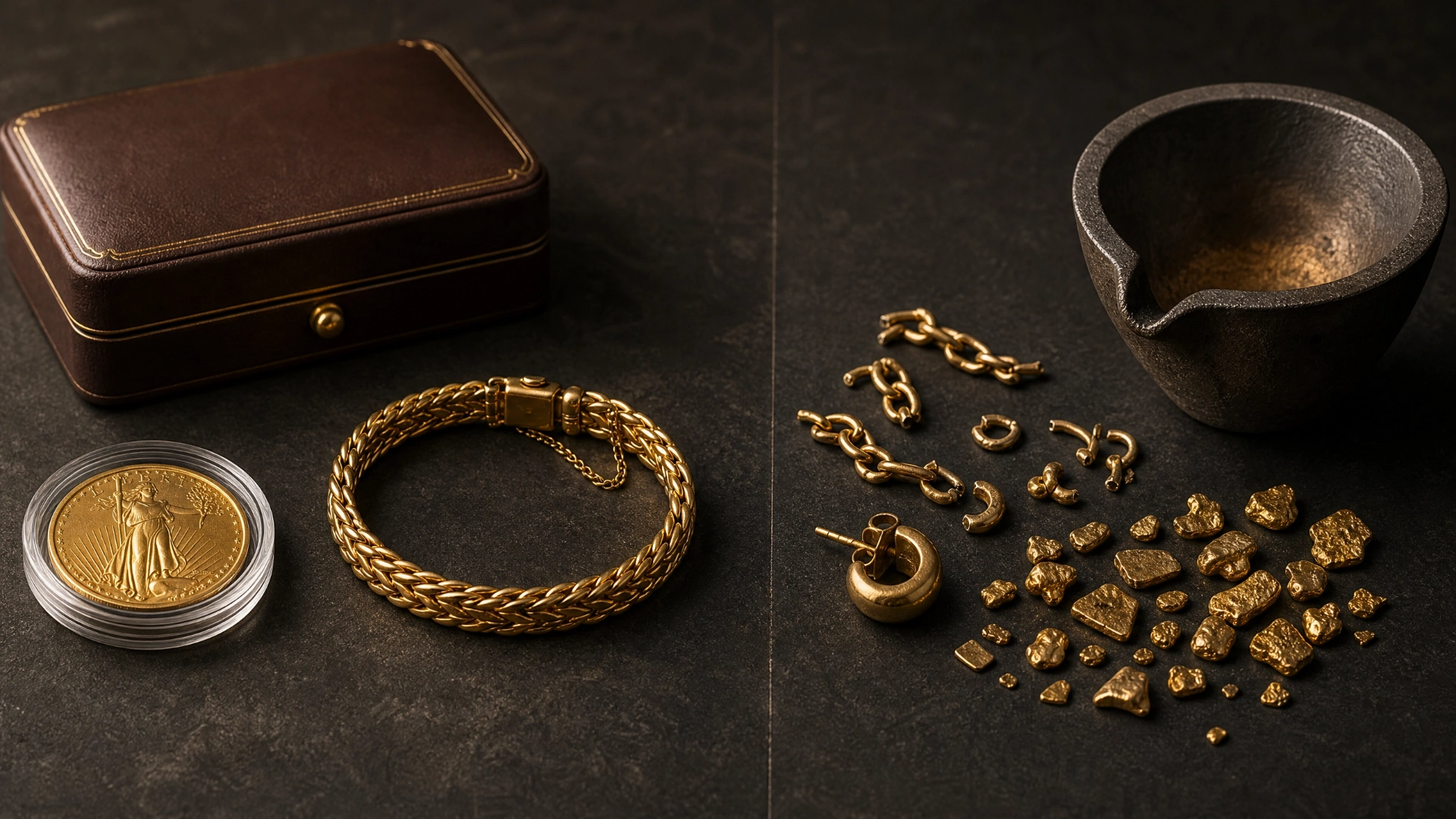
Every dealer sorts incoming gold into two streams, and the sort is a commercial judgement rather than a rule.
| Stream | What goes into it | What decides the value |
|---|---|---|
| Resale | Recognised bullion coins and bars in good condition; collectible and numismatic coins; jewellery of genuine design merit; signed pieces; anything still in its original box with papers | Date, mintmark, grade, maker, condition and demand — weight is only part of it |
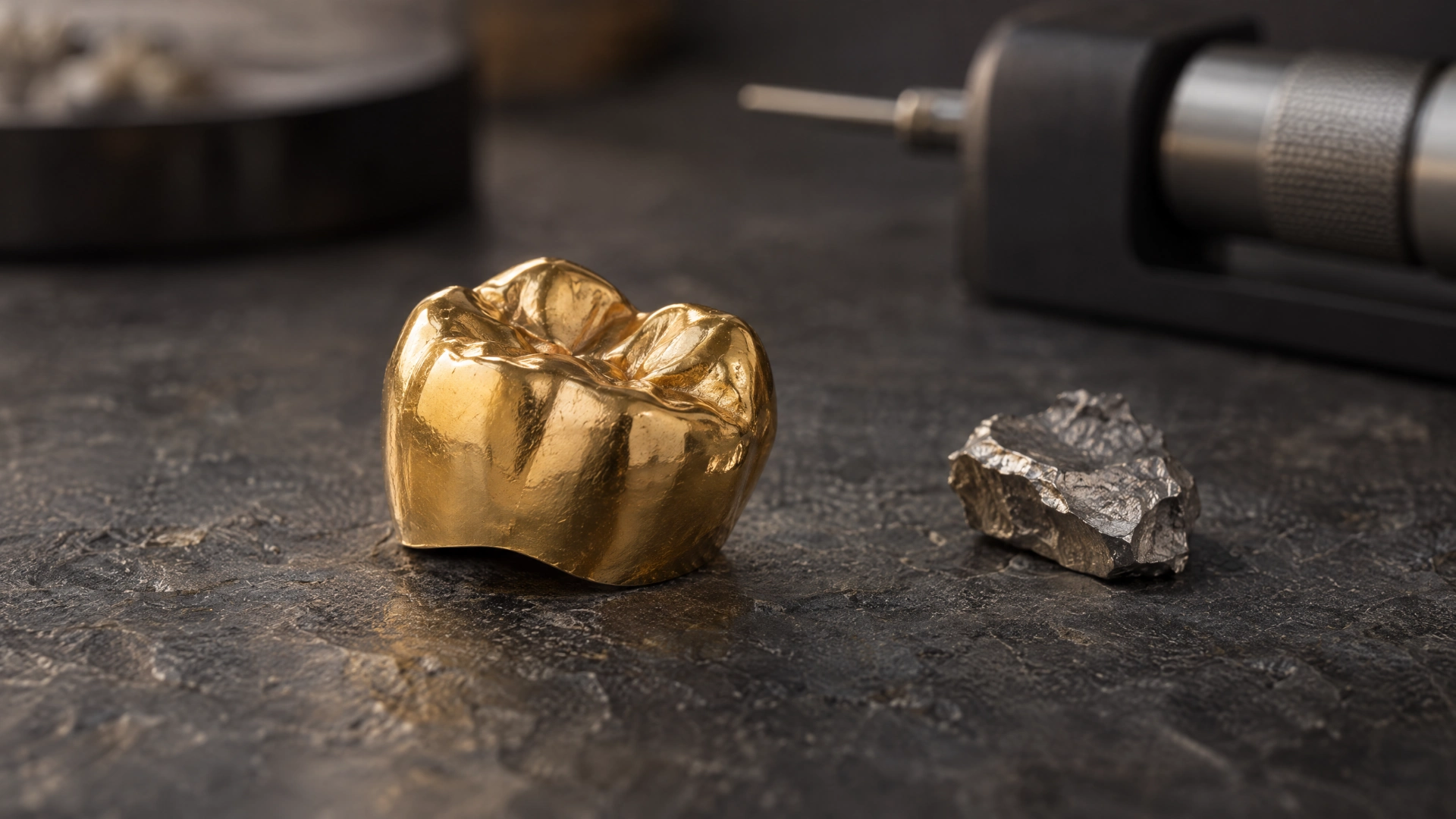
| Melt | Broken chains, single earrings, worn wedding bands, dental gold, damaged or unmarketable pieces, low-karat items whose fabrication value has been used up | Fine gold content and the market, less the cost of getting it refined |
Once a piece is melted, the difference between the two columns is gone permanently. That is why the sort happens before anything else and why it is done by hand — a dealer who handles both coins and scrap goes through a box of jewellery item by item rather than putting the lot on a scale.
This is the single most useful thing a seller can know, and it turns into a question worth asking at any counter you deal with: is any of this worth more than melt?
Step three: why some of it has to sit still for 15 days
In Virginia, jewellery and scrap bought from the public cannot move immediately — and this is state law rather than any dealer's policy.
Va. Code § 54.1-4104(A) provides that "the dealer shall retain all precious metals or gems purchased for a minimum of 15 calendar days from the date on which a copy of the bill of sale is received by the chief law-enforcement officer of the locality in which the purchase is made. Until the expiration of this period, the dealer shall not sell, alter, or dispose of a purchased item in whole or in part, or remove it from the county, city, or town in which the purchase was made." Subsection B extends the same 15 days to metals or gems a dealer removes from an article, and to the article they came out of.
Here is the part almost nobody knows, and it explains a good deal about how a counter behaves. Va. Code § 54.1-4100 defines precious metals, for the purposes of this chapter, as "any item except coins composed in whole or in part of gold, silver, platinum, or platinum alloys." Coins are excluded from the definition on the face of the statute. The holding period, and the chapter it belongs to, is aimed at secondhand jewellery, flatware and scrap rather than at bullion and numismatic coins.
So the same counter is subject to different rules depending on what is put on it. A gold chain and a Gold Eagle are handled differently under Virginia law — one more reason a shop that buys both keeps them in separate streams from the moment they arrive.
One thing the holding period does not do is delay your payment. It governs what the dealer may do with the item, not when the seller is paid; at our counters payment is made on acceptance of the offer, the same day. What it does mean is that jewellery and scrap bought in Northern Virginia stay in Northern Virginia, unaltered, for at least two weeks, and that the melt stream moves in batches: material accumulates, clears its hold, and goes out as a consolidated lot.
Step four: how a gold refinery works
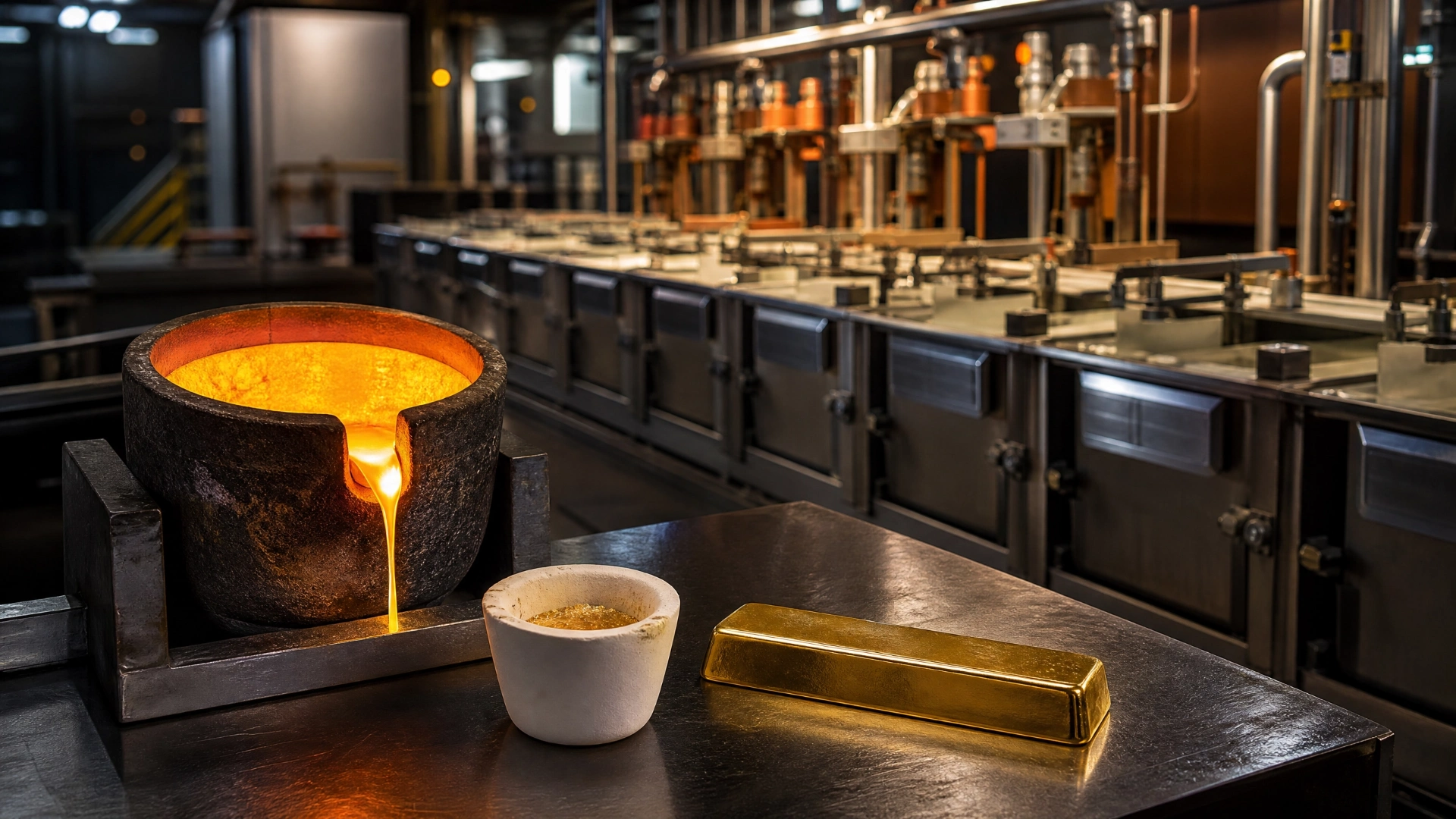
Refining is the process of separating gold from the other metals it is alloyed or mixed with, and returning it to a defined purity. Scrap arriving at a refinery is a jumble of karats and alloys, so the first stage is melting a lot into a single homogeneous bar and assaying it — the lot is paid on its assayed fine gold content, not on what the pieces were stamped.
Two industrial processes do most of the work, and they are usually used in sequence.
The Miller process blows gaseous chlorine through molten impure gold. As Britannica's account of gold processing explains, "virtually all the impurities present in gold combine with gaseous chlorine more readily than gold does at temperatures equal to or greater than the melting point of gold," forming a chloride layer that is skimmed off. It is "rapid and simple" but reaches "only about 99.5 percent purity."
The Wohlwill process takes it further by electrolysis. The impure gold is the anode in a bath of hydrochloric acid and gold chloride; gold dissolves and re-deposits on the cathode while impurities pass into solution or drop out as sludge. This "increases purity to about 99.99 percent," at the cost of tying up a substantial gold inventory in the electrolyte.
Nothing is thrown away. The silver, copper, platinum and palladium separated out of the mix are recovered and sold on their own account, which is part of why a refiner can quote a return on mixed low-karat material at all.
Step five: where refined gold goes next

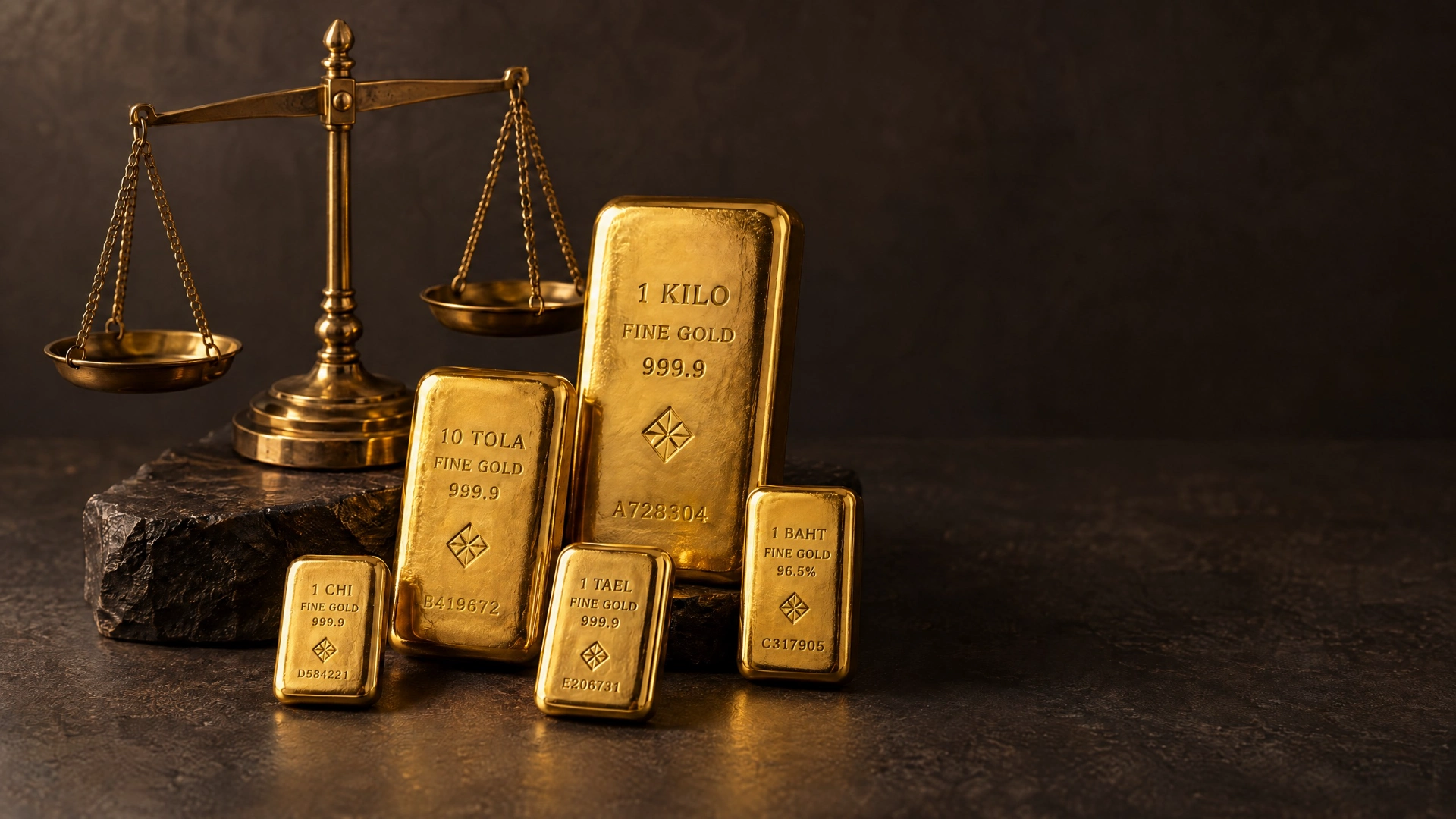
Refined gold leaves as bars, made to specification for whoever is buying them. At the wholesale end, the reference product is the Good Delivery bar. The London Bullion Market Association's Technical Specifications require a gold content of 350 to 430 fine troy ounces and a minimum fineness of 995.0 parts per thousand, with a refiner's stamp, assay mark, fineness, serial number and the month and year of manufacture stamped on the bar — by pressure stamping or dot matrix punching, never laser engraving. Only refiners on the LBMA's accredited list may produce them, which is what makes the bar tradeable without re-assay.
From there the metal goes wherever demand is: to sovereign and private mints for coins and small bars, to jewellery manufacturers, to electronics and aerospace, and back into vaults as investment-grade bullion. A wedding ring sold in Vienna in one year can plausibly be part of a one-ounce coin sold in another the next.
How much gold comes back this way
Recycled metal is not a footnote to gold supply. It is roughly a quarter to a third of it, every year.
The World Gold Council's Gold Demand Trends supply data for full-year 2025 puts total gold supply at 5,002.3 tonnes, of which mine production was 3,671.6 tonnes and recycled gold 1,404.3 tonnes — 28.1% of the total. The two do not add up to the total because the Council's supply figure also nets off producer hedging, which was negative in 2025. The Council notes that recycling volume rose only about 3% year on year despite a 44% increase in the annual average gold price, and describes that as a surprise.
The domestic picture is more striking still. The US Geological Survey's Mineral Commodity Summaries 2026 reports US mine production of 160 tons of gold in 2025 and states that "an estimated 90 tons of new and old scrap was recycled, equivalent to about 60% of reported consumption."
Those figures are worth sitting with. The jewellery box on a dresser in Fairfax County is part of the same supply chain as a mine in Nevada, and in the United States the recycled stream supplies most of what gets consumed.
Why the chain explains the offer
Every step above costs something, and those costs are why no dealer anywhere pays spot for scrap gold.
Spot is the price for large, standardised, already-refined metal delivered in the wholesale market. A mixed lot of jewellery is none of those things. Between the two sits every step described above — assay, refining, freight and insurance, the capital tied up across the statutory holding period — plus the dealer's own margin. Ask any counter to show you where its number came from rather than accepting a take-it-or-leave-it figure. We walk through how spot, premiums and dealer spreads relate to one another in a separate article on reading gold and silver prices.
The seller's real lever is not haggling. It is making sure nothing in the lot that belongs in the resale stream gets valued as melt — which means not pre-sorting a box yourself, not discarding boxes and papers, and asking to have anything unusual looked at separately.
This article is educational and reflects general information about precious metals and collectible coins. It is not investment, tax or legal advice, and The Bullion Bank is not a registered investment adviser, broker-dealer or tax professional. Metal prices fluctuate and past performance does not indicate future results. Consult a qualified professional about your own situation.
Frequently asked questions
Is my gold melted down as soon as I sell it?
No. Anything worth more as an object than as metal is set aside for resale. In Virginia, jewellery and scrap bought from the public are also held unaltered for at least 15 calendar days under Va. Code § 54.1-4104 before they can be sold, altered or moved out of the locality — coins are excluded from that requirement by the definition in § 54.1-4100. Melt-stream material typically goes to a refiner in consolidated lots after the hold, not piece by piece.
Do I have to wait 15 days to be paid?
No. The 15-day period in Va. Code § 54.1-4104 restricts what the dealer may do with the item; it says nothing about when the seller is paid. At our Chantilly and Vienna counters, payment is made on acceptance of the offer.
Why does a dealer need my ID to buy gold?
Because Virginia's precious metals dealer law requires it. Under Va. Code § 54.1-4102 the dealer must see government-issued photo identification, and under § 54.1-4101 it records the seller's identity and a description of the item and files the record with the chief law-enforcement officer of the locality — which is also what starts the clock on the 15-day holding period in § 54.1-4104. It is a statutory requirement on the dealer, not a policy choice.
What does the refinery actually do to the gold?
It melts a mixed lot into a single bar, assays it to establish the fine gold content, and then separates the gold from the other metals — typically by chlorination, which Britannica notes reaches about 99.5% purity, followed where higher purity is needed by electrolysis, which reaches about 99.99%. The silver, copper and platinum-group metals recovered along the way are sold separately.
Should I clean my jewellery before bringing it in?
Light dust or dirt makes no difference to a scale or an XRF reading, so there is no need. Do not polish, buff or repair anything, and do not remove stones or dismantle pieces — on anything with design or maker value, that work can reduce what the piece is worth intact. Bring boxes, papers and receipts if you still have them.
Bring it in and watch the testing
If you are considering selling gold in Northern Virginia, bring it to either counter and we will weigh it, test it with XRF in front of you, tell you which pieces belong in the resale stream and which are melt, and make an offer the same day. No appointment is needed, and payment is made on acceptance. You can read more about how we handle sellers on our cash for gold page.
Chantilly
The Bullion Bank
4086 Airline Pkwy
Chantilly, VA 20151
(703) 705-5151
Vienna
The Bullion Bank
131 Maple Ave W
Vienna, VA 22180
(703) 705-5252
Both locations: Monday–Friday 11:00–18:00 · Saturday 11:00–17:00 · Sunday closed
thebullionbank.com
Buying and selling precious metals in Northern Virginia since 2008.