
Published by
Gold Expert
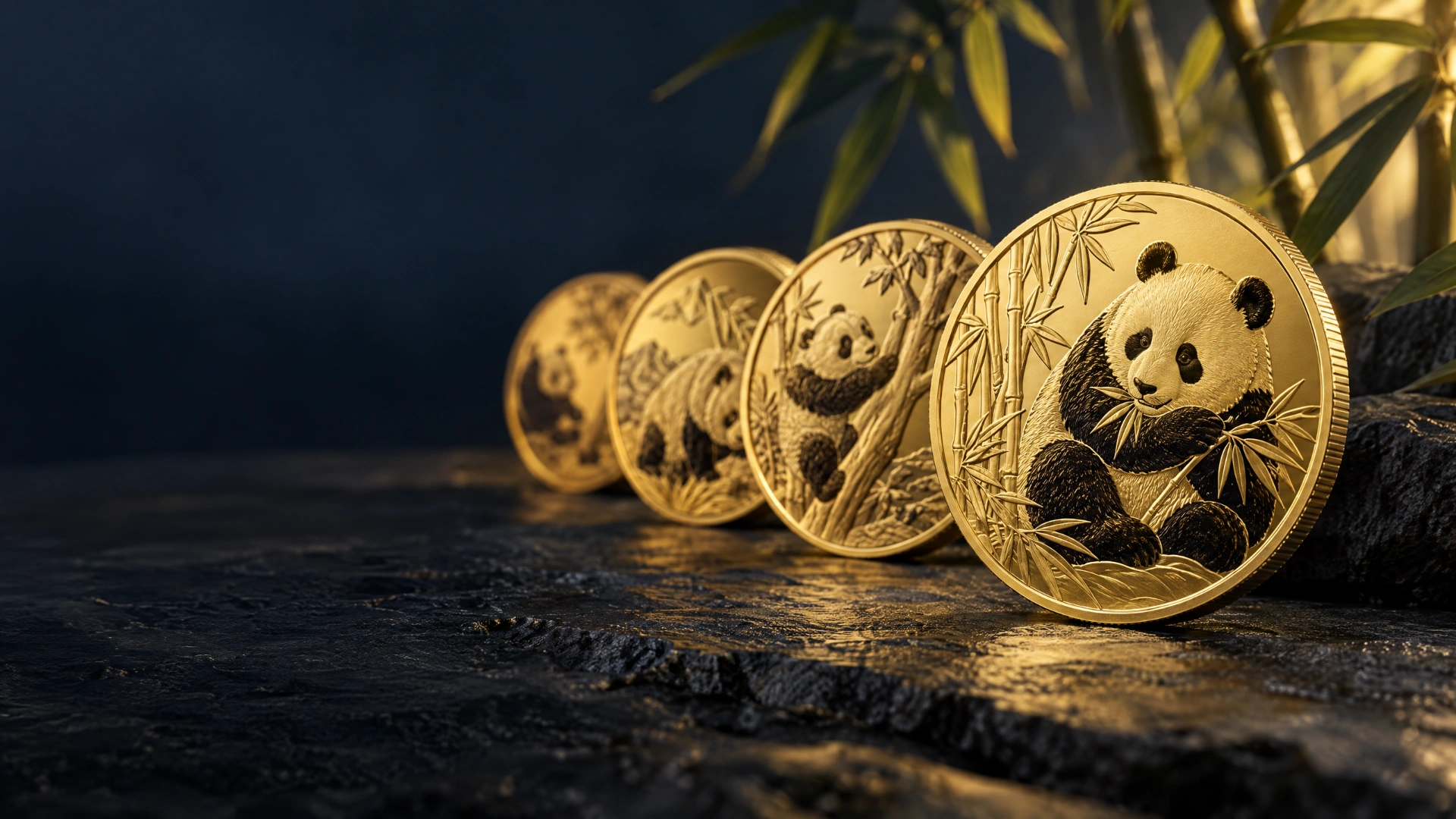
The Chinese Gold Panda was the first bullion coin to change its reverse design every year, and it has done so since 1982 with one interruption. The effect is structural rather than decorative: because each year carries its own design and its own mintage limit, the series does not trade as one product. A current-year Panda is priced as bullion, while a scarce earlier year is priced as a collectible, and the same coin name covers both.
That is the whole of what the annual change does to premiums. It does not make any particular year go up, and it does not mean a new design is worth more than an old one. What follows is how the series is built, what changed in 2016, and what a buyer or seller should actually look at.
What the Gold Panda is
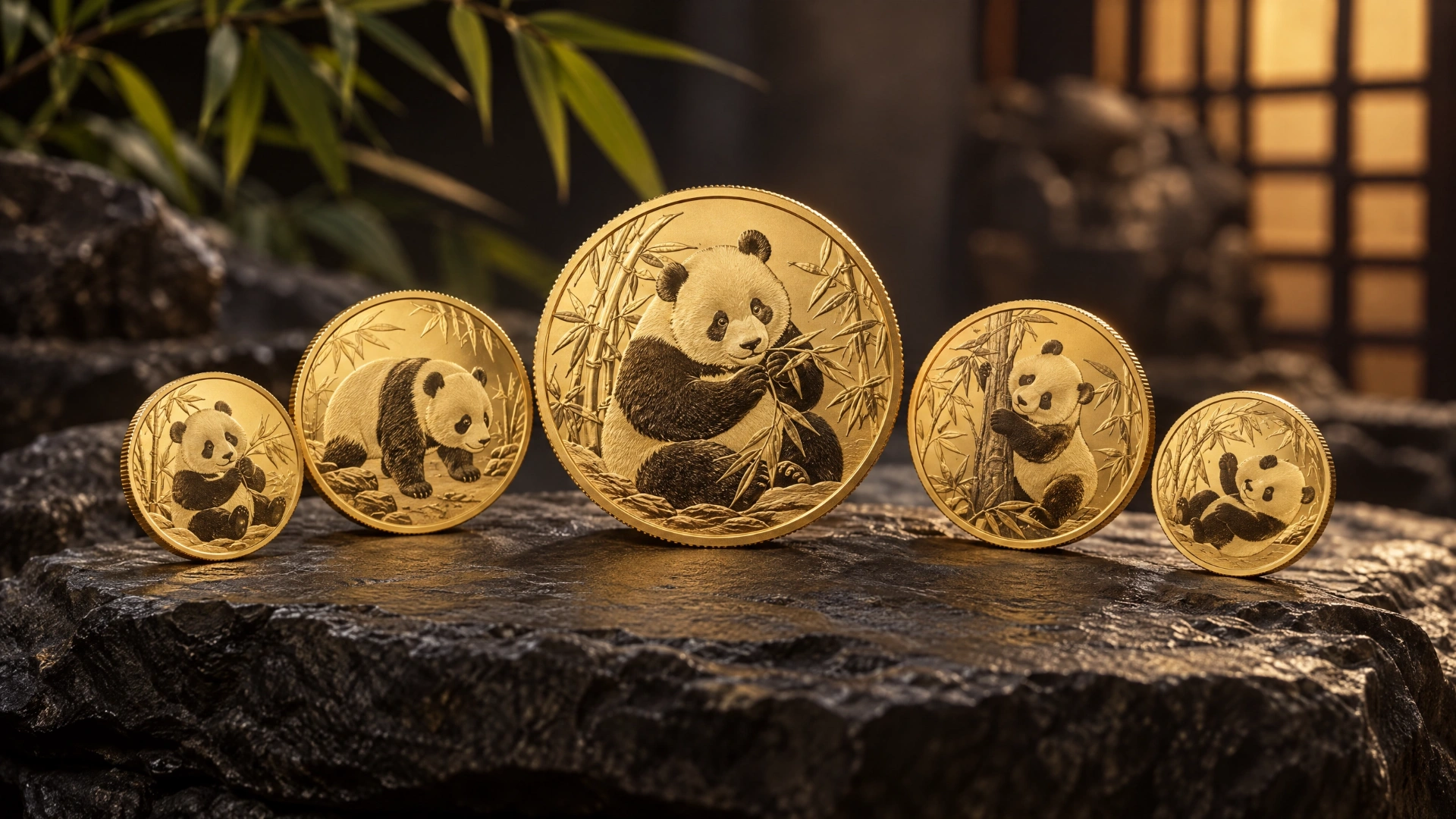
The Chinese Gold Panda coin series began in 1982, when the Shanghai Mint struck coins in one ounce, half ounce, quarter ounce and tenth ounce, with a twentieth-ounce size added in 1983. Original denominations were 100, 50, 25 and 10 yuan, and face values were increased in 2001, according to CoinWeek's history of the series. The gold is .999 fine.
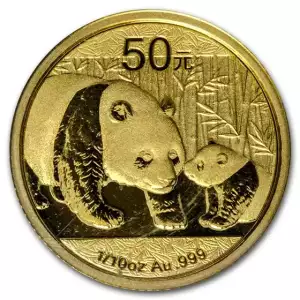
The obverse carries the Temple of Heaven in Beijing. The reverse is where the pandas are, and where the yearly change happens. CoinWeek's account traces the motifs from single bears in the early years, to mother-and-cub pairings from 2004 to 2012, to groups of three adults from 2013. The same source records three mints striking the series — Shanghai, Shenyang and Shenzhen Guobao, in overlapping periods — and notes that mint marks appear on the 1987 bullion issues — an S for Shanghai, a Y for Shenyang, which is why attributing most Pandas to a particular mint is a specialist exercise rather than something you read off the coin.
The annual change, and the one time it stopped
In 2001 the practice was halted, and the 2002 coin repeated the 2001 design. CoinWeek records public objection to the decision and the resumption of annual changes from 2003. It is a small episode with a useful consequence: 2001 and 2002 are the two years in the series a buyer cannot tell apart from the reverse alone, so on those two the date on the obverse is doing all the work.
The wider point is that a dated annual series behaves differently from an undated or perpetually redesigned one. A Silver Eagle buyer is usually indifferent to the year. A Panda buyer often is not, because each year is a finite issue that was never struck again.
2016: the coin stopped being an ounce
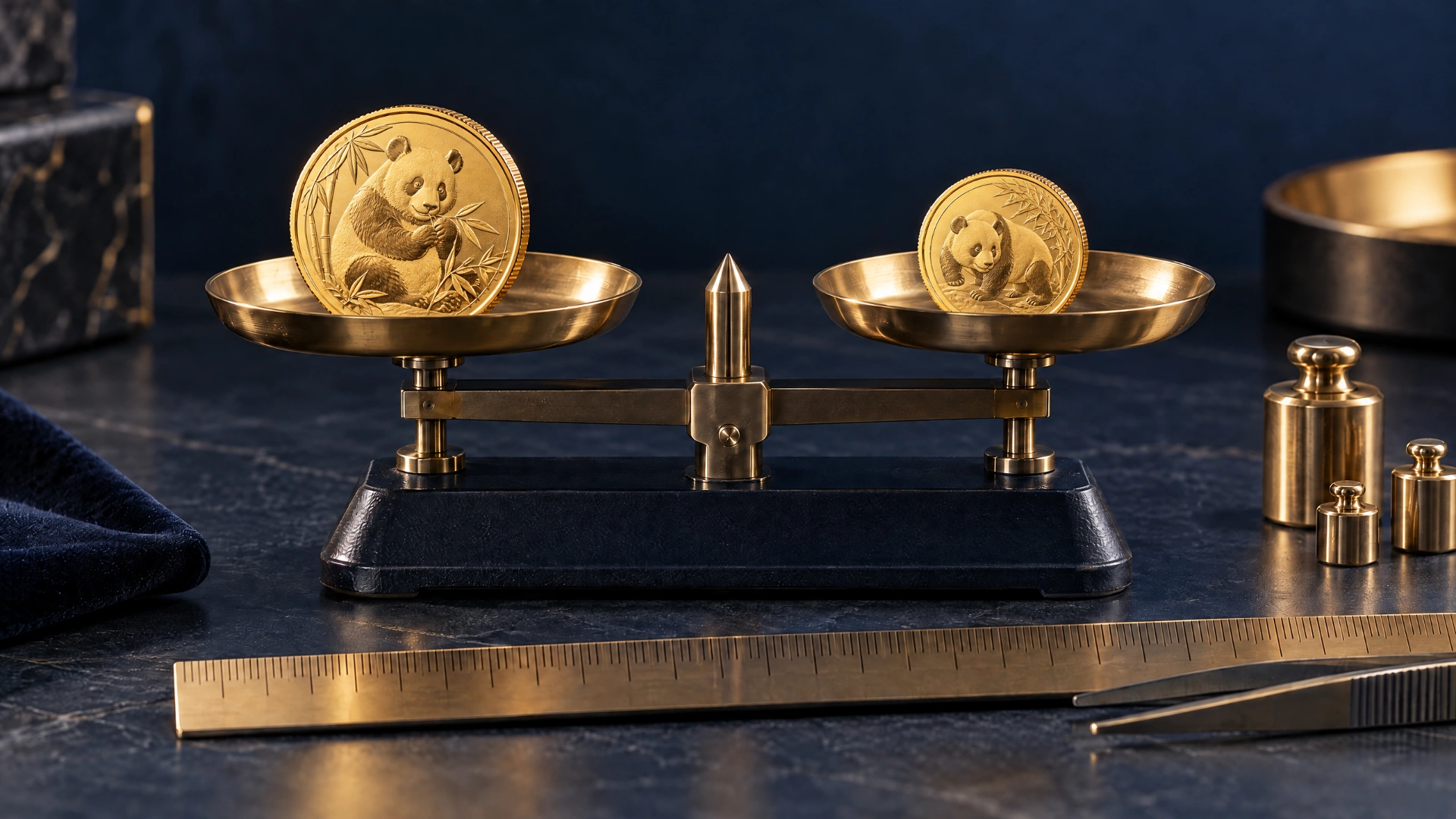
This is the single most practical fact about buying a modern Panda, and the most often missed. From 2016 the coins were issued in metric weights instead of troy ounces. Per NGC, the 30-gram coin replaced the one ounce, 15 grams replaced the half ounce, 8 grams the quarter, 3 grams the tenth, and a new 1-gram coin was added — a change made, in NGC's words, "in an effort to make these coins more accessible for retail collectors and investors in China". Coin World gives the face values of 500 yuan for the 30 gram, 200 yuan for the 15 gram and 10 yuan for the 1 gram. The fineness is unchanged at .999.
A troy ounce is 31.1034768 grams. So the 30-gram Panda contains 0.9645 of a troy ounce, not one ounce — roughly 3.5 per cent less gold than a one-ounce coin. That has one consequence worth doing on paper before you compare anything:
| Size, 2016 onwards | Size it replaced | Troy ounce equivalent | Face value |
|---|---|---|---|
| 30 g | 1 oz | 0.9645 | 500 yuan |
| 15 g | ½ oz | 0.4823 | 200 yuan |
| 8 g | ¼ oz | 0.2572 | — |
| 3 g | 1/10 oz | 0.0965 | — |
| 1 g | New size | 0.0322 | 10 yuan |
A dash means the cited source gives no face value for that size, not that the coin has none.
So divide a 30-gram coin's total price by 0.9645 before setting it beside a one-ounce coin's. Comparing the two ticket prices directly makes the Panda look cheaper than it is by about three and a half per cent. Pre-2016 Pandas were true one-ounce coins, so the same comparison on an older coin needs no conversion at all — which is exactly why the year matters here. How premium and spread work in general is set out in how to read gold and silver prices.
What the design change does to the Gold Panda premium, and what it does not
Premium is the amount above metal value that a coin costs, and it is a function of fabrication, distribution and demand rather than of the gold. On the Panda, the annual change adds one more variable: each year is its own issue, so demand can attach to a particular date rather than to the series.
Two facts bound that in practice. The first is that the standard size is a mass-produced bullion coin. The 30-gram gold Panda's mintage limit was raised from 600,000 to 700,000 coins for 2017, as CoinWeek reported. At that scale a current-year coin trades on metal and fabrication, much as any sovereign bullion coin does, and it is not scarce.
The second is that Panda mintage figures need reading carefully. CoinWeek's history records that issues from 1982 to 2000 were produced to demand rather than to a published maximum, and that limits applied to later years have been revised. So a published mintage for a Panda is usually a stated maximum rather than a count of coins struck, and that is a genuine difference from a US Mint figure, which is a production total. Anyone comparing Panda scarcity against an American series is comparing two different kinds of number.
Which years carry what premium is a market question that moves week to week, so we quote it live rather than publishing figures that go stale. What is durable is the reason the spread of premiums across the series is wide in the first place: more than forty annual issues since 1982, differing mintages, and two different weight standards inside one coin name.
Condition, packaging and grading
Pandas were distributed in sealed plastic, and the market distinguishes coins still in their original packaging from coins that have been out of it. A broken seal is not a defect and does not change the gold, but it does change what a buyer can assume about handling, and on gold the marks that matter are contact marks and rubs on the highest points of the design.
Both grading services maintain registry sets for the series organised by date, which tells you something about how the market thinks: collectors of Pandas are assembling runs, and a run has gaps that need filling. That is the demand that sits behind premiums on older dates. A date premium is a current market price, and it compresses as well as widens; it is not a forecast of anything.
Counterfeits: what testing the metal answers, and what it misses
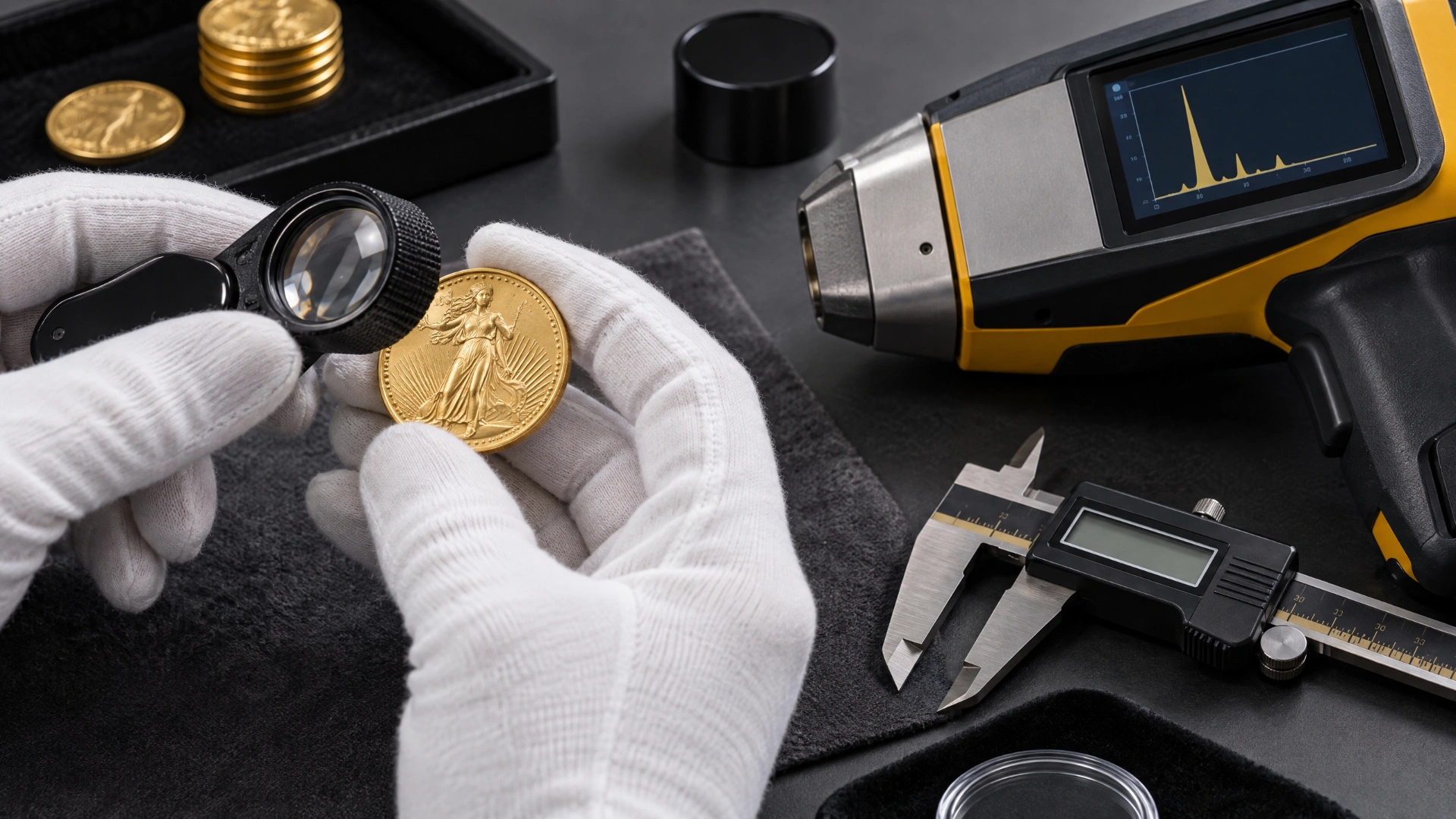
Chinese coins are counterfeited in volume. NGC publishes a top-25 list drawn from its own submissions, and a 2000 silver Panda sits at number 15 on it; no gold Panda appears. On the gold coins, the way the fakes are caught is instructive. On a counterfeit 2010 500 yuan gold Panda, NGC reported that the diagnostic was the panda's eyes: the fake showed "granular and poorly defined eyes" where a genuine coin has "smooth and deeply reflective corneas" with distinct pupils. Metal composition was not the tell.
That is the limit worth understanding. X-ray fluorescence establishes what the surface metal is, which answers the question of whether something is gold. It does not answer whether a gold object is a genuine issue of a particular mint in a particular year. A well-made counterfeit struck in gold of the right fineness passes a composition test and fails on design detail, weight, diameter or edge. What the gun measures and what it misses is set out in detail in XRF gold testing explained.
Practically: on a Panda, design detail and dimensions do work that composition testing cannot, and a coin certified by a grading service has had that work done by a third party. For a scarce date, that is the whole argument for buying certified.
Selling or buying a Panda in Virginia
Virginia's precious metals dealer chapter does not reach coins. Va. Code § 54.1-4109(B) provides that neither the chapter nor any local ordinance on its subject matter applies to the sale or purchase of coins, so the identification, records, reporting and holding requirements that govern a jewelry or scrap transaction do not attach to a Panda sale. Why those duties exist and where the line falls is the subject of what Virginia law requires when you sell gold.
Where The Bullion Bank fits
We have been buying and selling precious metals in Northern Virginia since 2008, from two locations in Chantilly and Vienna, and we make a two-way market in gold coins and bars. Metal content and purity are assessed by X-ray fluorescence in front of the customer — the analyser identifies 26 different metals — with an offer the same day against live market pricing and payment on acceptance.
On a Panda specifically, expect us to look at the year first, then the weight standard that year used, then the coin itself. Our answer to whether you need an appointment is "No. Walk-ins are welcome during normal business hours."
This article is educational and reflects general information about precious metals and collectible coins. It is not investment, tax or legal advice, and The Bullion Bank is not a registered investment adviser, broker-dealer or tax professional. Metal prices fluctuate and past performance does not indicate future results. Consult a qualified professional about your own situation.
Frequently asked questions
Why does the Chinese Gold Panda change design every year?
It was conceived that way. The Panda was the first bullion coin to change its reverse annually, and it has kept to that since 1982 apart from 2002, which repeated the 2001 design before the practice resumed in 2003. The design is the reason each year is treated as a separate issue rather than as more of the same coin.
Is a 30-gram Gold Panda the same as a one-ounce coin?
No. From 2016 the Pandas are issued in metric weights, and 30 grams is 0.9645 troy ounces — about 3.5 per cent less gold than a one-ounce coin. Divide a 30-gram coin's price by 0.9645 before comparing it with a one-ounce coin, or the Panda will look cheaper than it is.
Do older Gold Pandas carry higher premiums than new ones?
Premiums vary by date rather than simply by age, because each year is a separate issue with its own mintage and its own collector demand. Early issues were produced to demand rather than to a published ceiling, and some years' totals sit far below today's limit of hundreds of thousands. Premiums move with the market, so we quote them live.
What is the mintage of a Gold Panda?
It depends on the year, and the figure needs care. Issues from 1982 to 2000 were produced to demand rather than to a published ceiling, and announced limits for later years have been revised — the 30-gram coin's limit went from 600,000 to 700,000 for 2017. A Panda mintage is usually a stated maximum, not a count of coins struck.
How do you check whether a Gold Panda is genuine?
Composition testing by X-ray fluorescence establishes the metal, and weight, diameter and edge are measured. Design detail does the rest: NGC caught one counterfeit 2010 Panda on the panda's eyes alone. For a scarce date, certification by a grading service means a third party has already examined the design.
Should Panda coins be kept in their original packaging?
The packaging does not affect the gold, but the market distinguishes sealed original coins from coins that have been handled, and on gold the visible difference is contact marks on the high points of the design. If a coin is already out of its packaging, that is not a fault — it simply means condition is judged on the coin.
Bring a Panda in, or ask what we have
If you are selling a Panda, bring it to either location and we will check the year, the weight standard and the coin in front of you, and quote against live pricing. If you want to buy Gold Panda coins, ask us what is in stock across bullion and numismatic coins — world coin stock moves, and the year you want may need locating.
The Bullion Bank — Chantilly
4086 Airline Pkwy
Chantilly, VA 20151
(703) 705-5151
Monday–Friday 11:00–18:00 · Saturday 11:00–17:00 · Sunday closed
The Bullion Bank — Vienna
131 Maple Ave W
Vienna, VA 22180
(703) 705-5252
Monday–Friday 11:00–18:00 · Saturday 11:00–17:00 · Sunday closed