Published by
Gold Expert

Virginia sales tax on gold and silver works by exclusion: the Commonwealth charges no retail sales tax on gold, silver or platinum bullion, or on legal tender coins. The exemption is subdivision 19 of Va. Code § 58.1-609.1, it has applied without a minimum purchase amount since 2022, and the sunset date was pushed back again in the 2026 Appropriation Act — from 1 July 2026 to 1 July 2028.
Two things about it surprise people. The first is what falls outside: jewelry and works of art are excluded by the statute’s own definitions, and the exemption is written around gold, silver and platinum — palladium is not named. The second is that if you look up the Code section, it appears to have expired in 2025. It has not. The explanation is one of the more useful things a Virginia buyer can know, and it is covered below.
This article is educational and reflects general information about precious metals and collectible coins. It is not investment, tax or legal advice, and The Bullion Bank is not a registered investment adviser, broker-dealer or tax professional. Metal prices fluctuate and past performance does not indicate future results. Consult a qualified professional about your own situation.
What Virginia Sales Tax on Gold and Silver Covers
Subdivision 19 of § 58.1-609.1 exempts “gold, silver, or platinum bullion or legal tender coins” from the Virginia retail sales and use tax, and the statute defines both terms.
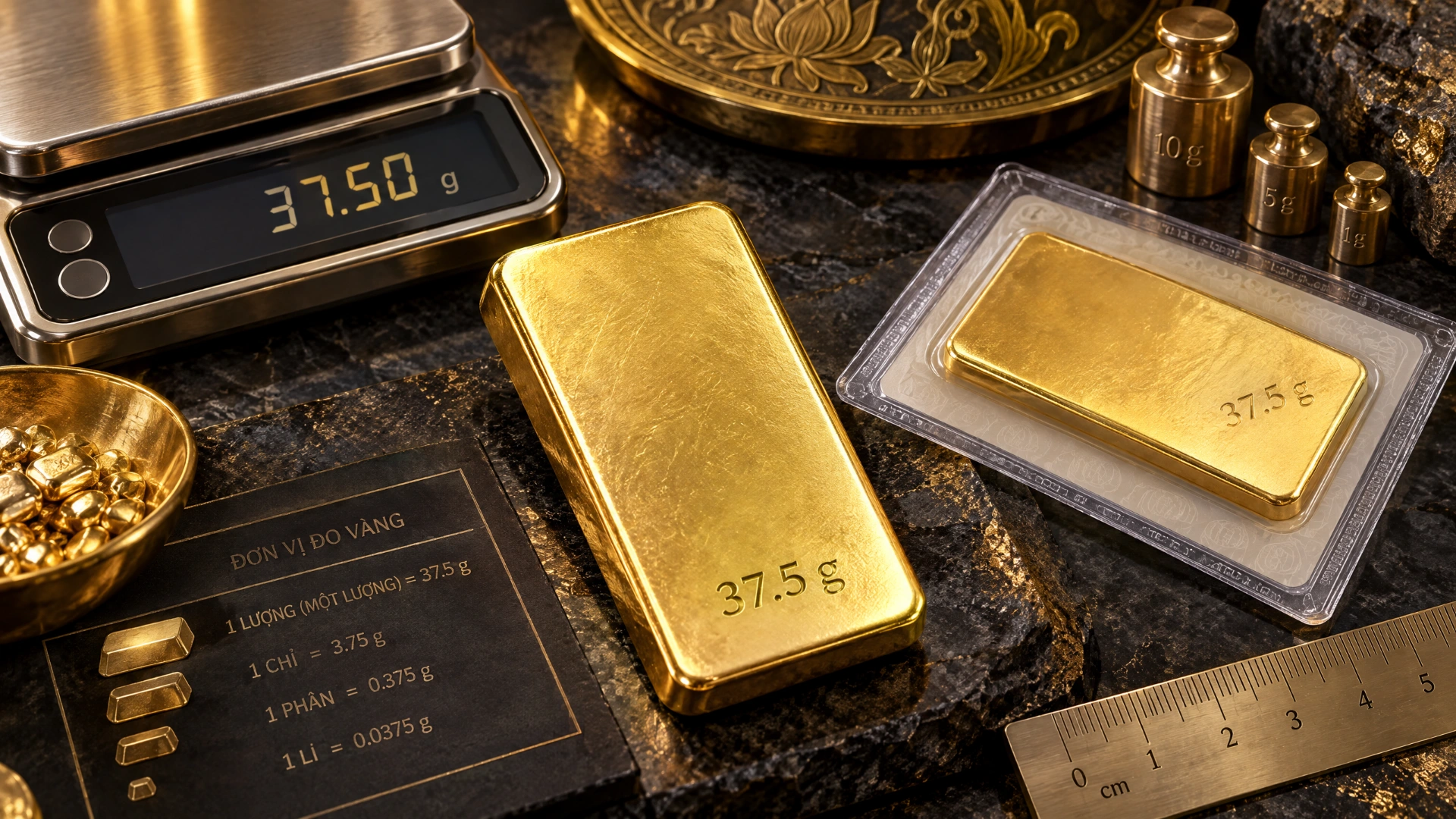
Bullion is gold, silver or platinum “that has gone through a refining process and is in a state or condition such that its value depends on its mass and purity and not on its form, numismatic value, or other value.” The definition allows other substances to be present provided their comparative value is minimal. In plain terms: bars, rounds and ingots, valued for the metal in them.
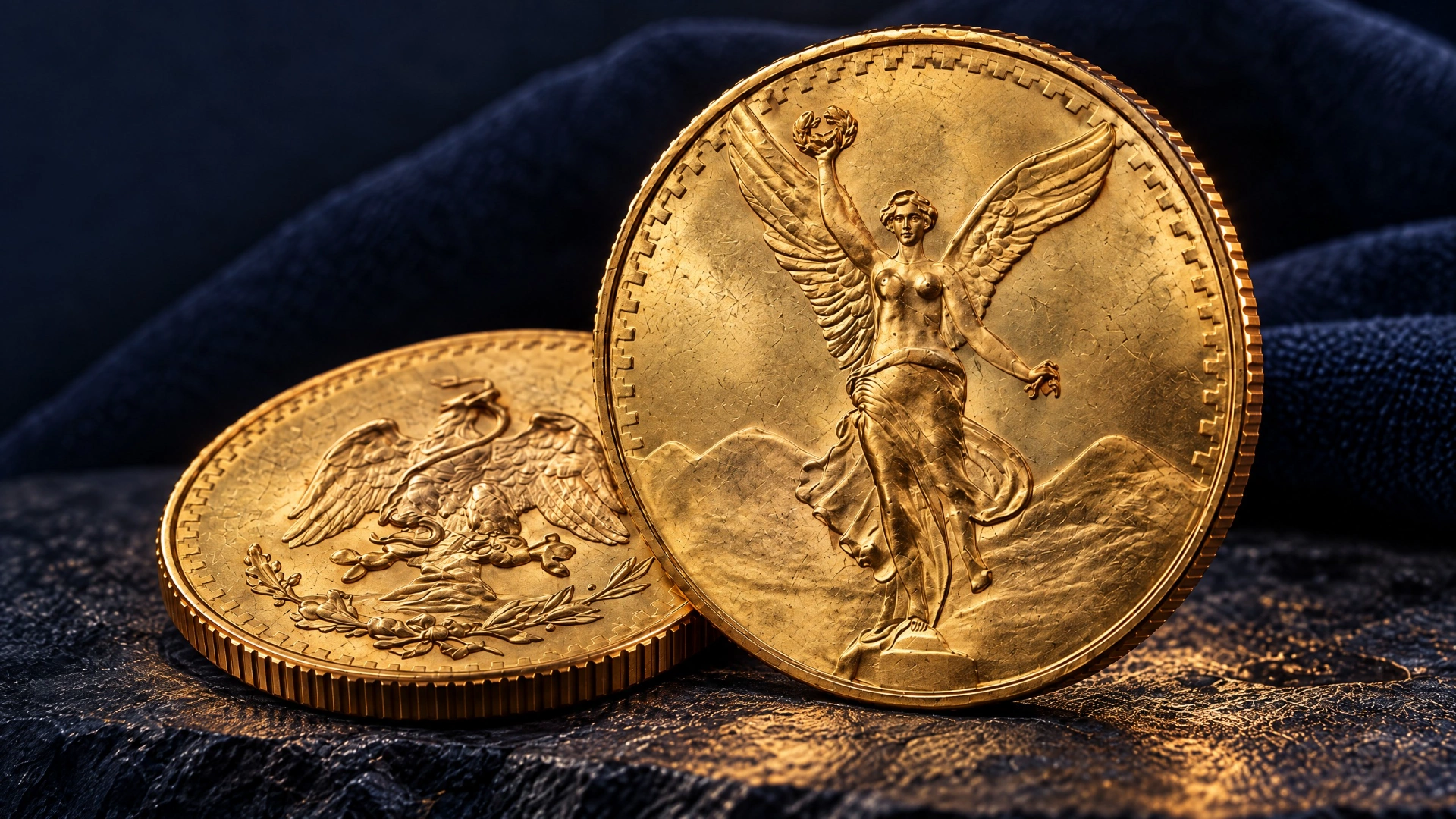
Legal tender coins are “coins of any metal content issued by a government as a medium of exchange or payment of debts.” Note what this definition does not contain — any test of purity, metal, or whether the coin is bought for its metal or its rarity. A one-ounce American Silver Eagle and a graded Morgan dollar are both coins issued by a government as a medium of exchange, and both sit inside the exemption.
The statute is explicit about the boundary: the terms “do not include jewelry or works of art.”
The Virginia Department of Taxation states the position simply on its own exemptions page: “Sales of gold, silver, or platinum bullion, or legal tender coins are exempt from sales tax.”
The $1,000 Threshold Is Long Gone
For years the Virginia exemption applied only to purchases over $1,000, which meant a buyer either cleared the bar or paid tax on the whole transaction. House Bill 936 of the 2022 session, Chapter 643, approved 11 April 2022, struck the qualifying language — “whose sales price exceeds $1,000” and the accompanying single-transaction rule — from subdivision 19.
The threshold still circulates in older state-by-state guides. It has not been part of Virginia law since 2022, and a single Silver Eagle is treated on exactly the same terms as a hundred of them.
Why the Code Section Appears To Have Expired in 2025

Look up § 58.1-609.1 today and subdivision 19 opens with the words “Effective through June 30, 2025.” That is accurate as printed and misleading as read, and it is the single most common source of confusion about Virginia bullion tax.
The sunset date in the Code has not been amended. Instead, the General Assembly has extended the exemption through language in the state budget. The item in the 2025 Appropriation Act — Item 3-5.25 of HB 1600, Chapter 725 — reads: “Notwithstanding any other provision of law or regulation, the retail sales and use tax exemption provided for in subdivision 19 of § 58.1-609.1 of the Code of Virginia, applicable to gold, silver, or platinum bullion or legal tender coins shall remain in effect through July 1, 2026.”
The Department of Taxation’s own 2026 Legislative Summary records the next step in the same mechanism: “Item 3-5.22 of the 2026 Appropriation Act (House Bill 30, Special Session I, Chapter 1) extends the sunset date for the Retail Sales and Use Tax exemption for bullion and legal tender coins from July 1, 2026, to July 1, 2028.”
Note the two details that get garbled in secondary coverage: the item was renumbered from 3-5.25 to 3-5.22, and the date the Department states is 1 July 2028, not 30 June.
The practical consequences for a buyer are worth stating directly:
- The Code section is not where the current date lives. A Code lookup alone will give you a date that expired over a year ago.
- The exemption runs on a renewal cycle. It has been extended repeatedly rather than made permanent, and the recent extensions have come through budget bills rather than by amending the Code.
- Dates in circulation go stale fast. Any article — including this one — states the position as of its writing. The Department of Taxation and the current Appropriation Act are the places to confirm it.
| Instrument | What it did | Date |
|---|---|---|
| Va. Code § 58.1-609.1(19) | Created the exemption for bullion and legal tender coins; still reads “Effective through June 30, 2025” | — |
| HB 936 (2022), Ch. 643 | Removed the $1,000 minimum purchase | Approved 11 April 2022 |
| HB 1600, Ch. 725 — Item 3-5.25 | Kept the exemption in effect notwithstanding the Code sunset | Through 1 July 2026 |
| HB 30, Special Session I, Ch. 1 — Item 3-5.22 | Extended the sunset date again | Through 1 July 2028 |
What Is Not Exempt from Virginia Sales Tax
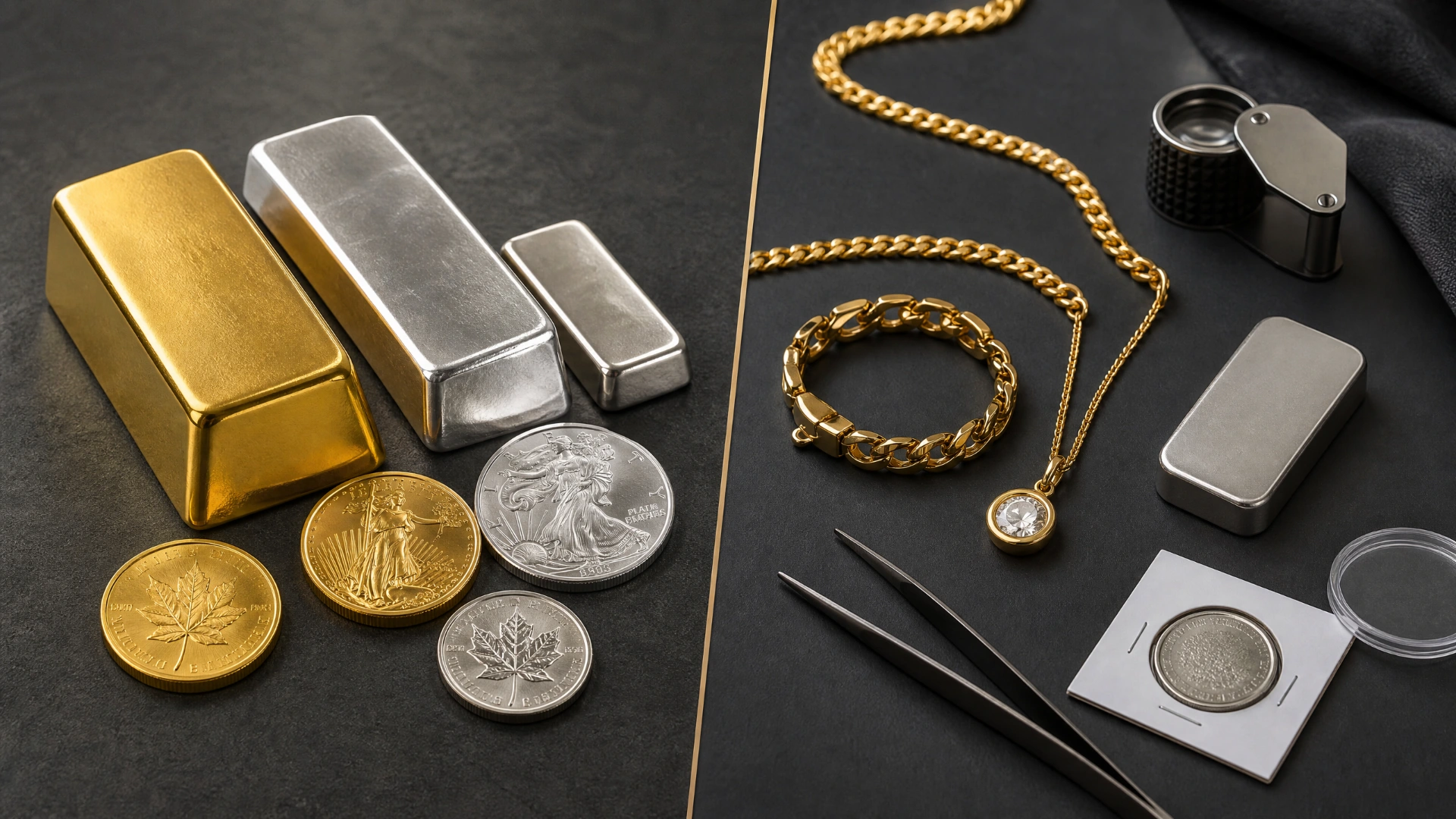
The exclusions are narrow, specific, and easy to trip over.
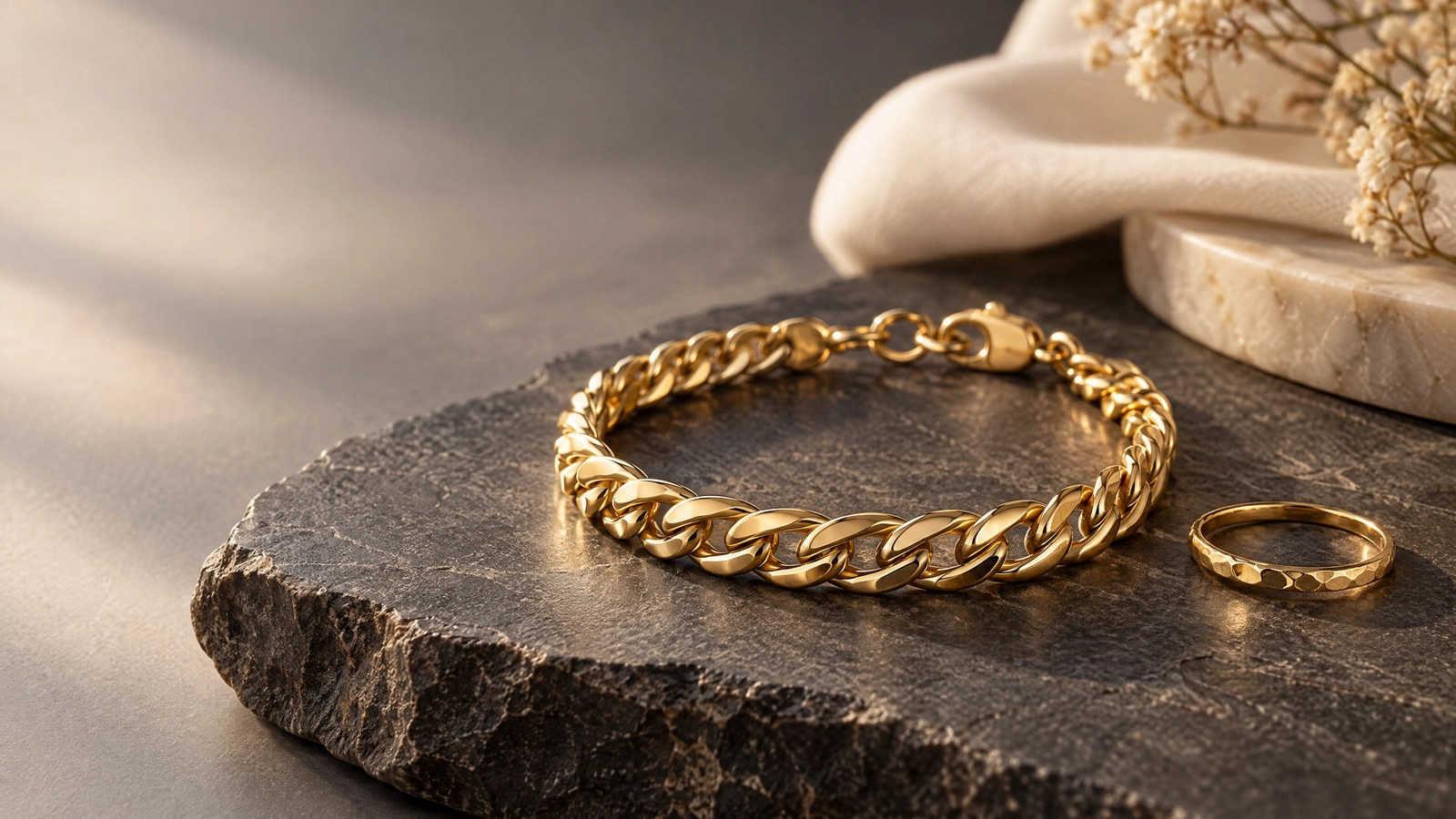
Jewelry and works of art. Written into the statute’s definitions. A gold chain is a taxable sale. A coin set in a bezel and worn as a pendant is jewelry, not a legal tender coin sale, even though the coin inside it would qualify on its own. If the question behind that is what to do with a chain you no longer wear, we have written separately on converting gold jewelry to bullion.
Palladium. Subdivision 19 names gold, silver and platinum. Palladium bullion is not in the list. A palladium coin issued by a government as legal tender is a different question, because the legal tender coin definition is written around issuance rather than metal — but palladium bars and rounds have no obvious route into the exemption as drafted. Anyone planning a substantial palladium purchase should put the question to the Department of Taxation or a Virginia tax professional first.
Everything that is not metal. Capsules, albums, safes, reference books and collector supplies are ordinary retail goods with no exemption of their own under subdivision 19.
| On the invoice | Virginia sales tax | Why |
|---|---|---|
| Gold, silver or platinum bars, rounds and ingots | Exempt | Meets the statutory definition of bullion |
| Government-issued coins, bullion or numismatic | Exempt | Legal tender coins, no purity or value test |
| Gold chain, bracelet, bezel-set coin pendant | Taxable | “Do not include jewelry or works of art” |
| Palladium bars and rounds | Not covered by subdivision 19 | Only gold, silver and platinum are named |
| Safes, capsules, albums, supplies | Taxable | No exemption under subdivision 19 |
What the Exemption Does Not Do
A sales-tax exemption answers one question — whether tax is added when you buy. It is routinely read as answering three others, and it does not.
It says nothing about selling. Virginia’s sales tax reaches a “retail sale,” which Va. Code § 58.1-602 defines as “a sale to any person for any purpose other than for resale.” A dealer buying your metal across the counter is not that, so the exemption is simply irrelevant to a liquidation.
It is not a capital gains exemption. The IRS taxes collectibles at a higher maximum capital-gains rate than most assets, and its guidance illustrates the category with coins. Topic no. 409 states that “net capital gains from selling collectibles (such as coins or art) are taxed at a maximum 28% rate,” against the 0%, 15% or 20% rates the same guidance sets out for other net long-term capital gains, with the bracket depending on taxable income. Holding period, cost basis and personal circumstances all bear on what is owed, which puts it firmly with a tax professional.
It does not affect Virginia’s dealer rules. Those are a separate body of law, in Title 54.1, Chapter 41 of the Code of Virginia, and they apply to the sell side of the counter regardless of tax treatment.
Three Things a Buyer Should Know About the Sell Side
Buying is where the tax question lives. Selling is where Virginia’s dealer statutes do, and they are among the strictest in the country. Three points are worth carrying across the counter; the rest is a longer subject.
- Identification is not optional and not the shop’s idea. § 54.1-4102 requires an unexpired government-issued photo identification showing the seller’s current legal address, plus corroborating identification.
- The purchase is reported quickly. Under § 54.1-4101 the dealer keeps the record for at least 24 months, including “a digital image of the form of identification used,” and a copy goes to the locality’s chief law-enforcement officer “within 24 hours of the time of purchase.”
- The 15-day hold does not delay your payment. Section 54.1-4104 requires the item to be retained unaltered and unsold for at least 15 calendar days from law enforcement’s receipt of the bill of sale. That restricts what the dealer may do with the item, not when the seller is paid.
How This Works at Our Counters
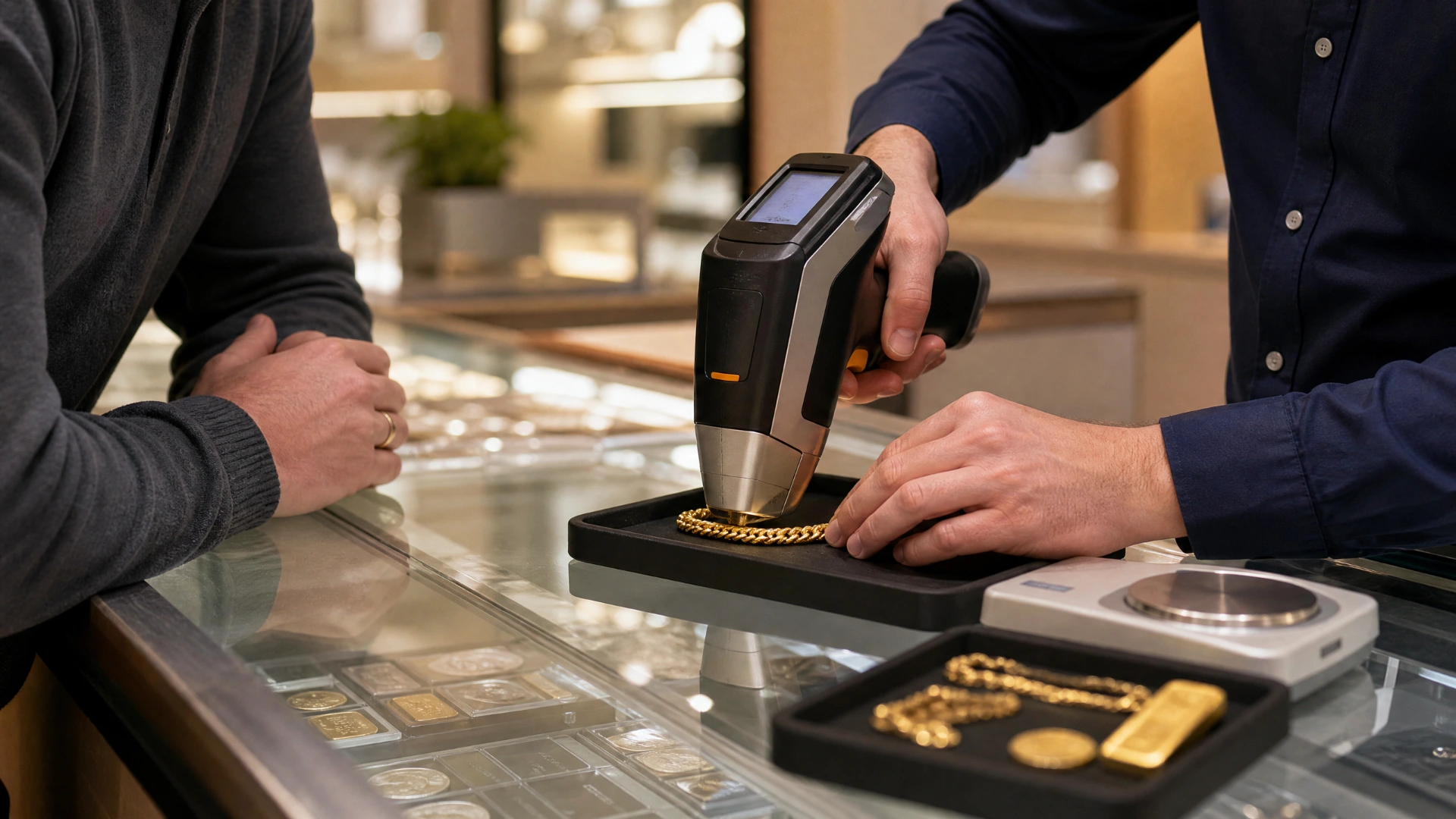
We have been buying and selling precious metals in Northern Virginia since 2008, at two locations — Chantilly and Vienna. On the buy side, an exempt item is exempt and nothing is added to it; on anything you are unsure about, ask before the invoice is written rather than after.
On the sell side, metal content and purity are assessed by X-ray fluorescence analysis, which reads the composition of a piece without damaging it, and the testing is done in front of you. The offer is made the same day against live market pricing, and payment follows on acceptance. What we will not do is tell you what you will owe when you file — that is a question for your accountant.
Frequently Asked Questions
Is bullion taxed in Virginia?
No. Va. Code § 58.1-609.1(19) exempts gold, silver and platinum bullion and legal tender coins from Virginia retail sales and use tax, with no minimum purchase amount since 2022. The exemption excludes jewelry and works of art, and names only gold, silver and platinum among the metals.
When does the Virginia bullion exemption expire?
The Department of Taxation’s 2026 Legislative Summary states that Item 3-5.22 of the 2026 Appropriation Act extends the sunset date from 1 July 2026 to 1 July 2028. The Code section itself still reads “Effective through June 30, 2025” because the extensions are made in budget language rather than by amending the Code. Confirm the current position with the Department before relying on it.
Why does the Code say the exemption ended in 2025?
Because the sunset date in § 58.1-609.1(19) has never been amended. The General Assembly has instead used the Appropriation Act, which states that the exemption “shall remain in effect” notwithstanding any other provision of law. The budget language governs, and it is where the operative date is found.
Do I pay Virginia sales tax on gold jewelry?
Yes. The statutory definitions of bullion and legal tender coins expressly “do not include jewelry or works of art,” so a chain, a bracelet or a coin mounted as a pendant is a taxable retail sale even though the metal in it would be exempt in bar or coin form.
Is there sales tax when I sell gold to a dealer?
No. Sales tax applies to retail sales to a consumer, so it does not arise when a dealer buys from you. What does apply on the sell side is Virginia's precious metals dealer law in Title 54.1, Chapter 41, which sets identification, record-keeping and holding requirements on the dealer — and which does not apply to coins at all. We cover it in detail in what Virginia law requires when you sell gold.
Does the exemption mean I owe no tax on my gains?
No. Sales tax and capital gains tax are separate. The IRS taxes collectibles at a maximum 28% rate on net capital gains under its Topic no. 409. What you owe depends on your holding period, basis and circumstances — ask your tax professional.
Visit Us in Chantilly or Vienna
Bring the piece you are unsure about. We will tell you what it is and what we would pay, with the testing done in front of you. Questions about your own tax position belong with your accountant. No appointment is needed.
The Bullion Bank — Chantilly
4086 Airline Pkwy
Chantilly, VA 20151
(703) 705-5151
The Bullion Bank — Vienna
131 Maple Ave W
Vienna, VA 22180
(703) 705-5252
Both locations: Monday–Friday 11:00am–6:00pm · Saturday 11:00am–5:00pm · Sunday closed
thebullionbank.com