Published by
Gold Expert
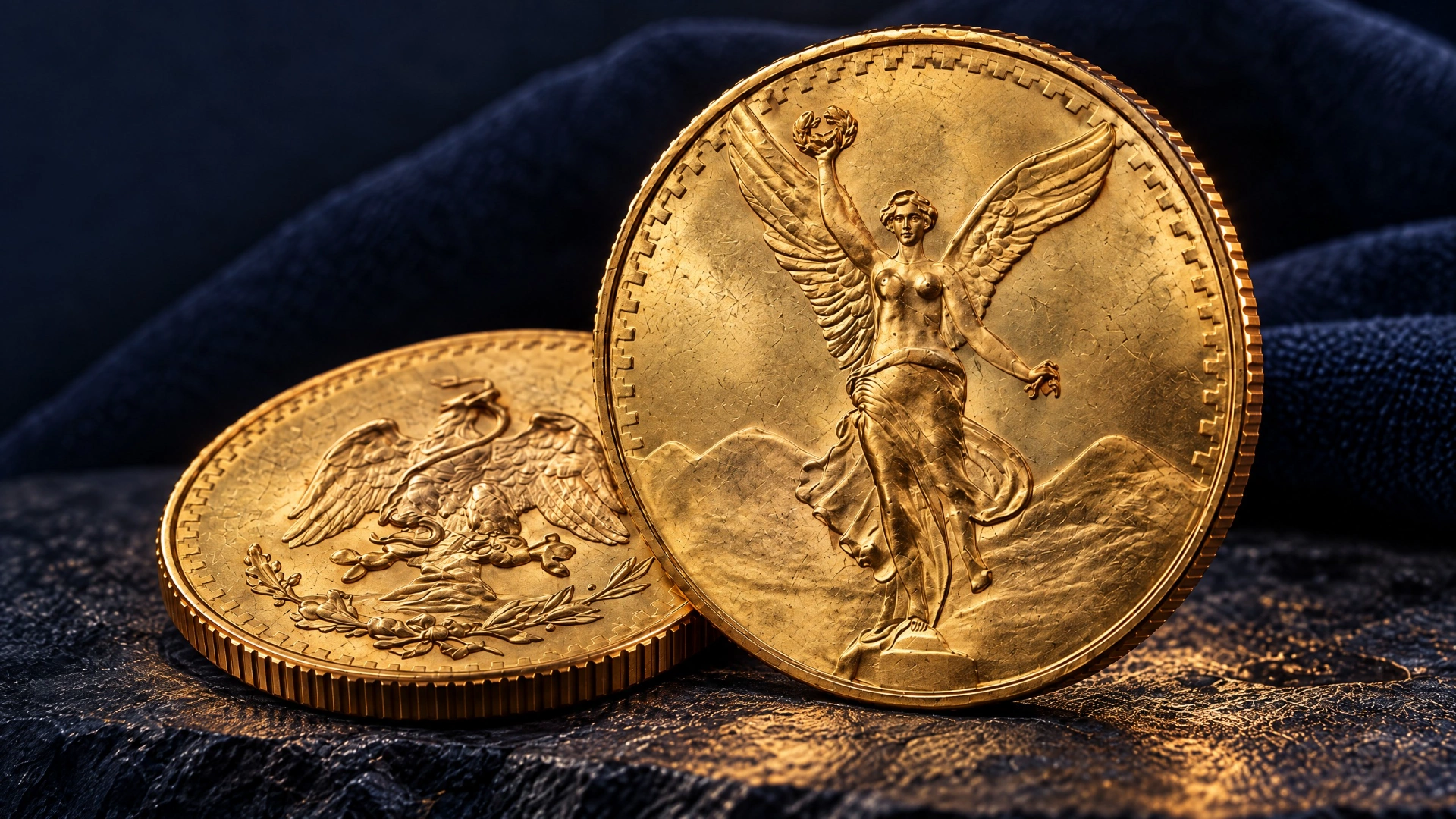
The Mexican Centenario is a 50-peso gold coin weighing 41.6666 grams at .900 fineness, which gives it 37.5 grams — 1.20565 troy ounces — of fine gold. First struck in 1921 for the centennial of Mexican independence, it holds more gold than any one-ounce bullion coin. Its value starts from that gold content and live spot price, plus a premium that depends on the date and condition.
Centenario Specifications
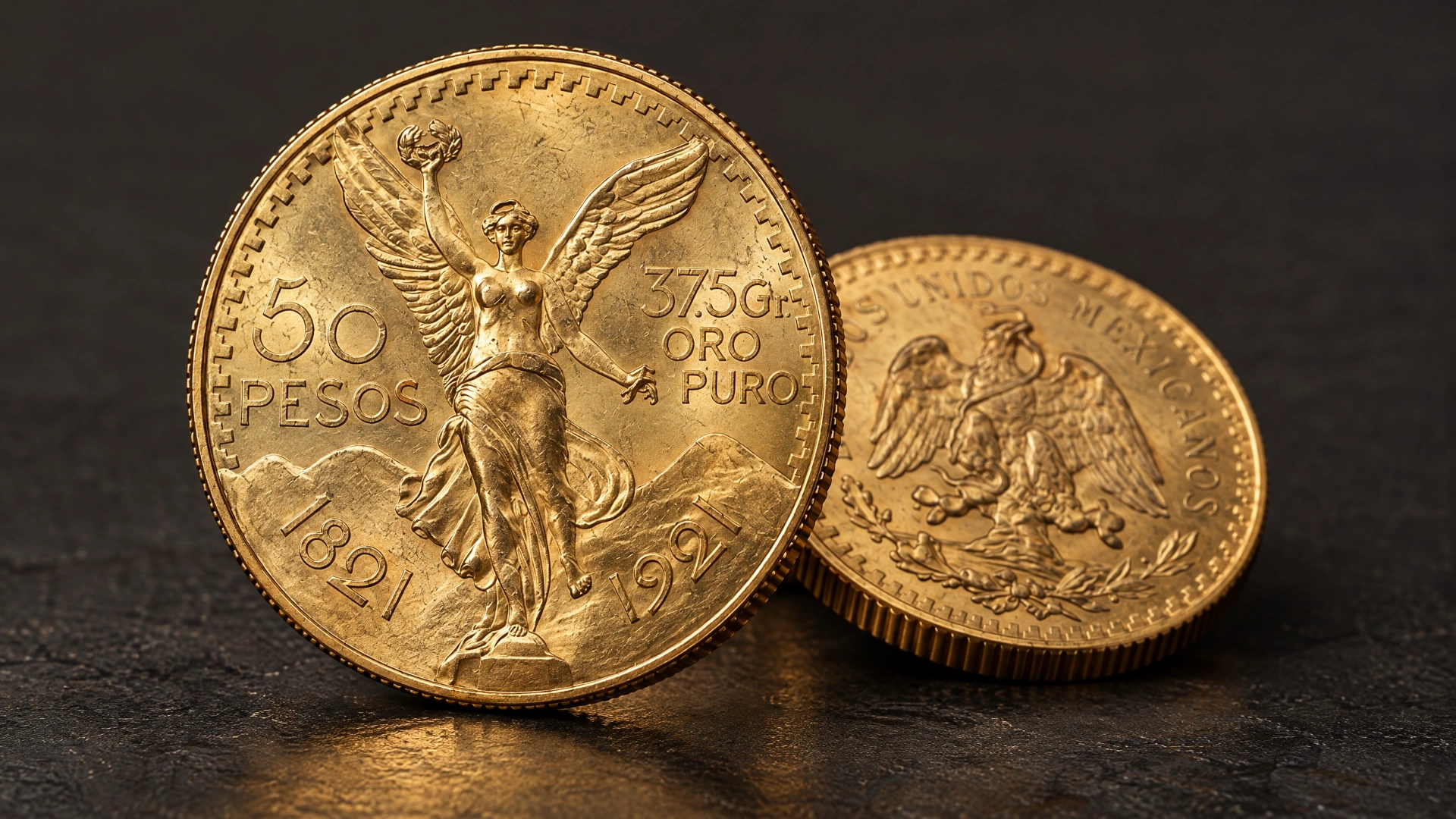
The Centenario's fineness, fine gold content and diameter are published by its issuer, the Banco de México; the gross weight is from PCGS. Fineness is the proportion of pure metal in an alloy, written in thousandths: .900 means 900 parts gold per 1,000.
| Specification | Centenario (50 pesos) |
|---|---|
| Gross weight | 41.6666 g |
| Fineness | .900 gold |
| Fine gold content | 37.5 g (1.20565 troy oz) |
| Diameter | 37.0 mm |
| Obverse | Mexican national shield of the period |
| Reverse | Winged Victory, with the Iztaccíhuatl and Popocatépetl volcanoes behind |
The balance of the alloy, about 4.17 grams, is base metal, which makes the coin harder-wearing than pure gold. Jay Turner, writing for PCGS, identifies the figure as the Winged Victory of El Ángel de la Independencia, the Mexico City monument.
Why the Centenario Was Struck
The Centenario was struck in 1921 to mark 100 years since Mexican independence, which is why the coin carries the dates 1821 and its own year. The Banco de México records that production was discontinued in 1931 and started again in 1943 because of growing demand for gold coins.
The Centenario is the largest member of a family of Mexican gold coins at the same .900 standard. The Banco de México lists the 20-peso Azteca at 0.48227 oz of fine gold and four Hidalgo denominations, from 10 pesos (0.24113 oz) down to 2 pesos (0.04823 oz).
Dates, Restrikes and the 1947 Question
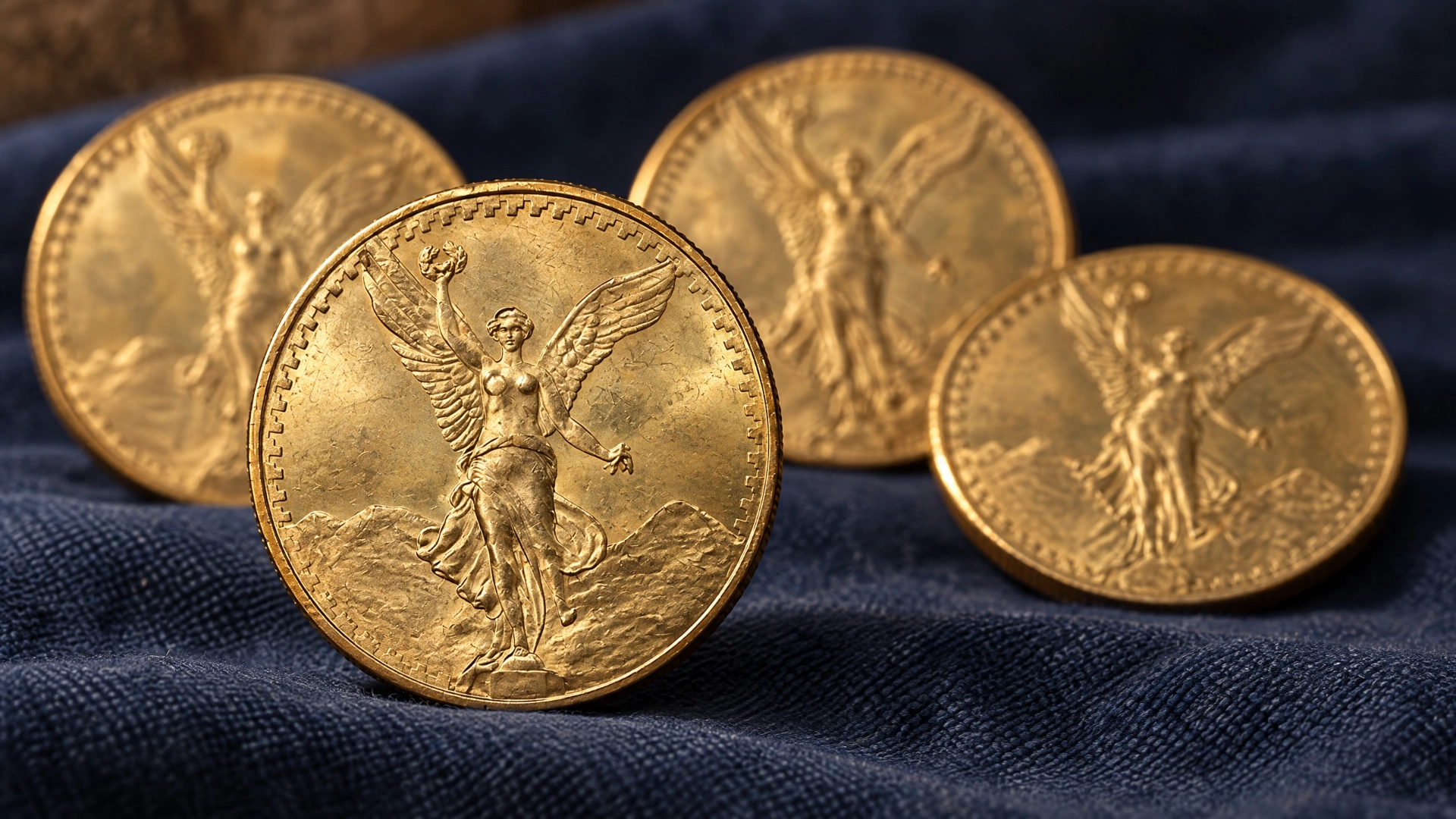
Most Centenarios ever struck are dated 1947 — over 12.5 million once PCGS's year-by-year figures are added up, although PCGS's own stated total reads 12,269,631 — and nearly all of those are restrikes. A restrike is a coin struck later from the original design, carrying an earlier date. According to Jay Turner's PCGS article, the 1947 original mintage was 309,000, while restrikes dated 1947 were produced in 1949–1972 (3,975,654 pieces), in 1996 (7,954,777) and in 2000–2009 (302,000).
The mintages below, for the original dates, are from Turner's PCGS article and the Numista catalog:
| Date | Mintage | Note |
|---|---|---|
| 1921 | 180,000 | First year, centennial issue |
| 1922–1930 | 372,000 to 716,000 per year | Regular first-series dates |
| 1931 | 137,000 | Lowest of the first series |
| 1943 | 89,000 | Denomination removed; lowest mintage overall, per PCGS |
| 1944–1946 | 593,000 to 1,588,000 per year | Second series |
| 1947 | 309,000 originals | Plus several million restrikes with the same date |
Turner notes that in 1943 the denomination was removed and replaced with the text "37.5Gr Oro Puro" on both sides. The denomination returned to the design in 1944, which is why a 1947 Centenario reads "50 PESOS" again. He also notes that the 2000–2009 restrikes have a modern finish. Because Turner reports the 1949–1972 and 2000–2009 restrikes as dated 1947, a 1947 Centenario is generally treated as bullion; earlier dates with lower mintages can carry a numismatic premium, particularly in higher grades certified by PCGS or NGC.
Is a Centenario 24k Gold?
No. A Centenario is .900 fine, which is 21.6 karat, not 24 karat. The confusion comes from the coin's inscription "37.5 Gr. Oro Puro" — 37.5 grams of pure gold — which states how much fine gold the coin contains, not how pure the coin itself is.
Karat measures purity in 24ths, so .900 × 24 = 21.6. The inscription states the coin's fine gold content; that gold is alloyed with base metal to make a 41.6666-gram coin. Our guide to karat versus fineness covers the conversion for other gold items.
How Much Is a Centenario Coin Worth?
A Centenario's melt value is its fine gold content, 1.20565 troy ounces, multiplied by the gold spot price on the day. Spot price is the current market price for one troy ounce of gold for immediate delivery. Melt value is the coin's worth as metal alone, before any premium for the coin itself.
The price you pay to buy, or are offered when you sell, differs from melt by a dealer premium or spread. For a common 1947 date, the premium reflects the coin's bullion market rather than its date. For the lower-mintage dates in the table above, condition and certification can add considerably more. Because the spot price moves through the day, we do not print a figure here; our article on reading spot prices, premiums and dealer spreads explains how a quote is built.
One practical difference from one-ounce coins: a Centenario holds just over 1.2 ounces of gold, so its price per coin will be higher than a one-ounce bullion coin's even when its price per ounce is similar. Compare per ounce of fine gold, not per coin.
37.5 Grams and the Lượng
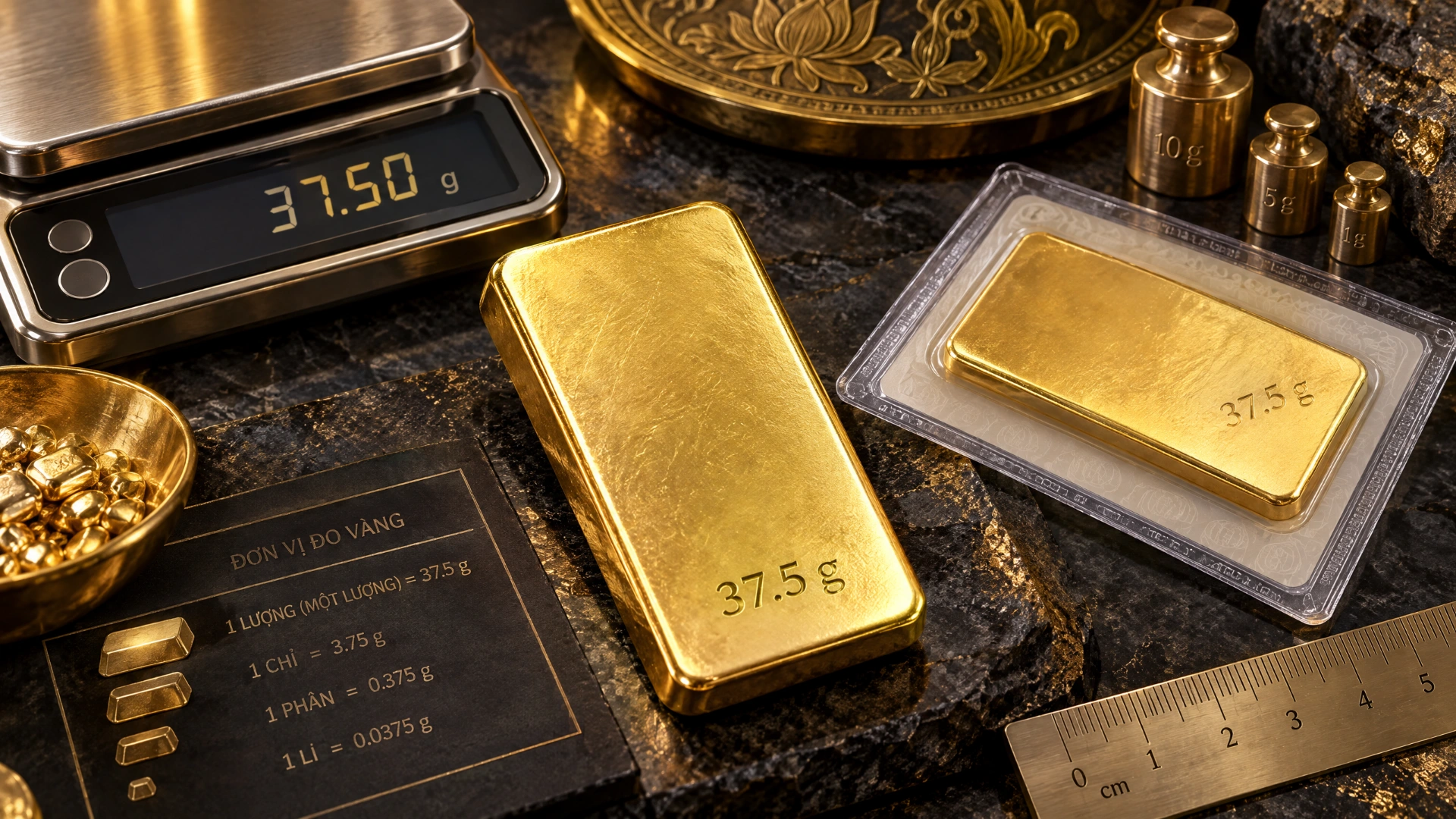
The Centenario's 37.5 grams of fine gold matches the lượng, the traditional Vietnamese gold unit, also called a tael, which is 37.5 grams. The match is a coincidence of two separate standards, so a Centenario's stated fine gold content equals one lượng. Our guide to the mot lượng 37.5 g gold bar covers the Vietnamese unit and how those bars are made.
The two are not identical products. A mot lượng bar weighs 37.5 grams in total; a Centenario weighs 41.6666 grams to carry the same 37.5 grams of gold.
Buying and Selling Centenarios at The Bullion Bank
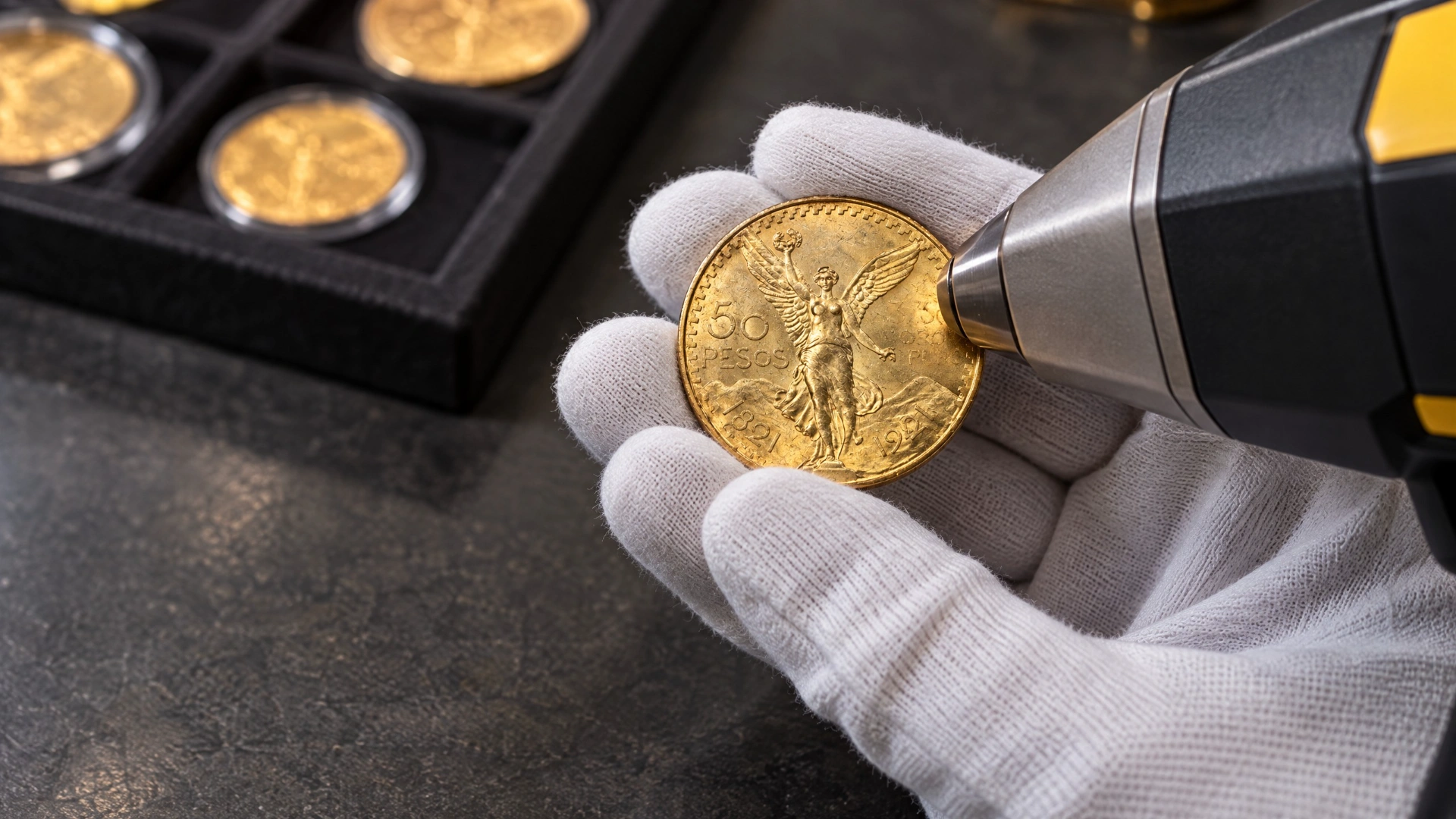
We list the Mexican 50 Peso gold coin in our catalog, though it is not always in stock. Availability changes, so call either store to confirm current stock before visiting.
If you are selling Centenarios, our cash for gold counter tests metal content with X-ray fluorescence (XRF) analysis, which identifies 26 different metals, and makes a same-day offer against live market pricing, with payment on acceptance. Walk-ins are welcome during normal business hours.
Virginia's precious metals dealer chapter does not apply to coins: Va. Code § 54.1-4100 defines precious metals as "any item except coins composed in whole or in part of gold, silver, platinum, or platinum alloys." Our guide to Virginia precious metals dealer law explains what does apply when you sell jewelry or scrap. For buyers, Virginia's sales-tax treatment of gold coins is covered in our article on the Virginia bullion sales tax exemption.
This article is educational and reflects general information about precious metals and collectible coins. It is not investment, tax or legal advice, and The Bullion Bank is not a registered investment adviser, broker-dealer or tax professional. Metal prices fluctuate and past performance does not indicate future results. Consult a qualified professional about your own situation.
Frequently Asked Questions
How much gold is in a Mexican Centenario?
A Mexican Centenario contains 37.5 grams of fine gold, which is 1.20565 troy ounces. The coin itself weighs 41.6666 grams because it is struck in .900 gold, so about 4.17 grams of the total is base metal. The Banco de México publishes the fine gold content; PCGS gives the 41.6666-gram gross weight.
Is the Centenario coin 24k?
No. The Centenario is .900 fine, equal to 21.6 karat. The inscription "37.5 Gr. Oro Puro" means the coin contains 37.5 grams of pure gold, which is a statement of content rather than purity. The rest of the 41.6666-gram coin is alloy that makes it harder-wearing.
How much is a Centenario coin worth?
A Centenario's metal value is 1.20565 multiplied by the current gold spot price per troy ounce. Dealer buy and sell prices sit around that figure by a premium or spread. Common 1947-dated coins are generally treated as bullion and priced from their gold content; lower-mintage dates such as 1931 and 1943 can carry a numismatic premium, especially when certified.
How can I tell an original 1947 Centenario from a restrike?
From the date alone, you cannot: PCGS reports that restrikes made from 1949 to 1972 and from 2000 to 2009 are dated 1947, and that the later ones have a modern finish. For bullion purposes the gold content is the same, so most 1947 coins trade on metal value. Submitting a coin to PCGS or NGC is the usual way to get an expert opinion on a specific coin.
Where can I buy or sell a Centenario in Northern Virginia?
The Bullion Bank buys and sells gold coins at 4086 Airline Pkwy in Chantilly and 131 Maple Ave W in Vienna. Both stores are open Monday to Friday 11am to 6pm and Saturday 11am to 5pm, and closed Sunday. Call (703) 705-5151 or (703) 705-5252 to check current Centenario stock.
Visit The Bullion Bank
The Bullion Bank has been buying and selling precious metals in Northern Virginia since 2008. Bring in a Centenario for XRF testing and a same-day offer, or ask about current stock of Mexican gold coins at either location.
The Bullion Bank — Chantilly
4086 Airline Pkwy
Chantilly, VA 20151
(703) 705-5151
Mon–Fri 11:00am–6:00pm · Sat 11:00am–5:00pm · Sun closed
The Bullion Bank — Vienna
131 Maple Ave W
Vienna, VA 22180
(703) 705-5252
Mon–Fri 11:00am–6:00pm · Sat 11:00am–5:00pm · Sun closed