Published by
Gold Expert
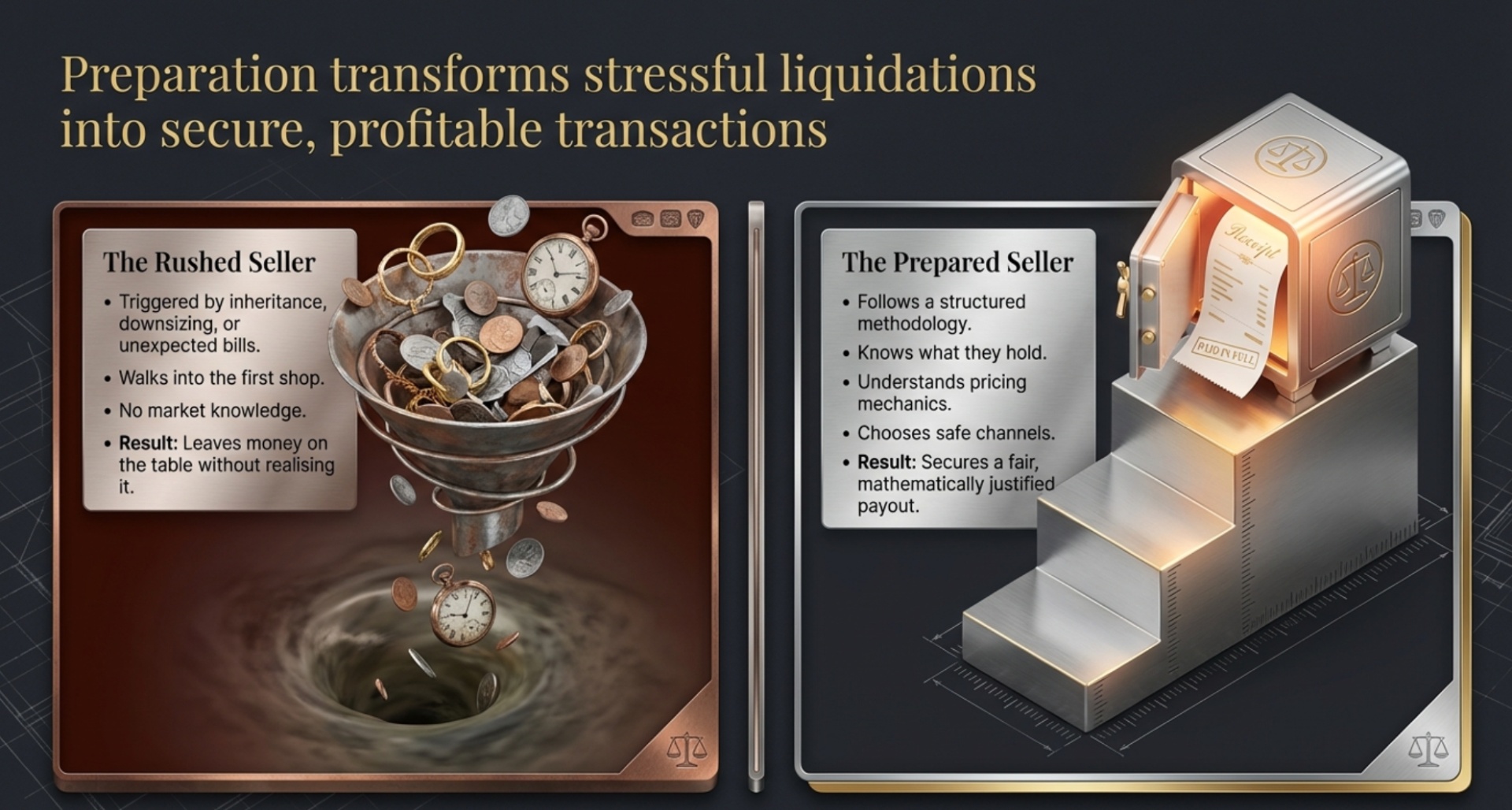
Avoiding common mistakes when selling gold and silver comes down to three things: knowing what you have, understanding how buyers price it, and choosing safe, reputable channels. When you prepare on those fronts, you can sell gold safely, avoid lowball offers, and feel confident about the deal.
Why first‑time sellers make costly mistakes
Selling gold and silver often happens during stressful times—after an inheritance, a move, or an unexpected bill—which makes it easy to rush decisions. Many first‑time sellers walk into the first shop they find, with no idea of current market value or how the process works, and leave money on the table without realizing it.
This practical guide highlights the most common mistakes when selling gold and silver jewelry, coins, and bullion and shows you how to avoid them. It is designed for first‑time and occasional sellers who want a straightforward way to protect themselves and get a fair payout.
Mistake #1 – Not knowing what you have
Confusing costume jewelry, karat gold, coins, and bullion
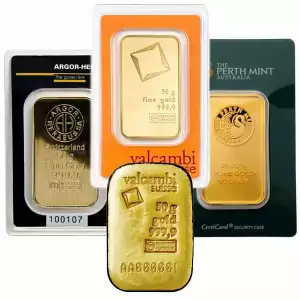
One of the biggest mistakes when selling gold is treating every yellow piece of metal the same. Costume jewelry, 10K or 14K gold, sterling silver, bullion coins, and numismatic coins all have very different values and buyer pools. When you show up with everything mixed together, it is easier for a buyer to quote a single “bulk” price that does not reflect the value of your best items.
Before you ask for offers, separate items by type: group karat‑stamped gold jewelry, sterling silver pieces, recognizable bullion coins and bars, and clearly collectible or vintage coins. This makes it much easier to get specific, line‑item quotes for pieces that might carry premiums above their melt value.
How to get a quick handle on value before you sell
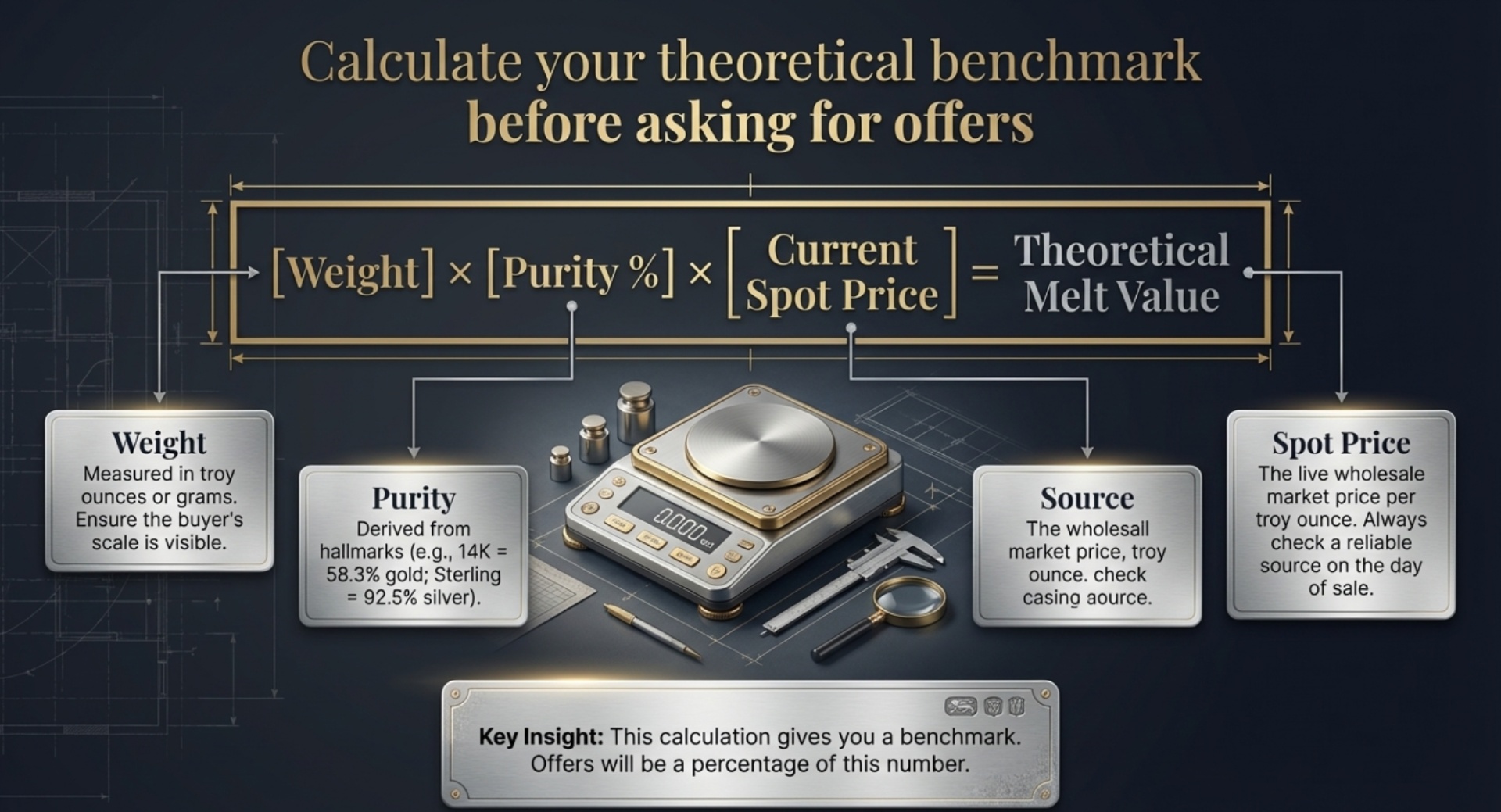
You do not need to become an expert, but you should know the basics. Check for hallmarks (e.g., 10K, 14K, 18K, .925, .999), weigh items if you can, and look up the current gold and silver spot price from a reliable source. From there, you can estimate melt value (weight × purity × spot), which gives you a benchmark for evaluating offers.
For potentially valuable coins or branded jewelry, consider getting an appraisal or at least showing them to a reputable dealer who handles numismatics, not just scrap. Resources that explain how bullion and spot pricing work will also help you interpret offers more confidently.

Mistake #2 – Selling without understanding price basics
Spot price, melt value, and what buyers really pay
Gold and silver prices move daily, sometimes by meaningful amounts, and not knowing the current market value is a classic error. The spot price is the wholesale market price per troy ounce, while melt value is the theoretical metal value of your item based on its weight and purity multiplied by spot.
Reputable buyers usually pay a percentage of melt value for scrap gold and silver and a product‑specific bid price for coins and bullion, not full retail. Understanding that structure up front makes it easier to see whether an offer is within a normal range or suspiciously low.
Typical payout ranges and why 100% of melt is unrealistic
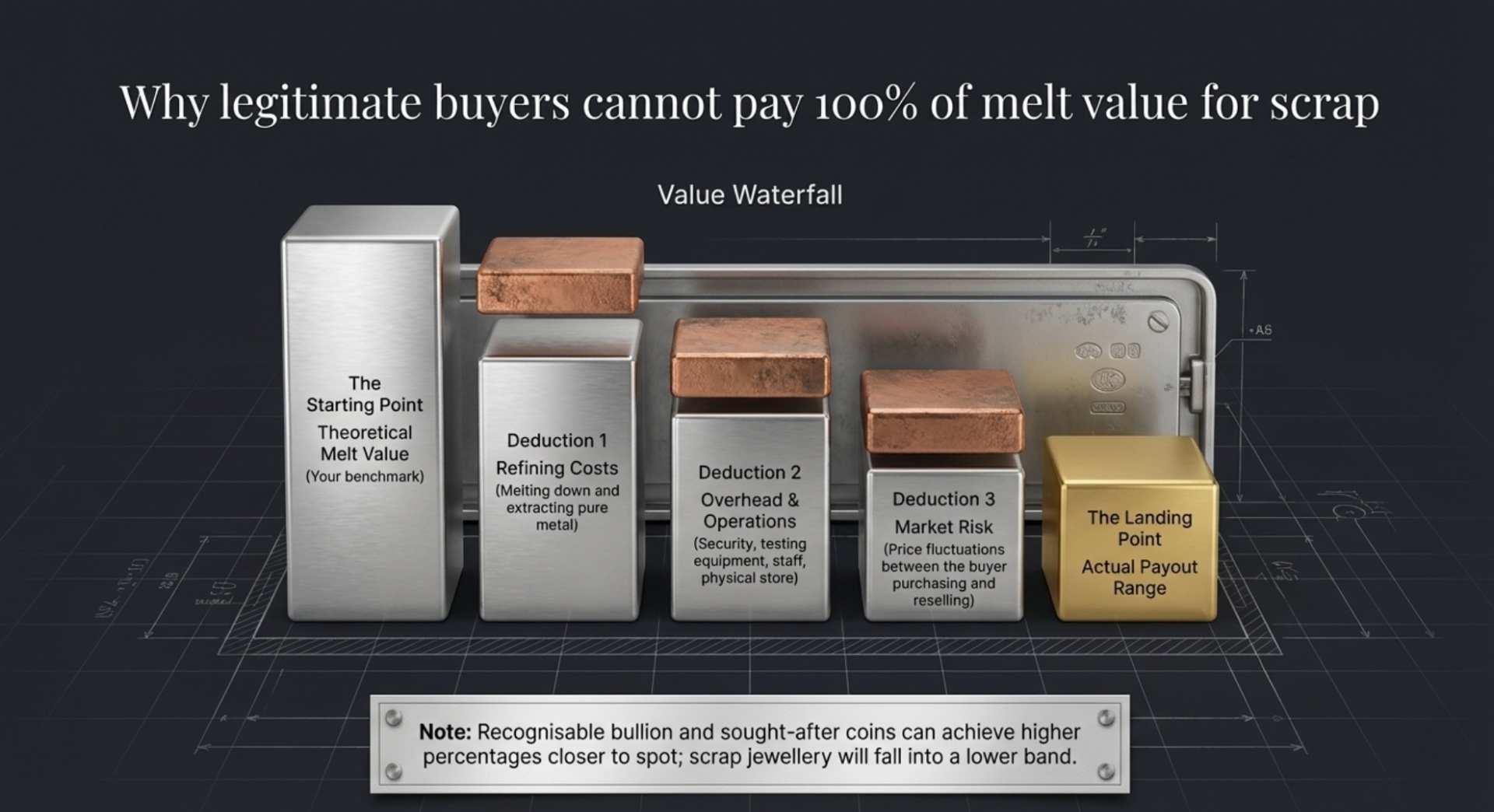
Many honest buyers cannot and will not pay 100% of melt because they must cover refining costs, overhead, and market risk between purchase and resale. Depending on the type of item and competition in your area, typical offers for common scrap jewelry may fall within a band below melt value, while recognizable bullion and sought‑after coins can achieve better percentages.
The key is to treat these ranges as a guide, not a promise. If you know roughly what fair percentages look like, it becomes easier to spot and reject extreme lowball offers for gold and silver. The Bullion Bank’s cash‑for‑gold guide, for example, explains how local buyers base offers on market value rather than arbitrary figures.
Mistake #3 – Taking the first offer (and ignoring lowball red flags)
Why “quick and easy” can cost you money
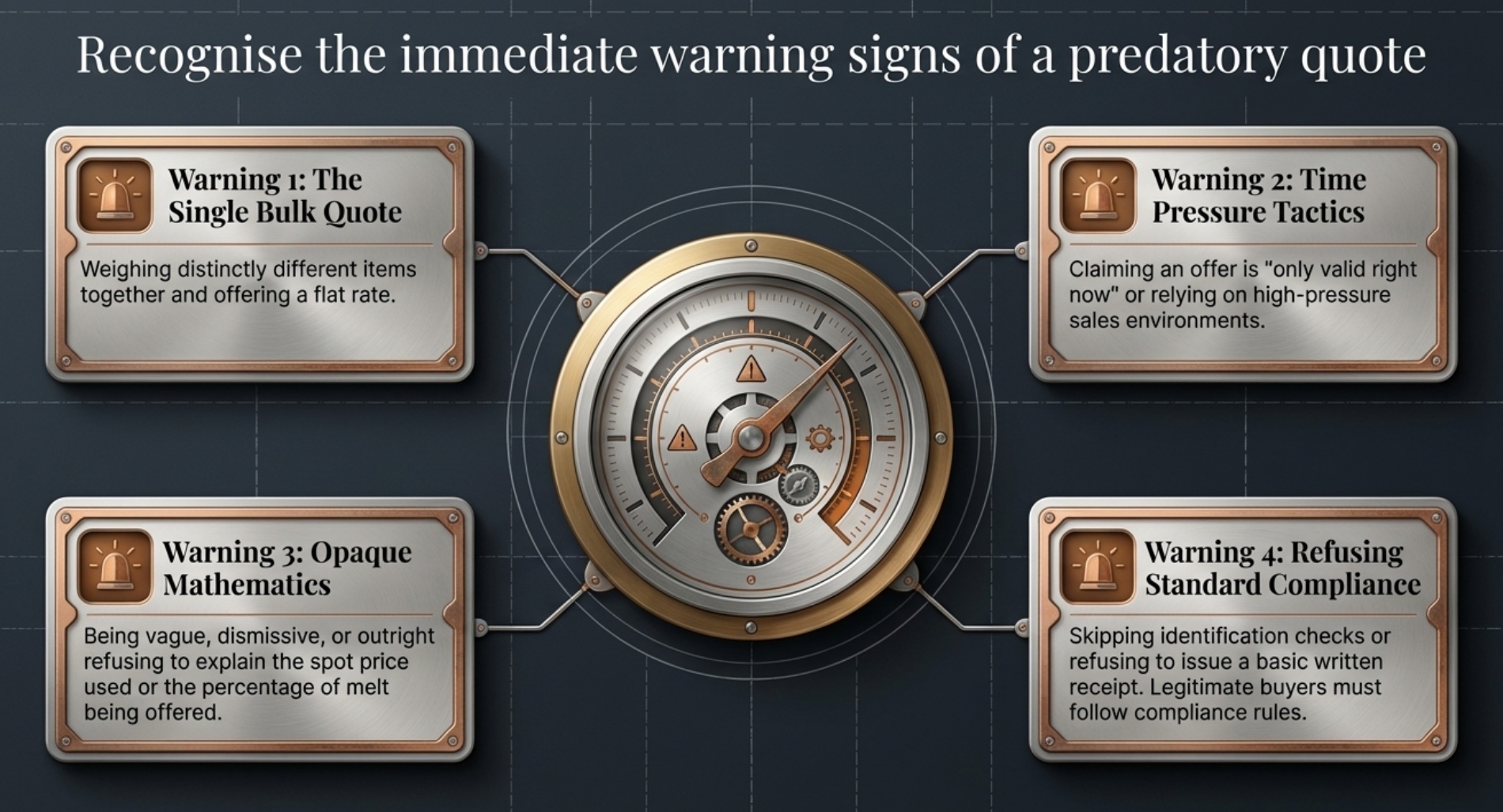
Another frequent mistake when selling gold is accepting the very first offer, especially if a buyer suggests it is “standard” or “only available today.” Under time pressure, it can feel easier to say yes than to shop around, but that convenience often comes at a real cost.
Reputable precious‑metals professionals actually encourage sellers to compare quotes. When you see how different buyers explain pricing and how their numbers stack up against each other, fair offers and lowball offers become much easier to distinguish.
How to avoid lowball offers for gold and silver
To avoid lowball offers, plan to get at least two or three independent quotes. For each offer, ask the buyer to explain how they arrived at the number, what spot price they are using, and what percentage of melt they are paying for scrap gold or silver.
Comparing written quotes or clearly documented offers gives you leverage and confidence. If one buyer is vague, dismissive, or unwilling to explain the math while another walks you through it step by step, that contrast tells you a lot about who deserves your business.
Mistake #4 – Choosing unsafe or unregulated selling channels
Selling to random individuals, meet‑ups, and online marketplaces
The desire to get a little more money can tempt sellers into risky channels—classified ads, social media meet‑ups, or unverified online marketplaces. Unfortunately, those are exactly where scams, counterfeit cash, chargebacks, and even robbery are more common.
While it is possible to sell to individuals safely, it requires a lot more caution and often does not offer the same protections as working with a professional buyer. For most first‑time sellers, licensed gold buyers, coin shops, and established dealers offer a far better balance of safety and value.
How to sell gold safely
To sell gold and silver safely, meet in a professional, well‑known location—ideally a shop with security measures, cameras, and staff on site. Avoid handing over items before you have verified payment, and favor traceable payment methods such as bank transfers or properly documented cash transactions.
Legitimate buyers will often ask for identification and follow compliance rules for larger transactions; this is a sign of professionalism, not a red flag. A dedicated “sell to us” or cash for gold page that explains how a dealer handles safety and payment can also be a good sign you are dealing with a serious business.

Mistake #5 – Mixing everything together and losing leverage
Treating coins, bullion, and jewelry as one bulk lot
Another costly mistake is allowing a buyer to weigh a mixed pile of items and quote a single “per gram” price for everything. This almost guarantees that higher‑value pieces—such as bullion coins, designer jewelry, or rare coins—are undervalued.
Instead, separate your items into logical groups before you visit: bullion coins and bars, recognizable investment‑grade products, standard gold jewelry by karat, silver jewelry, and any potentially collectible coins. You can then request separate quotes for each category, which makes it harder for a buyer to bury value.
Best way to sell silver coins vs scrap silver
Silver coins and scrap silver are often best sold through different channels. The best way to sell silver coins—especially recognizable bullion coins or numismatic pieces—is usually through a reputable coin or bullion dealer that understands both metal value and any potential collector premium.
Generic scrap silver (broken jewelry, flatware, etc.) may be better suited to local buyers or refineries, especially if you have larger quantities. Before you decide, it helps to understand how different buyers in your area handle coins vs scrap and whether they specialize in one category.
Reputable dealers like The Bullion Bank clearly distinguish between bullion, jewelry, and coins on their cash for gold services page.

Mistake #6 – Overlooking fees, fine print, and documentation
Hidden costs that eat into your payout
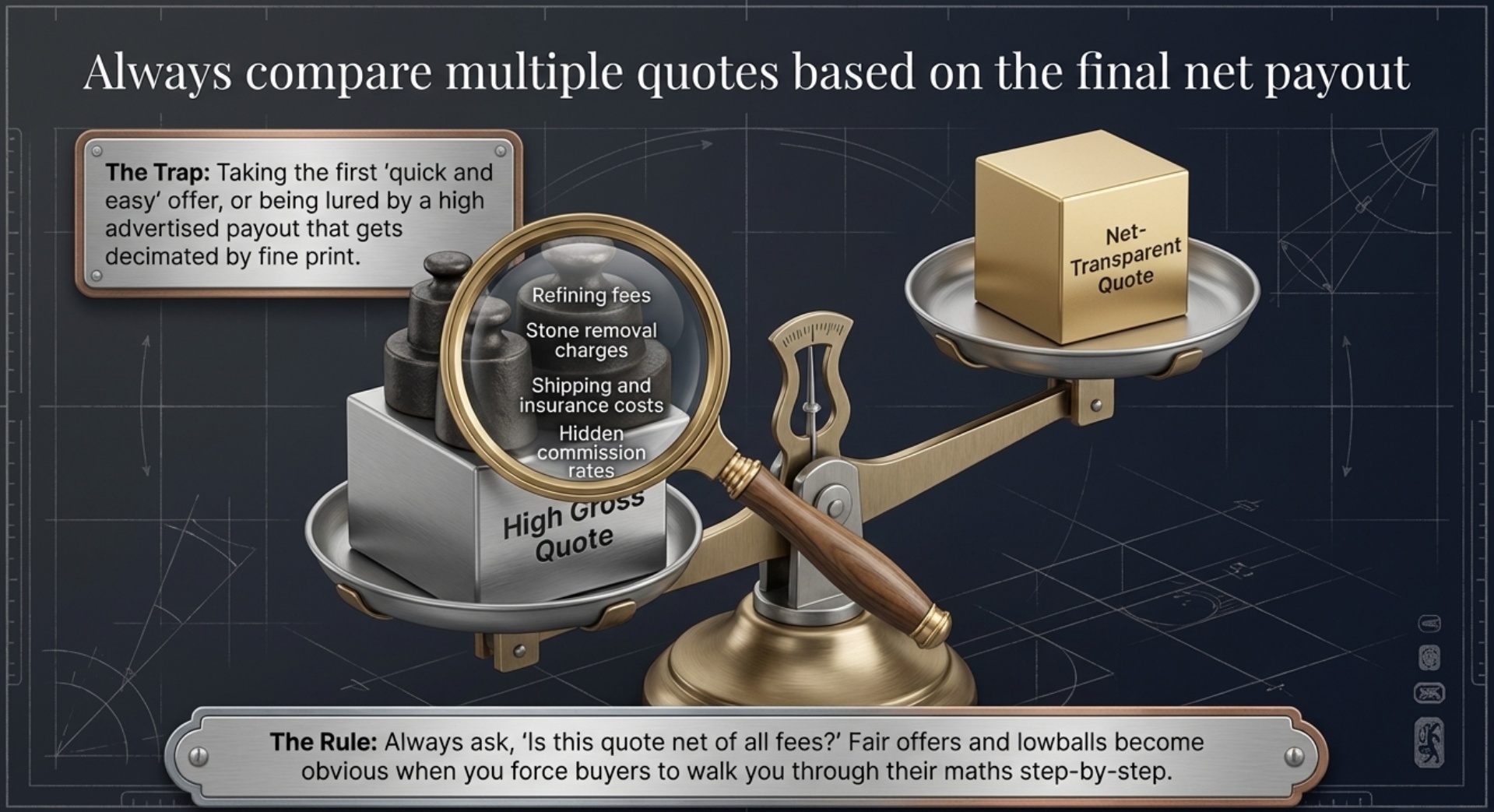
Some selling options advertise high payouts but quietly subtract fees for refining, stone removal, shipping, insurance, or commissions. If you do not ask the right questions, the number you see up front may not be the number you actually receive.
Always ask whether the quoted price is net of all fees and confirm who pays for shipping or insurance if you are using a mail‑in service. A solid selling bullion tips checklist should include “ask about every possible fee and write it down” before you agree.
Not getting a proper receipt or record of sale
Skipping documentation is another common mistake when selling gold and silver. For significant sales, you should receive a clear receipt or bill of sale that lists what you sold, weights and purities where applicable, prices, date, and the buyer’s details.
Professional buyers are accustomed to providing this kind of record, and it protects both parties in case of questions later. If someone refuses to issue even a basic written receipt, consider that a serious red flag.
Mistake #7 – Ignoring the buyer’s reputation and credentials
Not verifying who you are selling to
Choosing a gold buyer purely based on a sign, flyer, or mailer—without checking reputation—is a risky move. You should at least look for online reviews, years in business, a physical address, and a clear description of what the buyer specializes in.
Pop‑up hotel buyers and temporary “gold buying events” may offer convenience, but they are harder to research and may not be around if there is a problem later. Established gold and silver buyers, by contrast, have long‑term reputations to protect and usually invest more in transparent processes.
What a reputable local buyer looks like
A reputable local buyer explains how offers are calculated, tests your items in front of you, answers questions without pressure, and provides clear documentation. They are also transparent about their business (licenses, address, operating hours) and typically have consistent positive reviews.
The Bullion Bank’s cash for gold services in Chantilly and Vienna, for example, emphasize market‑based pricing, clear explanations, and two‑way markets for gold and silver items. That combination—transparent pricing, education, and an established local presence—is what you want to look for when choosing someone to sell to.

Practical selling tips: from first quote to final payout
A simple step‑by‑step plan for first‑time sellers
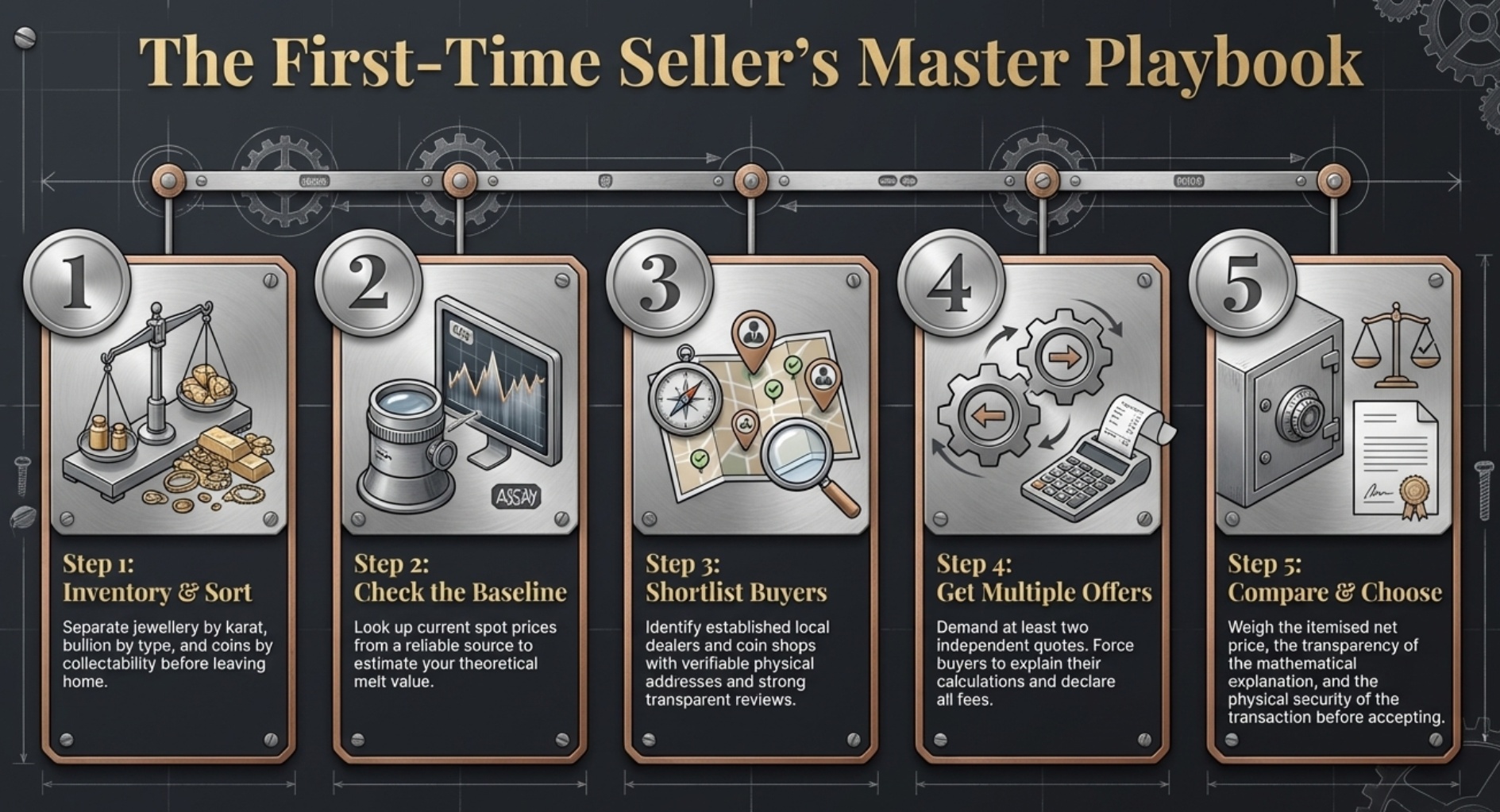
You can combine everything above into a simple plan:
- Inventory and sort your items. Separate jewelry by karat, bullion by type, and coins by potential collectability.
- Check current spot prices. Use a reliable source so you have a baseline for melt value.
- Shortlist reputable buyers. Look for established dealers and coin shops with strong reviews and clear information.
- Get multiple offers. Ask each buyer to explain their calculation and note any fees.
- Compare and choose. Weigh price, transparency, safety, and how comfortable you feel before accepting any offer.
If you hold bullion and are unsure how much of its value comes from metal vs product type, a bullion investment guide can help you understand the market for what you own.
When selling bullion vs jewelry vs coins
The best way to sell silver coins or gold bullion is usually through a dealer that specializes in investment products and understands bid‑ask spreads, product demand, and premiums. Jewelry, on the other hand, may be valued primarily for its melt value unless it carries brand or design premiums, so you should clarify whether a buyer is pricing it as scrap or as finished pieces.
Collectible coins sit somewhere in between: sometimes they are worth more than their metal content, but only if you sell to someone who recognizes and pays for numismatic value. When in doubt, ask whether a buyer distinguishes between bullion, jewelry, and collector coins—and consider using different channels if they do not.
For more background on how buyers in Northern Virginia approach gold and silver transactions, you can explore regional guides that cover both buying and selling perspectives.
FAQs: avoiding common mistakes when selling gold and silver
What are the biggest mistakes people make when selling gold?
The biggest mistakes include not knowing what they have, walking in without checking current market prices, accepting the first offer, and ignoring the buyer’s reputation and fees. These errors make it much easier for lowball offers to slip through and for sellers to be underpaid without realizing it.
How can I sell gold safely and avoid scams?
To sell gold safely, use established dealers or coin shops with clear addresses and good reviews, avoid meeting strangers in unsecured locations, and insist on secure, traceable payment methods. Legitimate buyers will test items in front of you, explain their offer, and provide documentation instead of rushing you or discouraging questions.
How do I avoid lowball offers for gold and silver?
You can avoid lowball offers by checking spot prices beforehand, estimating rough melt value, and getting written or clearly documented quotes from at least two or three reputable buyers. Ask each buyer to explain their calculation; vague explanations and pressure tactics are strong signs to walk away.
What is the best way to sell silver coins?
The best way to sell silver coins is usually through a reputable coin or bullion dealer that understands both metal value and any potential collector premium. Local coin shops, established precious‑metal dealers, or recognized online dealers are generally safer and more knowledgeable than random individual buyers or general pawn shops.
Should I sell gold jewelry, coins, and bullion all at once or separately?
It is often better to separate jewelry, coins, and bullion and get tailored offers for each category rather than accepting one bulk quote. Different items appeal to different buyers, so you might achieve better overall results by using a specialist for bullion and coins and a separate channel for scrap jewelry.
How can I tell if a gold buyer is reputable?
A reputable buyer has a physical location, clear contact details, positive reviews, and a history in the community, and is willing to explain their process and provide receipts. They follow ID and record‑keeping regulations and do not pressure you to decide on the spot or discourage you from seeking other offers.
What should I do before accepting an offer for my gold or silver?
Before accepting any offer, verify current spot prices, confirm how your items were tested, ask exactly how the price was calculated, check for any fees, and compare at least one other quote. Taking these steps turns a one‑sided transaction into a fair negotiation where you understand the numbers and can say yes or no confidently.
If you are thinking about selling gold or silver, take a little time to understand your items, check the market, and compare offers from reputable buyers before you decide. With a simple plan and the right local gold and silver buyer, you can sell safely, avoid common mistakes, and feel comfortable that you received a fair, well‑explained payout.