
Published by
Gold Expert

The Mexican silver Libertad is Mexico's .999 fine silver bullion coin, issued by Banco de México and struck by the Casa de Moneda de México. The one-ounce coin dates from 1982, four fractional sizes were added in 1991, 2 oz and 5 oz coins followed in 1996, and a one-kilogram piece is also part of the series. Recent years' issues come in several finishes, and annual mintages vary widely, so the date on a Libertad is worth noting alongside its weight.
This guide sets out the sizes, the design changes, what each finish is, and which mintages stand out, with the source for every figure.
What the Libertad is

The Libertad silver coin is a government issue whose legend states its weight and fineness rather than a peso denomination. A current one-ounce coin reads "1 ONZA PLATA PURA", the year, "LEY .999" and the "Mo" mint mark of the Mexico City mint, as recorded in the Numista catalogue entry for the 2000-date type.
Banco de México's page on the silver Libertad series explains where the design came from. In 1981 it was decided that the obverse would carry the national coat of arms and the reverse would repeat the design of the gold Centenario: the Winged Victory of Mexico City's Independence monument, with the volcanoes Popocatépetl and Iztaccíhuatl behind it. Banco de México, as quoted by Expansión in August 2025, says the one-ounce silver coin was intended to replace the earlier silver troy onza and was given legal tender character, "poder liberatorio".
That shared reverse is why a Libertad and a Mexican Centenario look related across a display case. The Centenario is a 50-peso gold coin with a stated denomination; the silver Libertad carries only its weight.
The Libertad also had a predecessor. Writing for PCGS in December 2025, Sanjay Gandhi describes the 1949 Onza Troy as the first one-ounce silver bullion coin issued by a government. Production of the Onza resumed from 1978 to 1980, none was issued for 1981, and the Onza Libertad replaced it in 1982.
The sizes in the series
The silver Libertad has been issued in eight sizes, from one-twentieth of an ounce to one kilogram. The table gives the dimensions where a catalogue records them for the current design.
| Size | First year in the series | Weight | Diameter, current design |
|---|---|---|---|
| 1/20 oz | 1991 | about 1.56 g (nominal) | - |
| 1/10 oz | 1991 | about 3.11 g (nominal) | - |
| 1/4 oz | 1991 | about 7.78 g (nominal) | - |
| 1/2 oz | 1991 | about 15.55 g (nominal) | - |
| 1 oz | 1982 | 31.1 g | 40 mm from 2000 (36 mm 1982-1995) |
| 2 oz | 1996 | 62.2079 g | 48 mm |
| 5 oz | 1996 | 155.5175 g | 65 mm |
| 1 kg | - | 1,000 g | - |
Sources: fractional sizes and their 1991 introduction from Banco de México; one-ounce, 2 oz and 5 oz weights, diameters and first years from the Numista catalogue entries for the 1982-1995 one-ounce, the 2000-date one-ounce, the 2 oz and the 5 oz. The one-kilogram size is listed in Expansión's August 2025 guide to the series. Fractional weights are nominal, calculated from 31.1035 g per troy ounce. A dash means no figure is given here because the sources consulted either disagree or do not state one.
The one-ounce diameter is the figure most likely to confuse a buyer comparing sources. Banco de México's specification table lists 36.0 mm, which matches the original 1982-1995 coins in the Numista catalogue. Coins struck from 1996 onward are catalogued at 40 mm and 3 mm thick, against 36 mm and 3.47 mm for the original type.https://en.numista.com/17818 A genuine 1990 Libertad and a genuine 2020 Libertad are simply different sizes.
How the design has changed
The Libertad has had three broad designs, and a buyer can date one roughly from across the counter:
- 1982-1995. The original type, with a larger Winged Victory, on a 36 mm coin. Numista records both lettered-edge coins, reading "INDEPENDENCIA Y LIBERTAD", and reeded-edge varieties of this type. Gandhi notes that two types were struck in 1991.
- From 1996. Gandhi describes the change: the angel became smaller, part of the monument's column now shows, and the coin's diameter grew.
- From 2000. The obverse changed to the current Mexican coat of arms surrounded by the earlier versions of the national emblem, the design catalogued by Numista for the 2000-date one-ounce coin, with a reeded edge.
Because the coin grew in 1996, a Libertad from before that year can be told from a modern one by size alone. Varieties inside each period, including doubled dies and mules, are a specialist collecting field of their own.
The finishes, and what each one is
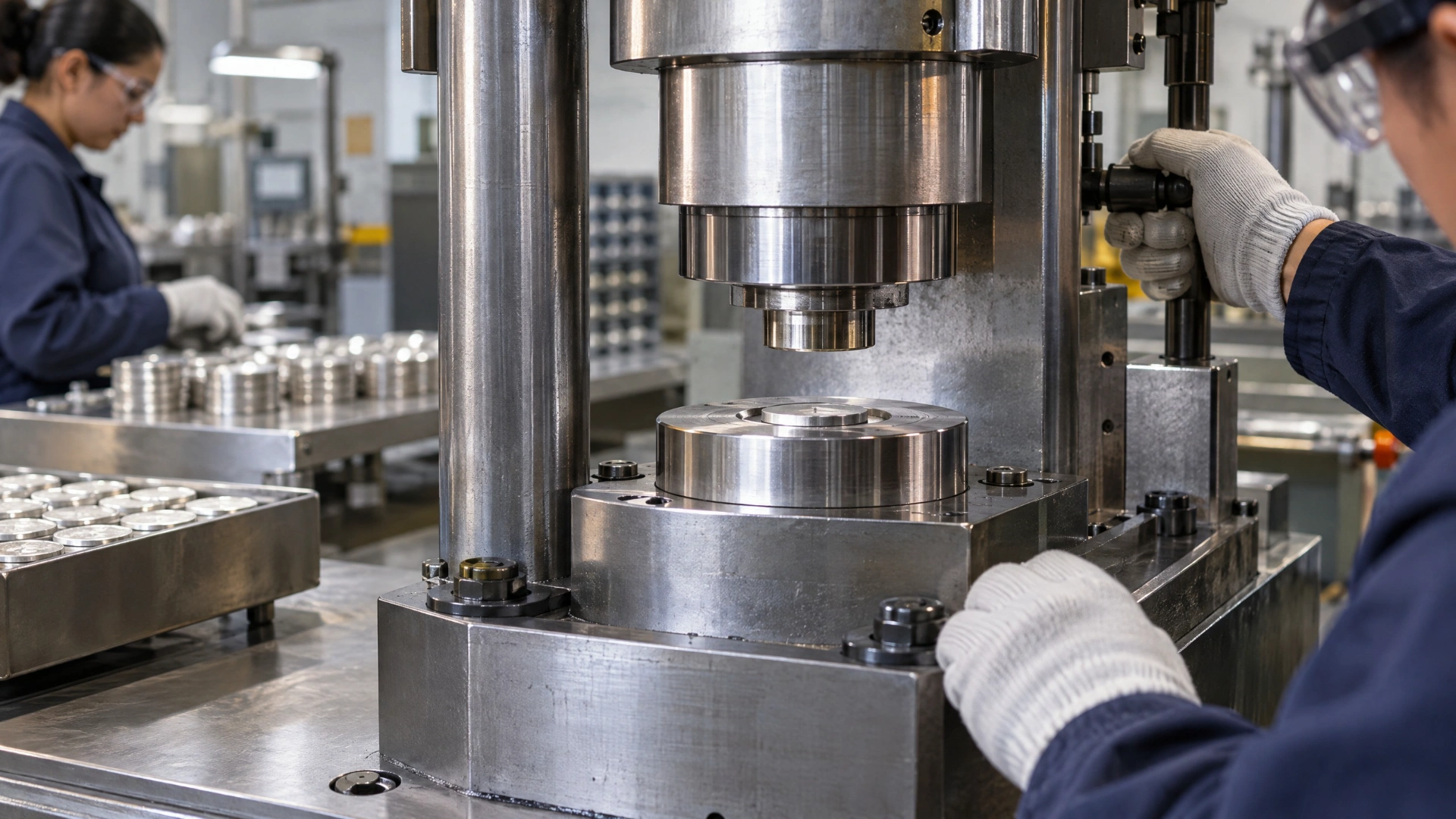
A finish is the surface the mint gives a coin, and on the Libertad it changes both the look and the premium. Banco de México's table lists uncirculated and proof qualities; later issues added two more.
- Brilliant uncirculated. The standard bullion strike, made in the largest numbers.
- Proof. A coin struck from polished dies, giving a mirror field behind frosted design elements. The Numista catalogue records proof one-ounce Libertads from 1983, when the mintage was just 998.
- Reverse proof. The proof finish inverted: frosted fields behind a mirror-polished design. Numista first records it on the one-ounce coin in 2015, with 1,500 struck, and on the 5 oz in 2017.
- Antiqued. A deliberately darkened, aged-looking surface. In Numista's entries for the 1 oz, 2 oz and 5 oz coins, the antiqued finish first appears in 2018: 40,000 one-ounce coins and 2,000 each of the 2 oz and 5 oz.
Proof, reverse proof and antiqued coins have generally been made in much smaller numbers than bullion strikes. That is part of why the same ounce of .999 silver can carry very different premiums depending on its finish. The premium is everything a buyer pays above the silver content, and how it is built up is explained in How to Read Gold and Silver Prices.
Mintages: the years that stand out
Libertad mintages vary sharply from year to year, and a few bullion-strike dates are very low by bullion standards. The figures below are brilliant uncirculated strikes.
| Coin | Year | Mintage | Source |
|---|---|---|---|
| 1 oz | 1982 | 1,049,680 | Numista |
| 1 oz | 1994 | 400,000 | PCGS (Gandhi), Numista |
| 1 oz | 1997 | 100,000 | PCGS (Gandhi) |
| 1 oz | 1998 | 67,000 | PCGS (Gandhi) |
| 1 oz | 1999 | 95,000 | PCGS (Gandhi) |
| 1 oz | 2007 | 200,000 | Numista |
| 1 oz | 2009 | 1,650,000 | Numista |
| 2 oz | 2005 | 3,549 | Numista |
| 5 oz | 1998 | 3,500 | Numista |
| 5 oz | 1999 | 2,800 | Numista |
Gandhi calls the 1998 one-ounce coin the series key, at 67,000 struck. In the larger sizes the late 1990s are thin too: Numista records 3,500 5 oz Libertad coins for 1998 and 2,800 for 1999, and 3,000 a year for 2005, 2006 and 2007.
Two cautions travel with any mintage table. Catalogues do not always agree on Libertad figures, and the most recent years in particular can be incomplete or revised, which is why no 2025 figure appears here. And a mintage is how many were struck, not how many survive in a given condition or what any one coin is worth. Grade, finish and the coin's surfaces still decide that.
Why a Libertad prices differently from a generic ounce
A Libertad's price has two parts: the silver it contains, and the premium above it. On a generic round the premium mostly covers fabrication and distribution. On a Libertad it can also reflect the year's mintage, the finish, the condition, and collector demand for a run of dates.
The same thing happens with other sovereign coins that change from year to year. Our Chinese Gold Panda guide covers how an annual design change feeds into a coin's premium. On the Libertad the design is stable, so the date and the mintage do that work instead.
The practical point for a buyer is to compare like with like. A 1998 brilliant uncirculated one-ounce coin, a 2018 antiqued one-ounce coin and a current-year bullion strike all hold about an ounce of .999 silver, and they are three different purchases.
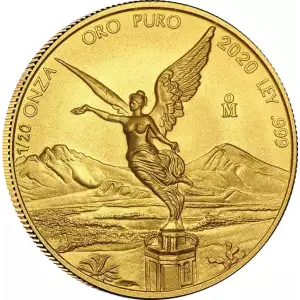
The same Libertad design is also struck in .999 gold, in five sizes from 1/20 to 1 ounce. Banco de México authorized the first gold pieces, in 1, 1/2 and 1/4 ounce, in 1981, and added the 1/10 and 1/20 ounce in 1991.
Checking a Libertad
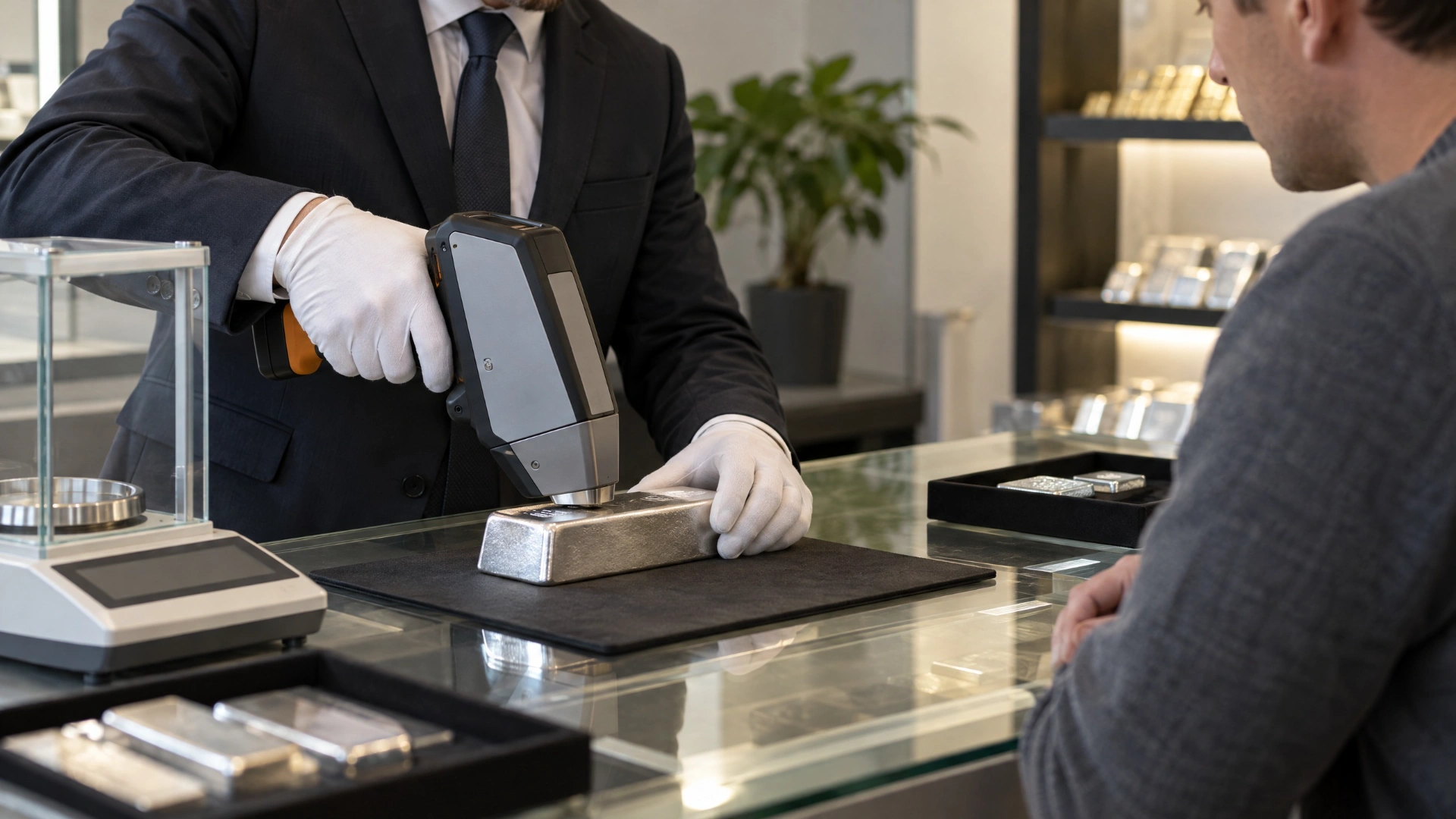
The first checks on any Libertad are weight, diameter and thickness against the published specification for its year and type. Because the one-ounce coin was 36 mm through 1995 and is 40 mm on coins from 1996, the right figure depends on the date.
Weight and size are a screen, not proof. When coins are brought to The Bullion Bank to sell, we test metal content by X-ray fluorescence in front of the customer, a method that reads the surface composition without damaging the coin; XRF Gold Testing Explained covers what the instrument measures and where its limits are. For a high-grade or low-mintage date, a coin already authenticated and graded by PCGS or NGC answers questions that a counter test cannot.
This article is educational and reflects general information about precious metals and collectible coins. It is not investment, tax or legal advice, and The Bullion Bank is not a registered investment adviser, broker-dealer or tax professional. Metal prices fluctuate and past performance does not indicate future results. Consult a qualified professional about your own situation.
Frequently asked questions
Is the Mexican silver Libertad legal tender?
In Mexico, yes, for the one-ounce coin. Banco de México, as quoted by Expansión in August 2025, says the one-ounce silver Libertad was given legal tender character, "poder liberatorio", when it was introduced. The coin carries no peso denomination; its legend states its weight and fineness instead.
What sizes does the silver Libertad come in?
Eight: 1/20, 1/10, 1/4 and 1/2 ounce, 1 ounce, 2 ounces, 5 ounces and one kilogram. The one-ounce coin dates from 1982, the four fractions from 1991, and the 2 oz and 5 oz from 1996. All are .999 fine silver, issued by Banco de México and struck by the Casa de Moneda de México.
Which one-ounce Libertad is called the series key?
Among brilliant uncirculated one-ounce coins, Sanjay Gandhi, writing for PCGS, calls the 1998 the series key, with 67,000 struck. The 1999, at 95,000, and the 1997, at 100,000, are also low. Figures for the newest years, including 2025, may still be revised. Mintage alone does not set a coin's value; grade and surfaces still matter.
What is the difference between a proof and a reverse proof Libertad?
A proof has mirror-like fields with frosted design elements. A reverse proof inverts that, with frosted fields and a mirror-polished design. Proof one-ounce Libertads go back to 1983 in the Numista catalogue, while the reverse proof one-ounce coin first appears in 2015. Both have generally been made in much smaller numbers than bullion strikes.
Why is my older Libertad smaller than a new one?
The one-ounce coin was enlarged. Coins of the original 1982-1995 type are catalogued at 36 mm and about 3.47 mm thick, while those struck from 1996 onward are 40 mm and 3 mm thick. PCGS's Sanjay Gandhi dates the widening to the 1996 redesign. Both hold the same ounce of .999 silver.
Selling a Libertad in Chantilly or Vienna
To sell a Libertad or other silver coins, visit either store during opening hours; items brought in to sell are tested in front of you. Walk-ins are welcome during normal business hours.
Chantilly
The Bullion Bank
4086 Airline Pkwy
Chantilly, VA 20151
(703) 705-5151
Mon-Fri 11:00-18:00, Sat 11:00-17:00, Sun closed
Vienna
The Bullion Bank
131 Maple Ave W
Vienna, VA 22180
(703) 705-5252
Mon-Fri 11:00-18:00, Sat 11:00-17:00, Sun closed