Published by
Gold Expert
Key takeaways
- In‑person dealers offer face‑to‑face testing, immediate settlement, and help with mixed items.
- Online platforms are efficient for price shopping on standard bullion.
- Safety, fees, spreads, and liquidity matter more than any single sticker price.
- The best setup is often a mix of local and online options.
- Your ideal choice depends on experience level, risk tolerance, and whether you’re buying, selling, or both.
Definitions (quick answers)
What is a gold dealer?
A gold dealer is a business or professional that buys and sells physical precious metals—such as gold and silver coins, bars, and sometimes jewelry—at prices linked to the live market.
What is spot price?
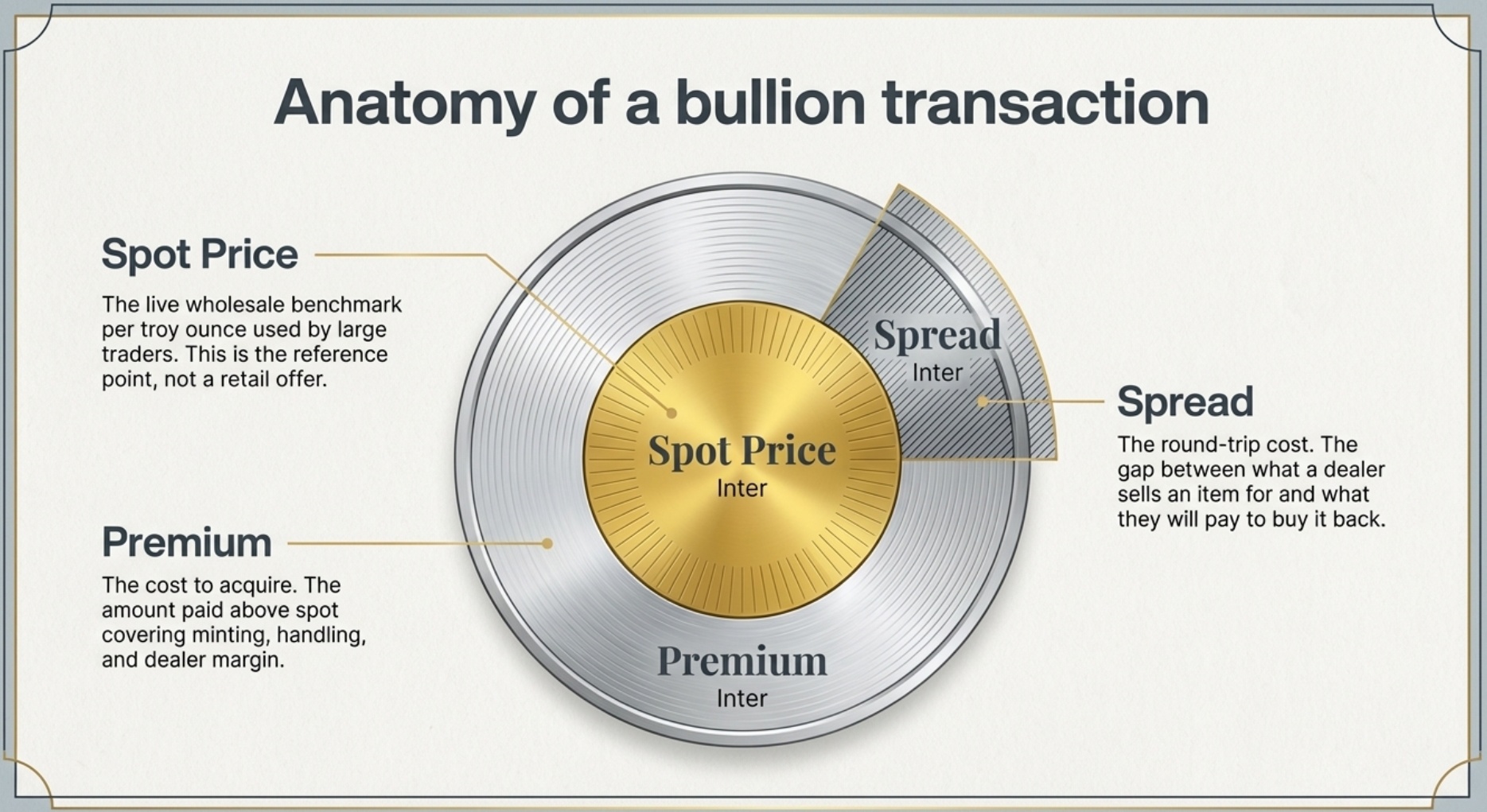
Spot price is the current wholesale market price per troy ounce that large traders pay for gold or silver, used as the reference point for retail quotes and buy‑back offers.
Local vs online gold and silver at a glance
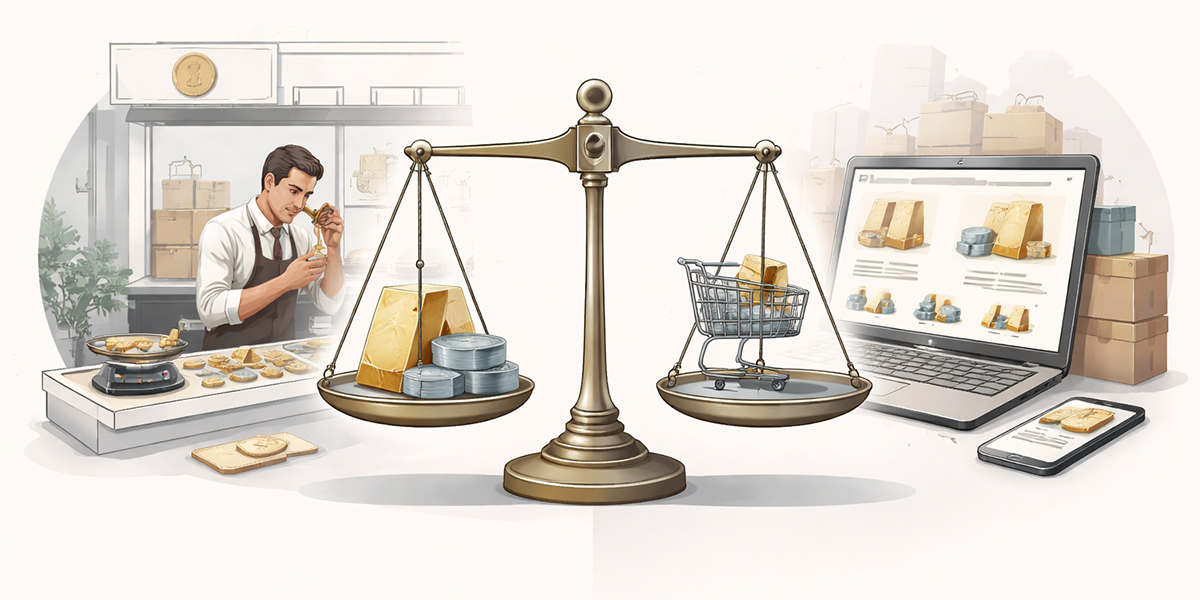
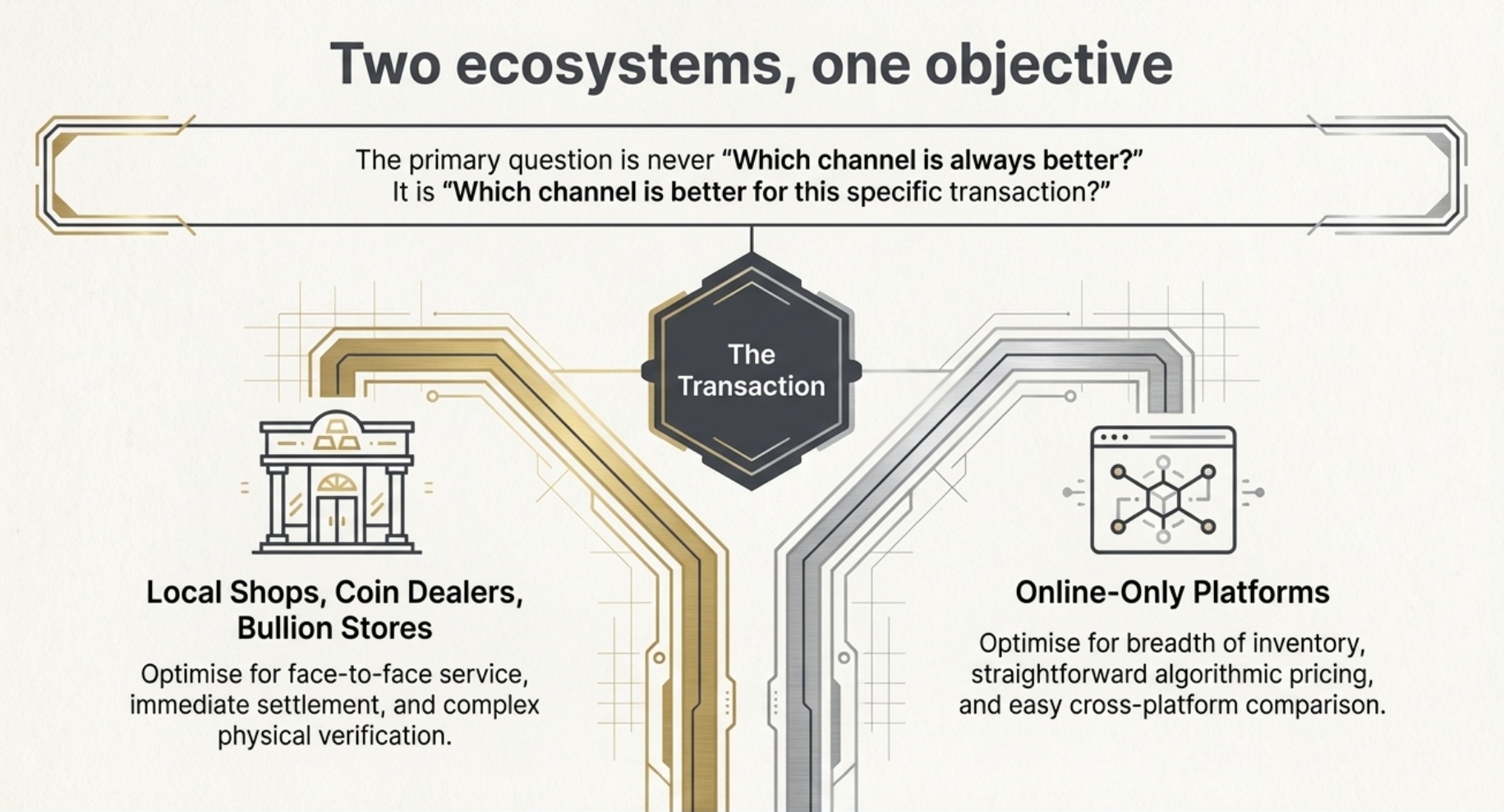
When you search for an in person gold buyer near me or compare local vs online gold dealer options, you are really choosing between different ways to manage price, convenience, and risk. Local shops, coin dealers, and bullion stores offer face‑to‑face service and immediate settlement, while online‑only platforms win on breadth of inventory and easy price comparison.
For most people who want to buy gold and silver in Northern VA or anywhere else, the question is not “Which is always better?” but “Which is better for this transaction?”. The answer often changes depending on whether you are buying, selling, or handling a complex collection.
Local vs online dealers: key differences
Comparison table: local vs online dealers
| Factor | Local in‑person dealer | Online‑only dealer |
|---|---|---|
| Pricing transparency | Explained live, tied to spot, you can ask questions | Shown on screen, easy to compare across multiple sites |
| Safety & security | Transactions in a staffed, monitored shop | Relies on shipping, packaging, and platform reputation |
| Fees & costs | Built into bid/ask; minimal extra in‑store fees | May add shipping, insurance, payment surcharges |
| Liquidity (speed) | Same‑day payment or product hand‑over | Slower: ship, verify, then get paid or receive metal |
| Product inspection | You see items and testing in person | You rely on descriptions, photos, and brand reputation |
| Complexity handling | Strong for mixed lots, inherited collections | Best for standard coins/bars in known condition |
| Risk profile | Counterparty risk tied to one shop you can visit | Includes shipping loss risk and platform selection risk |
This table is a general guide rather than a hard rule, but it shows why many buyers and sellers still anchor their strategy around a local, trusted bullion dealer and then use online options when appropriate.
Fundamental concepts: price, spreads, liquidity, risk
A few basic concepts help you compare any dealer, local or online.
- Spot price: wholesale benchmark per troy ounce, not a retail offer.
- Premium: what you pay above spot when you buy (covers minting, handling, margin).
- Spread: the difference between what a dealer sells for and what they’ll pay to buy back the same item; this is your round‑trip cost.
- Liquidity: how quickly and easily you can turn your metal into cash (or vice versa) at a reasonable price.
- Risk: the chance you lose money or metal due to fraud, non‑delivery, fees you didn’t anticipate, or very wide spreads.
A dealer who explains spot, premiums, spreads, and liquidity clearly, and offers predictable processes with reasonable risk, is usually worth more than one who only advertises the lowest upfront price.
Why so many buyers still use in‑person dealers
Trust, explanations, and transparency
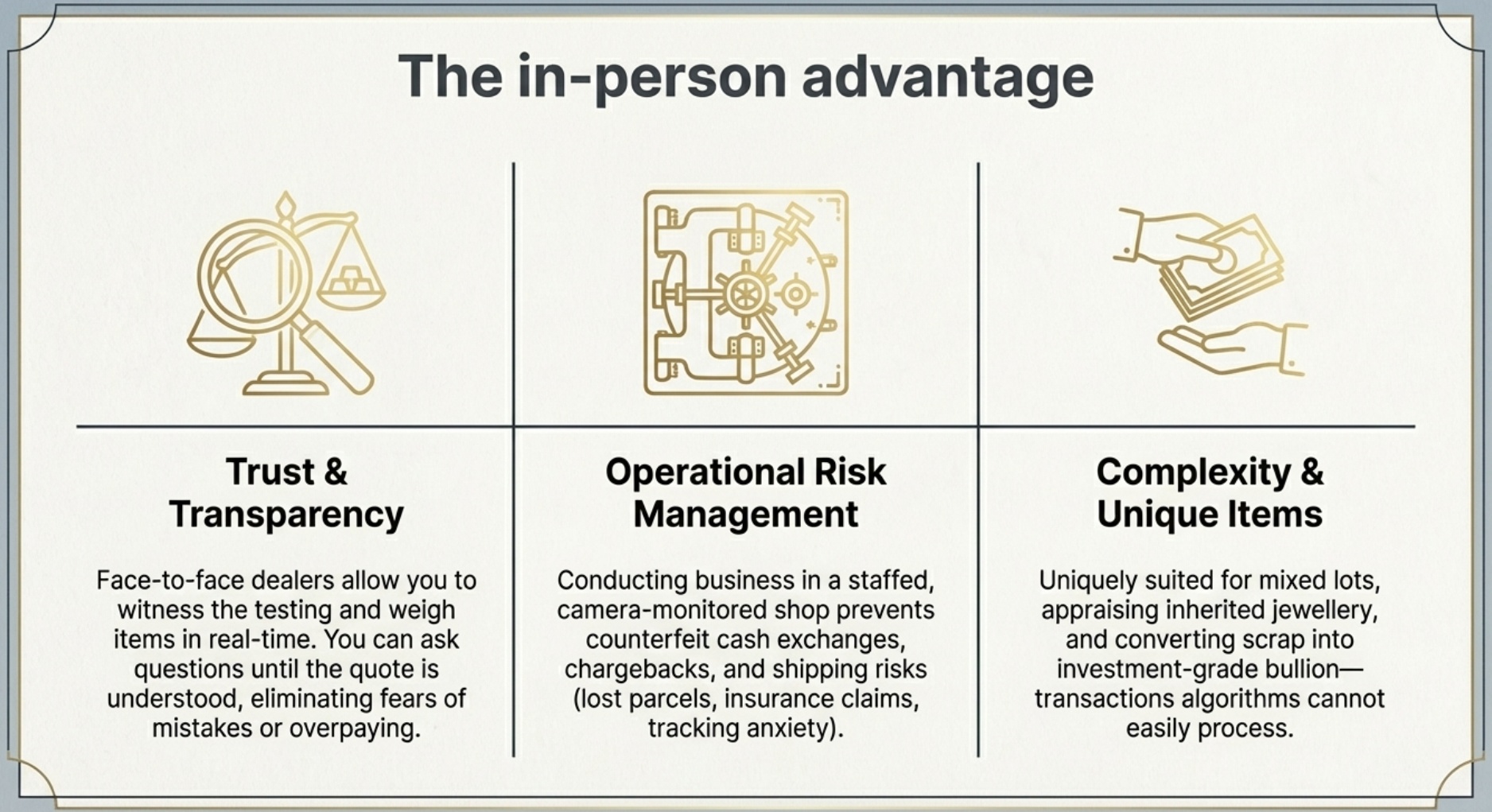
Face‑to‑face dealers let you see testing, weigh items in front of you, and ask follow‑up questions until you actually understand the quote. That’s valuable if you are worried about mistakes, scams, or simply overpaying.
Because conversations happen in real time, you can get clarity on how spreads work, how your items compare with standard bullion, and what kind of liquidity you can expect if you sell back later. This can be reassuring for first‑time sellers and buyers of gold and silver coins, bars, and jewelry.
Safety, security, and risk management
Meeting in a shop with staff, cameras, and established procedures is generally safer than handing over metal or cash in a parking lot or to an unknown online buyer. You avoid some of the most common risks: counterfeit cash, chargebacks, or disputes when someone claims they received the “wrong” items.
Local dealers also reduce shipping risk. You don’t have to package and insure high‑value items, worry about tracking, or wonder what happens if a parcel goes missing in transit. For many people, this lower operational risk is a big reason to stay local.
Liquidity and spreads in practice
If you sell to a good in‑person dealer, you often get immediate liquidity: they test your items, agree a price, and pay you on the spot. The spread you pay (on buy) or accept (on sell) is your real round‑trip cost.
Having a local point of liquidity is useful if you ever need to convert bullion or coins into cash quickly without waiting for mail‑in processes or bank transfers from distant buyers. Even if spreads are slightly wider than at some high‑volume online outlets, the speed, simplicity, and lower perceived risk are worth it for many people.
When online‑only platforms make sense
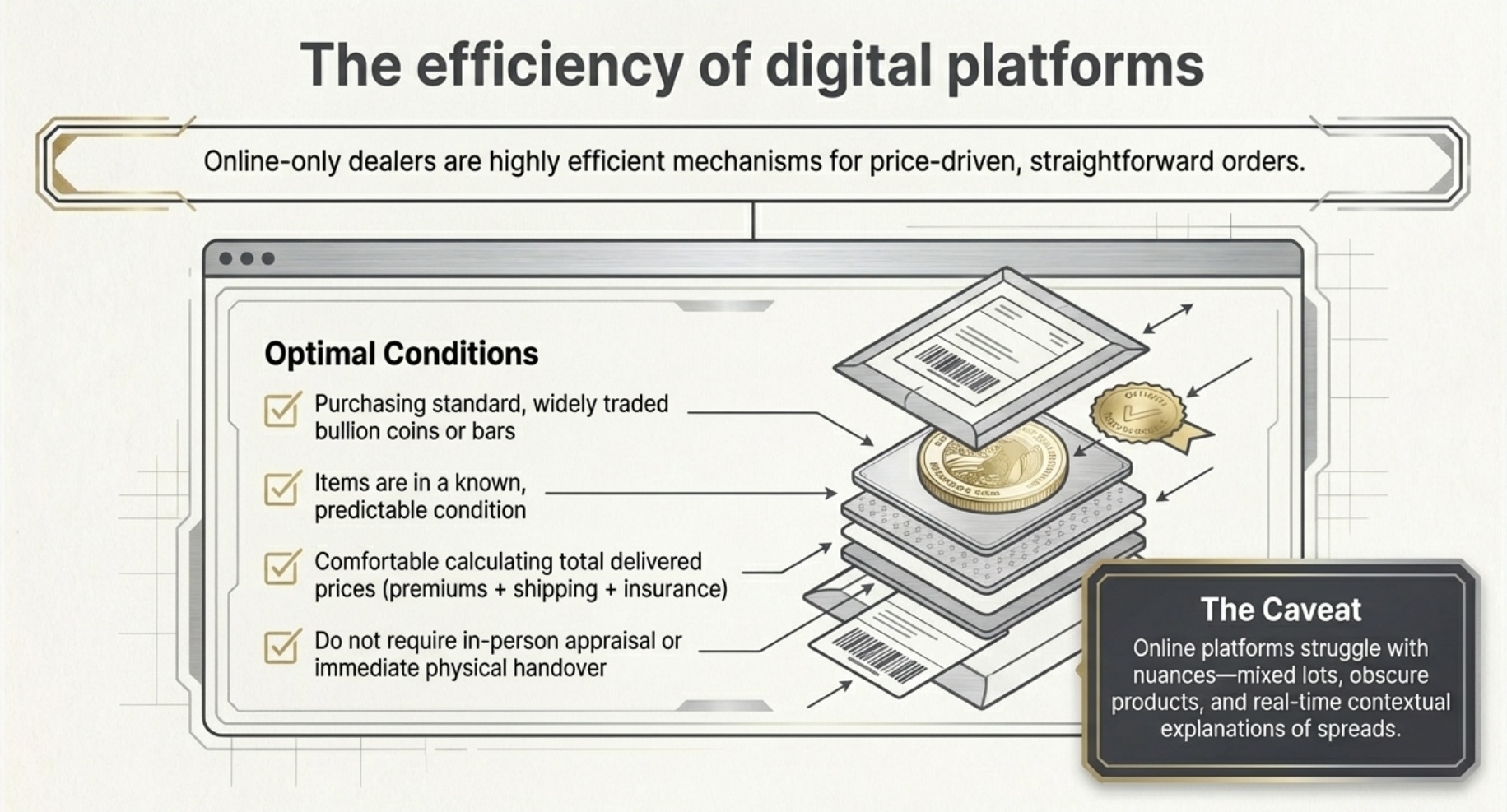
Online‑only dealers can be very efficient for price‑driven, straightforward orders:
- You want a standard, widely traded bullion coin or bar.
- You’re comfortable comparing premiums, fees, and shipping costs.
- You’re fine with insured delivery and don’t need in‑person help.
For example, if you already know you want a specific 1 oz gold coin from a major mint, a reputable online platform can make it easy to compare total delivered prices. The key is to stick to well‑known, well‑reviewed sellers and to read the fine print on shipping, insurance, and fees.
Where online options are weaker is in handling mixed lots, appraising unique jewelry, explaining spreads in context, or providing nuanced advice about the liquidity and risk of more obscure products. That’s where an in‑person dealer still has an edge.
Best choice depends on…
Your ideal mix of local vs online depends on several factors:
- Your goal: Are you building a position in bullion, selling inherited items, or just testing the waters?
- Experience level: New buyers often benefit more from in‑person explanations; experienced investors can navigate online platforms more comfortably.
- Risk tolerance: If you’re uncomfortable with shipping and remote transactions, local shops will likely feel safer.
- Time horizon: If you think you might sell back soon, understanding buy‑back spreads and liquidity is crucial.
- Item type: Standard bullion orders are online‑friendly; unique or mixed lots are better suited to in‑person evaluation.
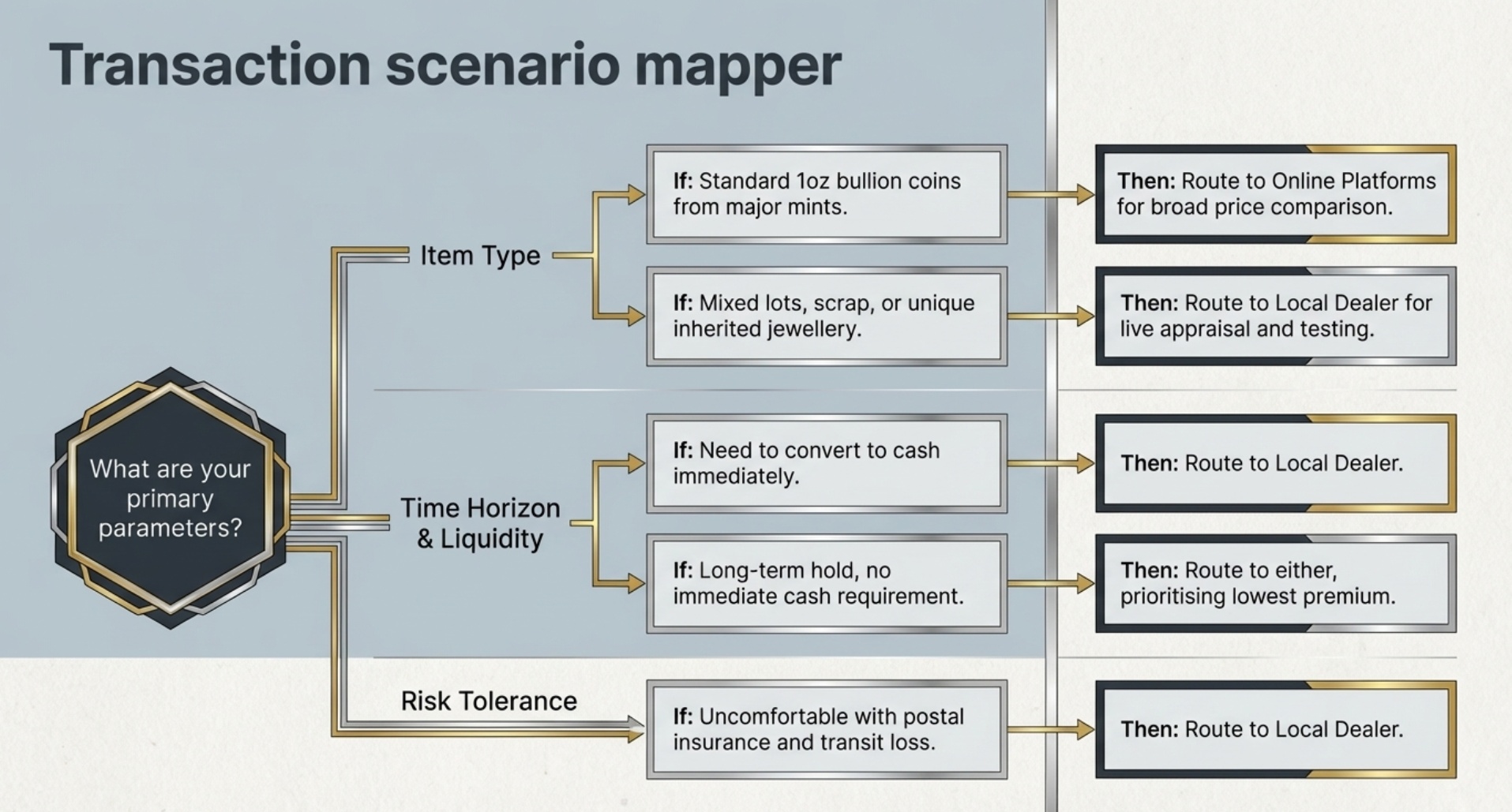
Most people end up with a hybrid approach: a local dealer they trust for core transactions, plus one or two reputable online dealers they use when the math clearly favors a remote order.
How to choose a gold dealer (any location)
Regardless of where you live, use this framework for selecting a dealer.
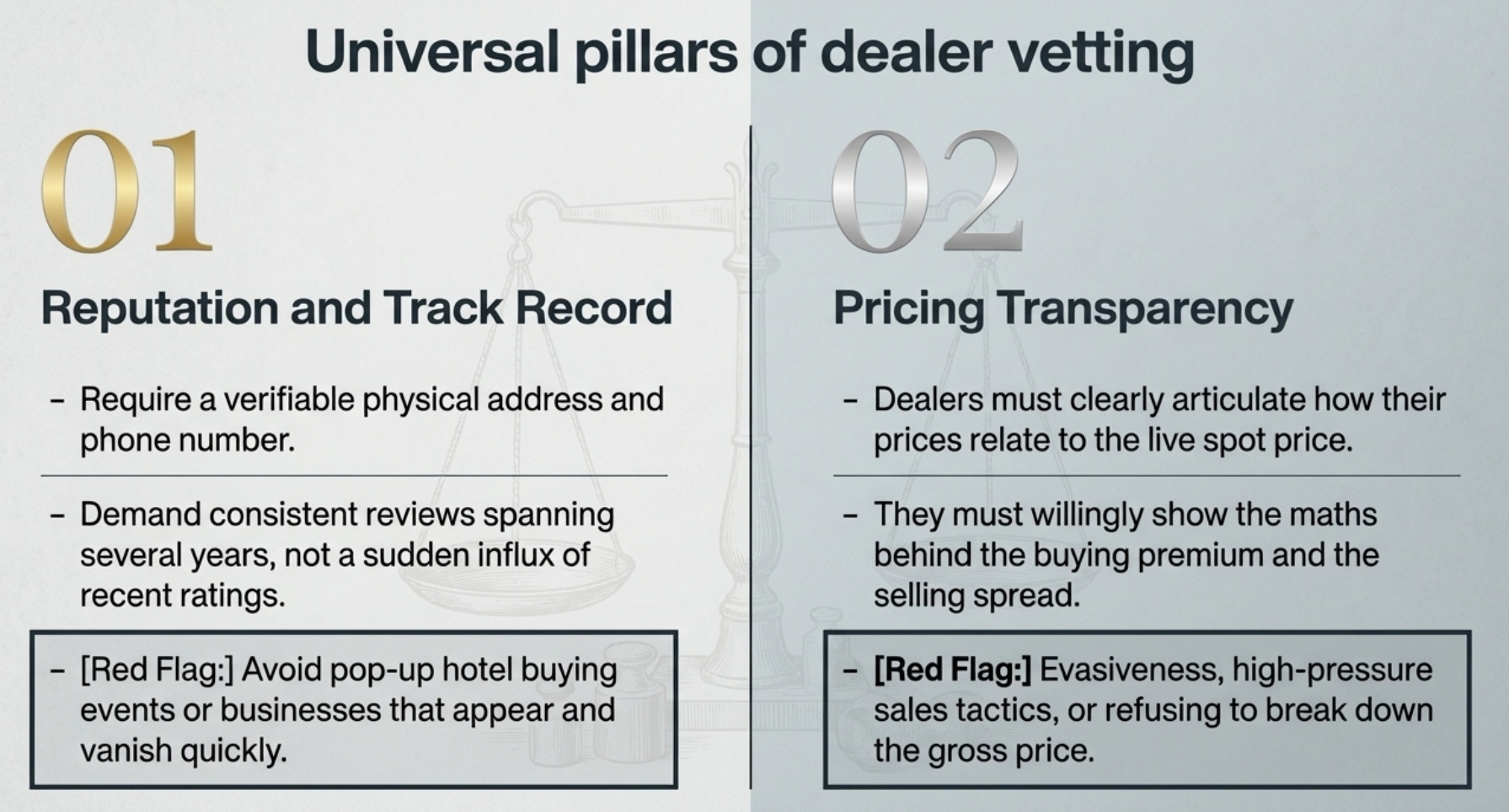
1. Reputation and track record
- Look for consistent reviews over several years, not just a handful of recent ratings.
- Check that the business has a real address, phone number, and clear information about what they buy and sell.
- Be cautious with pop‑up hotel events or businesses that appear and disappear quickly.
2. Pricing transparency
- Ask (or check on‑site) how prices relate to spot: what premium they charge when you buy, and what spread they apply when you sell.
- Prefer dealers who show the math or are at least willing to explain it without pressure or evasiveness.
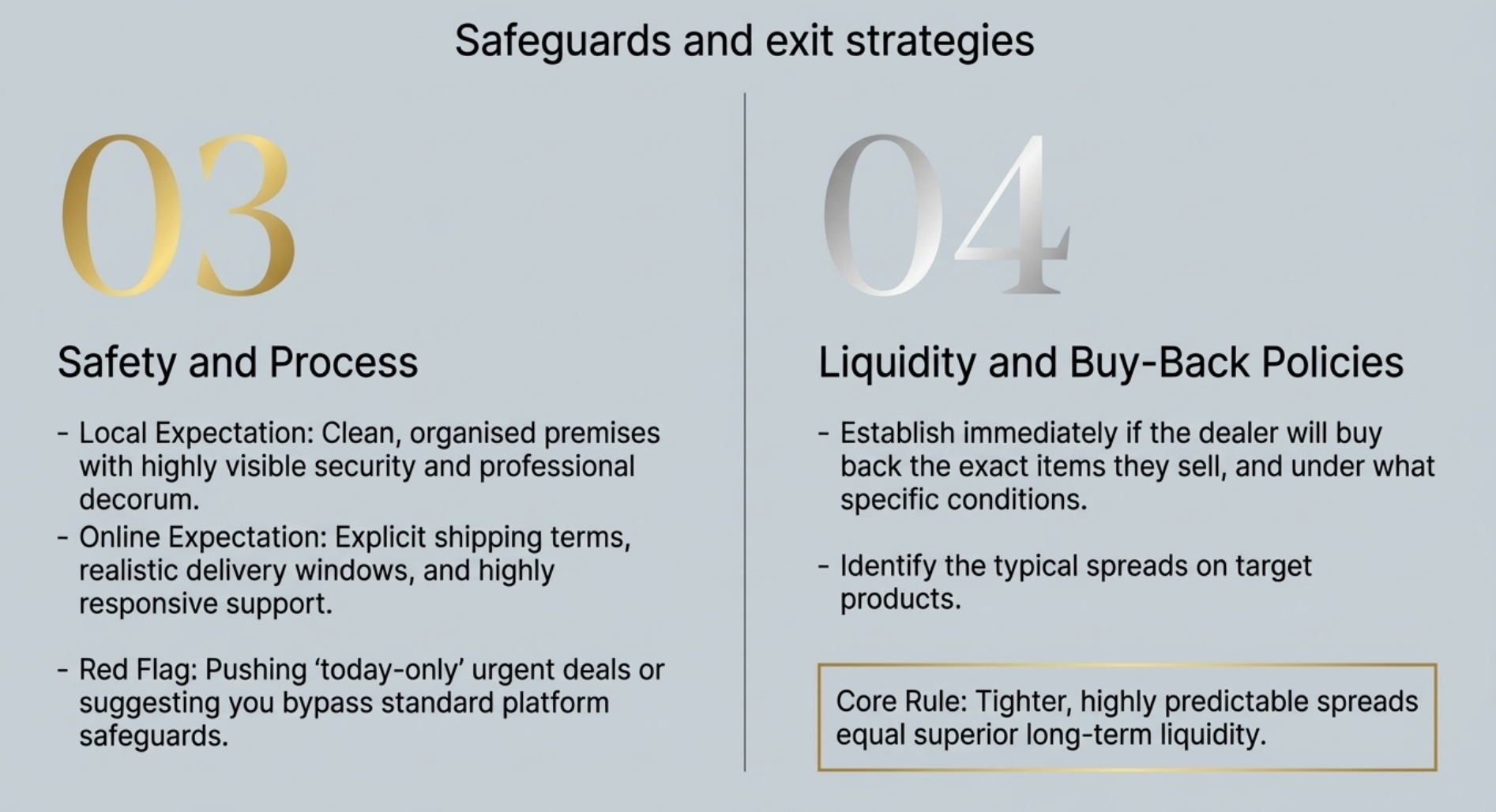
3. Safety and process
- In‑person: clean, organized premises, visible security, and a professional attitude.
- Online: clear shipping and insurance terms, realistic delivery times, and responsive customer support.
- In all cases, be wary of anyone who wants you to bypass normal safeguards or pushes “today‑only” deals.
4. Liquidity and buy‑back policies
- Ask if the dealer will buy back what they sell and under what conditions.
- Understand typical spreads on the products you’re considering; tighter, predictable spreads usually mean better long‑term liquidity.
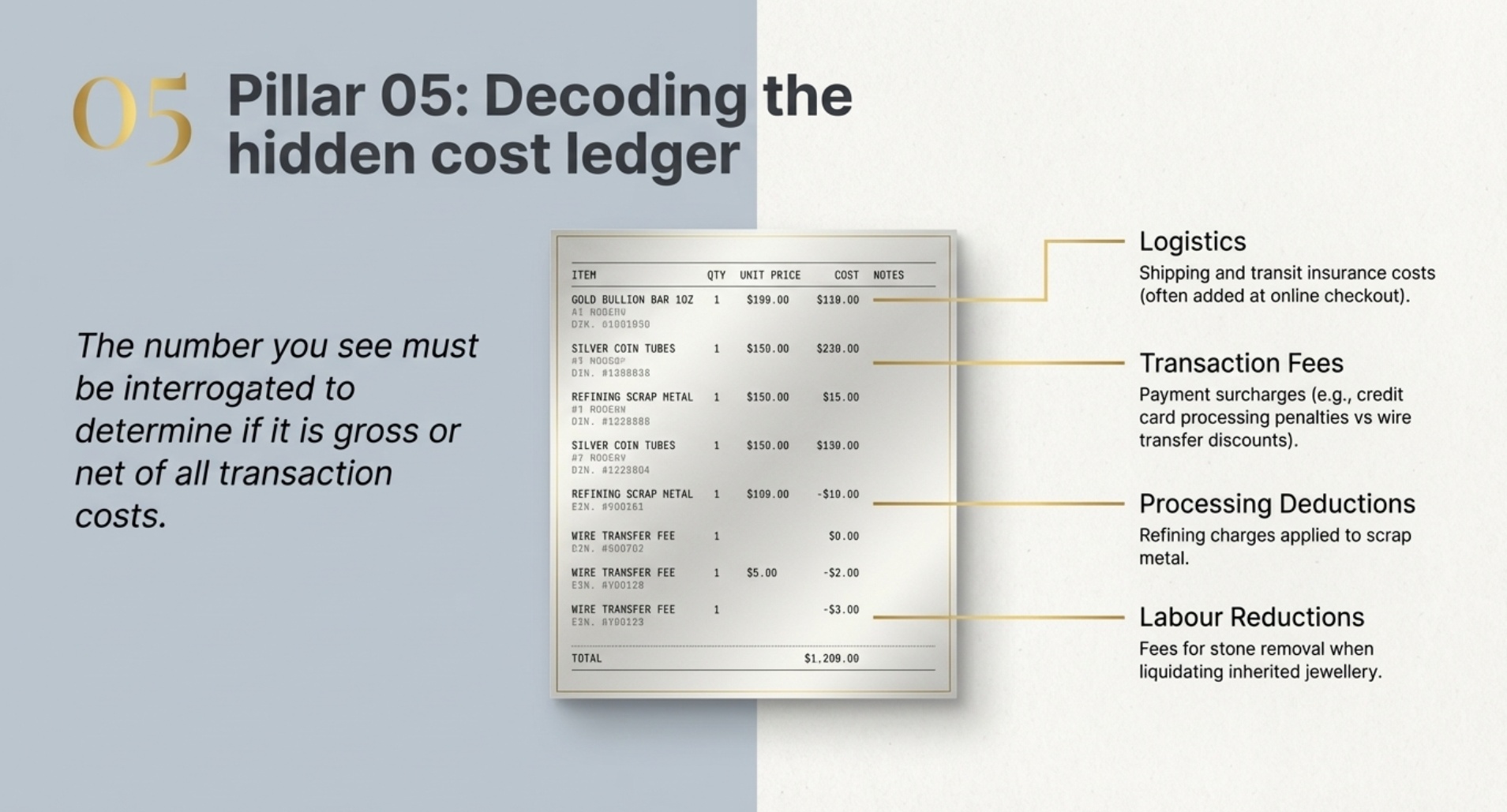
5. Fees and fine print
- Clarify all fees: shipping, insurance, payment surcharges, refining charges for scrap, or stone removal for jewelry.
- Make sure you know whether the number you see is gross or net of all costs.
If a dealer scores reasonably well on all of these dimensions, they are more likely to be a solid long‑term partner than someone who wins on price alone.
A case study approach: how a hybrid local dealer works
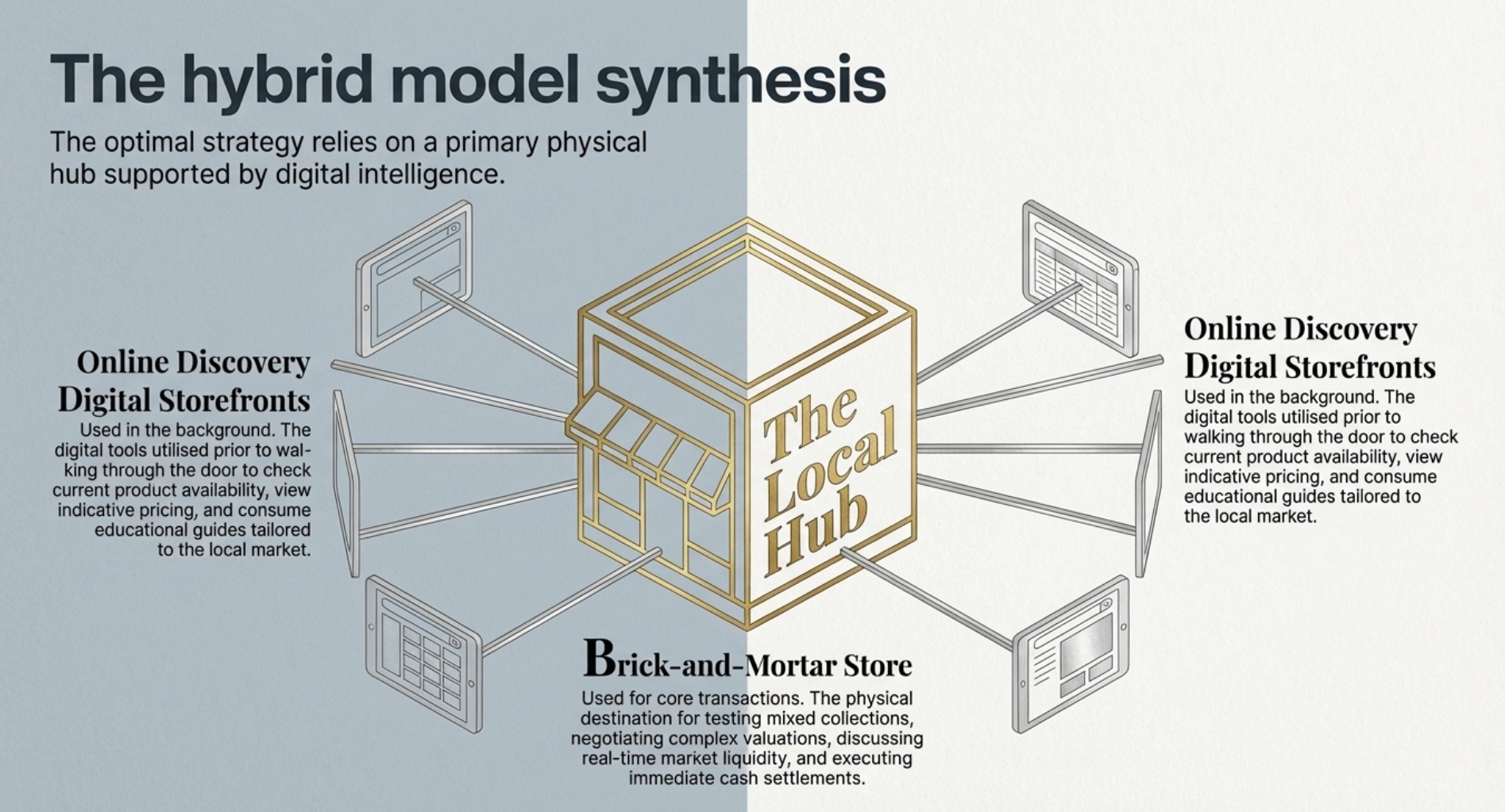
Consider a regional bullion business with physical shops in suburban areas and an online storefront. Clients use the website to see current product availability and indicative pricing, then visit in person for:
- Testing and valuing mixed collections of jewelry, coins, and bullion.
- Discussing spreads, liquidity, and risk for different product types.
- Selling items for immediate payment or converting jewelry into investment‑grade bullion.
This kind of dealer also publishes educational content—guides on buying and selling, pricing basics, and local checklists—so that people can prepare before they ever walk through the door. That model illustrates how a brick‑and‑mortar dealer can be a “hub” for in‑person transactions while still offering online convenience in the background.
If you operate or shop in a market like Northern Virginia, you can adapt this model: use local guides tailored to specific neighborhoods, keep brand references modest, and let the process and transparency speak louder than promotion.
FAQs: local vs online gold and silver
Why do many people still prefer in‑person gold dealers?
Because they can see testing done in front of them, ask questions, and walk out with cash or metal the same day, without relying on shipping or remote dispute processes.
Is a local dealer always more expensive than buying online?
Not necessarily. When you factor in shipping, insurance, and the value of in‑person service, a fair local dealer can be competitive—or even cheaper—especially for small to medium transactions.
When should I use an in‑person gold buyer instead of an online platform?
When you have mixed items, want immediate payment, are new to precious metals, or feel uncomfortable shipping high‑value pieces, an in‑person buyer is usually the better fit.
When does it make sense to buy or sell through an online‑only dealer?
Online‑only dealers are most useful for standard bullion coins and bars when you know exactly what you want and are comfortable with insured shipping and remote customer service.
How can I reduce risk when dealing with any gold dealer?
Verify reputation, understand how pricing relates to spot, clarify all fees, and favor channels (local or online) that provide documentation, clear policies, and traceable payments.
What matters more: the lowest price or the tightest spread?
The tightest spread usually matters more over time, because it determines your total round‑trip cost when you buy and later sell, while an ultra‑low purchase price with a very wide buy‑back spread can be a false bargain.
Can I use both local and online dealers in one strategy?
Yes. Many people keep a trusted local dealer for core transactions and liquidity, then supplement with one or two reputable online dealers when they find a genuinely better all‑in deal on specific products.
If you want to walk through local vs online options for your own situation, you can contact a bullion specialist for a quick consultation.Then pick the channel—or mix of channels—that gives you clear pricing, reasonable spreads, and processes you actually understand.